
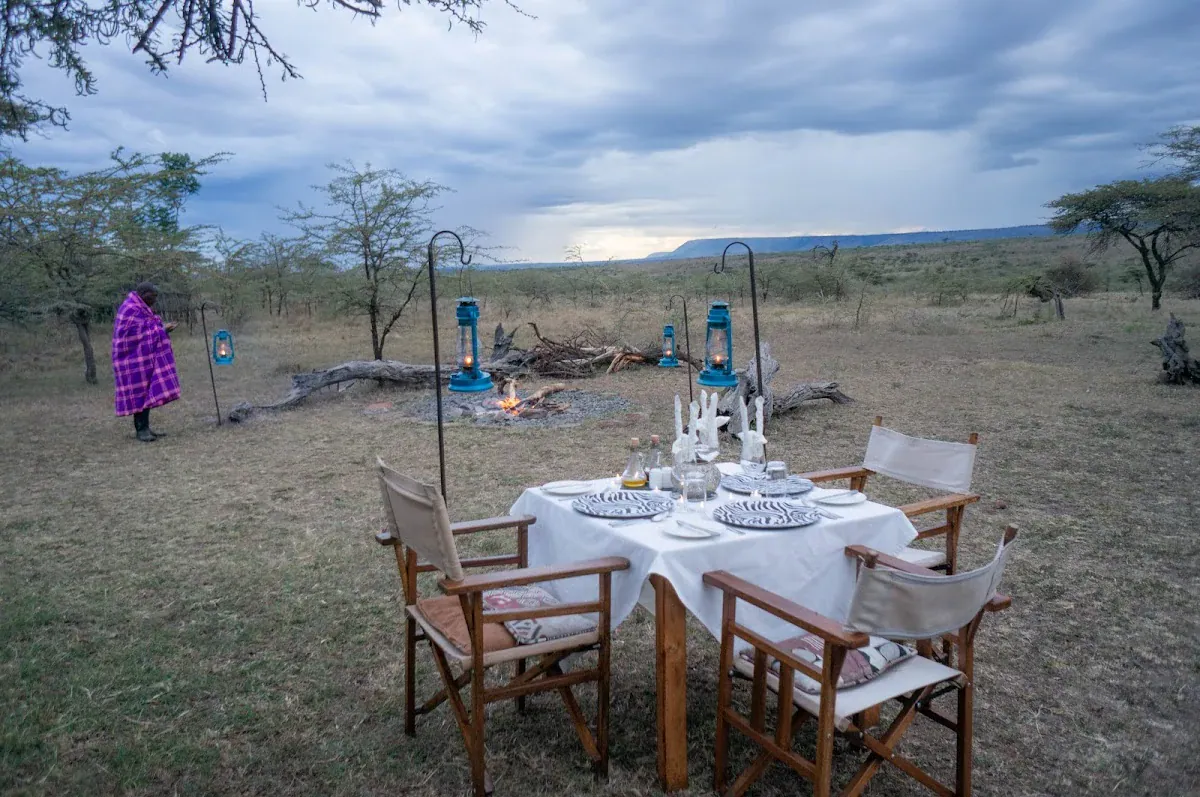
Bush dining in the Maasai Mara: breakfast, dinner and sundowners
Bush dining in the Maasai Mara brings a hosted meal or sunset drinks into your safari setting. A bush breakfast follows the morning programme, a bush dinner is a prepared evening meal, and sundowners are a drinks stop around sunset. Choose the experience through your camp or safari organiser, with the venue, access, service and inclusions arranged in advance.
Bush dining and the rhythm of a safari
Outdoor meals make time for the setting as well as the food. After a morning of wildlife viewing, breakfast offers a natural pause; towards sunset, drinks can round off an afternoon outing. Dinner gives the evening its own focus, with the hospitality team managing a prepared meal away from the usual dining room where the programme allows it.
The appeal is the change of pace. You can sit, talk and take in the surrounding landscape while the service team handles the meal. It works best as part of a well-planned day, with enough room for the experience and the journey back to camp.
Choose the moment that matters most to your party. A family may prefer a straightforward breakfast, while another group wants an evening meal to mark a celebration. There is no need to put every outdoor dining format into a short stay; the right choice should support the wider safari rather than crowd it.
A hosted bush breakfast after the morning outing
A bush breakfast is a meal organised outdoors through the provider, with the location and service prepared as part of the morning programme. It can offer a more settled pause than eating a packed breakfast in the vehicle. The actual menu and setup depend on the camp or activity arrangement.
The experience should fit the wildlife outing rather than interrupt it at an arbitrary point. Your guide handles the route, and the hospitality team prepares the breakfast according to the agreed programme. Give the morning space to develop while keeping the meal and return arrangements realistic.
Decide whether breakfast outdoors is replacing the normal camp meal or is a separately arranged experience. That distinction affects the itinerary and what is included. For a party that enjoys a slower morning after early viewing, a hosted breakfast can be a useful way to finish the outing before returning for rest.

A bush dinner with a prepared evening setting
A bush dinner is an organised evening meal at a location selected and managed by the provider. It may involve a separate setup, lighting and service team, rather than simply moving a camp dining table outside. The evening should have a clear arrival, meal and return arrangement.
The setting can feel different from daytime outdoor dining because visibility changes and guests rely more on the host’s directions. Stay within the prepared area and follow the team’s instructions when moving between the vehicle, table and other facilities. A lantern-lit table is part of the hosted venue, not a starting point for exploring the surrounding bush independently.
Choose the dinner for its hospitality and atmosphere without expecting a guaranteed wildlife encounter. The sound or sight of an animal is determined by the setting and the animals themselves. The meal remains worthwhile as an evening together, with the provider responsible for the actual venue and service.

Sundowners at the end of an afternoon drive
Sundowners are drinks around sunset, usually with a lighter food arrangement than a full meal. The pause gives the party time to enjoy the changing light and reflect on the afternoon before continuing the agreed return programme. It should be described separately from dinner so everyone knows what to expect.
Alcohol is not essential to the experience. Soft drinks or another suitable non-alcoholic choice can serve the same purpose, and families can enjoy the setting without a drinks-focused programme. The menu and any snacks belong to the actual arrangement, rather than a universal promise attached to the word sundowners.
The guide chooses the permitted stop and manages its timing. A view that looks attractive on a photograph does not establish that guests can leave a vehicle there. The experience needs to fit the area’s visitor rules and return requirements, especially when your accommodation is outside the area being visited.

Breakfast, dinner and sundowners compared
These experiences occupy different parts of the safari day and should be chosen for different reasons. Breakfast can extend a morning outing with a settled meal. Dinner adds an evening hospitality experience, while sundowners provide a shorter pause around the sunset setting.
The programme should make clear which meal is being served and how substantial it is. Drinks and snacks are not a substitute for a planned dinner, particularly for children or anyone who needs a regular meal schedule. Likewise, a packed breakfast is a different format from a fully hosted outdoor service.
Compare the practical details as well as the photographs. A private table, a shared camp event and a drinks stop with your travelling party can feel different even when all are described as bush dining. Choose the format that matches your expectations for company, comfort and time spent outdoors.
Prepared locations and permitted access
Bush dining is offered through arranged locations and provider programmes. It does not give visitors permission to pick any tree, riverbank or viewpoint and set up a meal there. The host needs to manage the actual venue under the rules that apply to the land being used.
Keep the distinction between the National Reserve, the Mara Triangle and surrounding conservancy areas in view. They are connected parts of the destination, but access and activity arrangements are not interchangeable. Your itinerary should identify where the meal takes place and how you reach it from the camp or game-drive route.
The entry and visitor-rule guide explains the wider framework. A bush dinner advertisement is not permission for an unrestricted after-dark outing, and a sundowner booking does not extend a visitor’s park access. The organiser should build the meal around the authorised programme.
Planning breakfast around game drives and balloon flights
An early drive and a hosted bush breakfast can work together when the programme allows enough time for both. The guide manages the viewing route while the meal is prepared for the agreed stopping point. A clear plan avoids the party hurrying through breakfast simply to recover time lost in transfers.
A balloon safari can have its own breakfast arrangement after landing. Read that programme separately before adding another outdoor breakfast to the same morning. The balloon safari guide explains the pickup and activity sequence, with actual inclusions set by the chosen provider.
Choose the breakfast that fits the day’s main priority. A party focused on patient wildlife viewing may prefer a simple packed meal or a later camp breakfast, while another party wants time at a hosted table. Our game-drive guide helps connect meal choices with the wider outing.
Dinner timing and the return to camp
Evening meals need a complete transport and hosting arrangement. A dinner held away from the main camp dining area may involve a transfer, a briefing on arrival and a managed return. Build those elements into the itinerary so the evening does not end with uncertainty about how the party reaches its accommodation.
Follow the host’s directions once daylight fades. Use the agreed paths and assistance, and wait for the team when moving away from the table. An outdoor dinner can be relaxed while still relying on the provider to manage the setting and the guests’ movement within it.
Keep dinner distinct from a night game drive. The meal does not automatically include a nocturnal wildlife outing, and the transport to a dining venue should not be described as one unless a separate authorised activity is actually arranged. Give each experience its own clear place in the programme.
Food preferences and dietary arrangements
Share dietary requirements before the kitchen plans the meal. A vegetarian preference, an allergy and a need for a particular meal schedule involve different arrangements, so describe the actual requirement instead of relying on a general label. The hospitality team can then state what it is able to provide.
For a bush breakfast or bush dinner, the food may be prepared away from the normal dining room service. Advance information matters because ingredients, equipment and staffing are organised for the outing. Do not assume that the full camp menu can be reproduced at every outdoor venue.
Keep the party’s comfort in mind when choosing the format. A familiar meal and clear serving arrangement may be more suitable than a complicated surprise menu. Where someone has a dietary concern, use the provider’s explicit plan for that person rather than infer suitability from a photograph of another group’s meal.
Drinks, snacks and a family-friendly sundowner
Set out your drinks preferences as part of the sundowner arrangement. The party may want soft drinks, a hot drink or alcoholic drinks where provided. A menu described in the itinerary is more useful than a broad promise of a fully stocked bar at every stop.
Children may need food and a comfortable seat at a different point from adults who are happy to wait until dinner. Keep snacks, the evening meal and the return journey connected in the programme. A sunset stop should fit the family, rather than require everyone to follow the same drinks-centred routine.
Build in a simple alternative for anyone who would prefer returning to camp. The setting can be enjoyable without keeping the whole party outdoors longer than it wants. Clear expectations help the host prepare appropriately and give everyone a practical way to enjoy the evening.
Seating, facilities and accessible arrangements
Comfort depends on the actual venue as well as the view. Find out how guests reach the seating area, what surfaces they cross and what assistance is available. A table on a camp deck and a setup on uneven ground can have different practical demands.
Explain mobility needs before choosing the experience. The organiser can assess the transfer vehicle, walking distance within the venue and the available seating or facilities. Do not treat a generic description of bush dining as evidence that every outdoor table is accessible to every visitor.
Bathroom arrangements also matter, especially for families and longer hosted meals. Choose a format with facilities that suit the party and include any necessary assistance in the plan. A suitable camp-side outdoor meal may offer the setting you want with a more convenient arrangement than a remote dining venue.
Celebrations, private tables and shared events
An outdoor meal can mark a birthday, anniversary or another occasion, but its privacy and service should be described clearly. A private safari vehicle does not automatically mean every camp dining event is exclusive to your party. The meal may be a shared hosted programme unless a private arrangement is agreed.
Give the organiser the occasion and the kind of evening you want. A quiet dinner, a family gathering and a larger celebration call for different seating and service. Keep any decoration, cake or special menu within the provider’s actual arrangements rather than assume it accompanies the activity name.
Allow the setting to remain a wildlife destination. Music, performances and other additions need the host’s own assessment and permissions; they should not be improvised by guests at the venue. A well-hosted meal can feel personal through the table and service without turning the surrounding landscape into an event space.
Weather, light and outdoor comfort
Outdoor hospitality depends on the actual conditions. Wind, rain or changes at the venue can affect the setup and may lead the provider to move the meal or use a camp-based alternative. Keep that flexibility in the arrangement instead of treating a particular photograph as a fixed promise.
Bring suitable layers for an early breakfast or an evening outdoors, and keep personal belongings easy to manage. A comfortable outer layer helps when the air changes, while a small organised bag is easier to handle than loose items spread around the table. Follow the host’s guidance on what is useful for the chosen venue.
Light also changes the character of the experience. Sundowners are about the evening setting, with no guarantee of a clear sky or a particular colour. Our best-time guide supplies wider seasonal context, while the organiser manages the meal according to conditions on the day.
Photography and consideration for other guests
Outdoor dining can provide photographs of the setting and the party together, but the meal should remain comfortable for everyone. Take pictures without blocking service, moving equipment or keeping other guests waiting. The provider’s prepared arrangement matters more than finding a different table position for an image.
Ask permission before photographing staff or other visitors. A hosted meal does not make everyone present part of your photograph, and a private celebration may call for particular care about who is included. Simple communication keeps the photography considerate and gives guests room to enjoy the occasion.
For landscape photographs, stay within the host’s directions and the designated area. Do not walk away towards wildlife, a riverbank or the fading horizon. The photography guide helps plan dedicated picture-making time elsewhere in the safari, leaving the meal itself relaxed.
Wildlife space, fires and leaving the venue clean
Keep food and drinks within the hosted setup and do not feed wildlife. Leftovers should be handled by the hospitality team, not left on the ground for birds or other animals. The meal belongs within the destination’s visitor rules even when the location feels quiet or secluded.
Leave the lighting and any fire arrangement to the provider. The Reserve visitor code permits campfires only in authorised campsites; an outdoor dinner does not authorise guests to light their own fire wherever they stop. A photograph of a campfire illustrates a managed setup, not a general permission.
Take personal litter with you and let the team manage catering waste. Avoid collecting plants, wood or other natural objects as souvenirs or decorations. The experience should end with the venue cleared under the provider’s arrangements and the surrounding habitat left undisturbed.
Inclusions, packed picnics and the safari quote
A camp’s board basis and an outdoor dining experience are related but distinct parts of a booking. Some programmes include hosted meals or sundowners, while others quote them separately. The written itinerary should identify the actual experience, service and transport included for your party.
Our picnicking guide covers packed meals and authorised stops during game drives. Bush dining focuses on hosted breakfast, dinner and sunset arrangements. Choose between them according to the pace and hospitality you want, with no assumption that a packed lunch includes a staffed dining venue.
Use the safari-cost guide for the wider budget. Where Reserve tickets are purchased separately, use the KAPS ticket portal for the appropriate entry; that ticket is separate from the hosted meal. Keep all compulsory selected-property charges and agreed activity arrangements clear in the final quote.
Planning a comfortable outdoor dining experience
- Choose breakfast, dinner or sunset drinks according to your preferred pace.
- Match the venue and transfer arrangements to your accommodation.
- Give dietary, mobility and family requirements in advance.
- Establish whether the meal is private or a shared hosted event.
- Keep meals, drinks and transport inclusions clear in the itinerary.
- Allow a suitable alternative if conditions affect the outdoor venue.
- Follow the host and leave wildlife, fires and catering equipment undisturbed.
Plan the rest of your Mara experience
Add an outdoor meal to your private Mara safari
Tell us your travel dates, party size and whether a bush breakfast, bush dinner or sundowners appeal to you. Include dietary requirements, mobility needs and any special occasion. MaasaiMara.ke quotes and books private safaris through authorised tour operator partners, who can assess suitable dining arrangements alongside your camp and game-drive programme.
