
Best time to visit the Maasai Mara: a month-by-month guide
The best time to visit the Maasai Mara depends on what you want to see: the migration usually arrives in July, while April and May are the quietest months of the year.
The best time to visit the Maasai Mara for the wildebeest migration is usually July to September. In the Mara Conservancy’s records for 2023–2026, the first herds entered the Mara between 28 June and about 20 July, rain in August often pushed them back to Tanzania for a while, and most had left between late September and early November. The dry season runs from July to October.
For fewer vehicles, April and May are the quietest months of the year, in the long rains. The park fee for non-resident adults is USD 100 from 1 January to 30 June and USD 200 from 1 July to 31 December, set by Narok County; tickets for both parts of the Reserve are sold on the KAPS ticket portal. Outside the migration months you see the Mara’s resident wildlife, without the migratory herds.
The dated observations below come from the Mara Conservancy, which manages the Mara Triangle and measures rain at Serena, and from Governors’ Camp’s game reports in the north of the Reserve.
The best time at a glance
Migration: July to September
First herds entered between 28 June and about 20 July in 2023–2026.
Dry season: July to October
From long-term Mara rain-gauge records (1965–2015).
Quietest: April and May
The Mara Conservancy calls them the quietest months of the year.
Busiest: August
41,992 visitors to the Mara Triangle in August 2023, its record.
Long rains: March to May
Usually wettest in April; short rains in November and December.
Fee doubles on 1 July
Non-resident adults: USD 100 in January–June, USD 200 in July–December.
How do the months compare?
To find the best time for your trip, compare where the migratory herds were, how much rain fell and how busy the Mara was, month by month (each month links to its own guide). Rain figures are measured totals from the Mara Conservancy (Mara Triangle) unless marked; rain varies sharply across the Mara, so treat them as examples, not averages. Crowd notes are mostly from the Conservancy’s reports and cover the Mara Triangle; camp closures come from the camps’ own sites.
| Month | Migratory herds | Recorded rain | Crowds | Park fee season |
|---|---|---|---|---|
| January | In Tanzania on the southern Serengeti plains; calving begins late in the month | 272 mm (2024; the January report said over 275 mm), 190 mm (2025), 80 mm (2026) | Busy over New Year, mainly with Kenyan visitors; January 2024 was a record January for visitors | Low season |
| February | Calving at its height around Ndutu, Tanzania | 118.7 mm (2024; the February report said 117 mm), over 200 mm (2026) | February 2024 was a record February for visitors; a rush of Chinese visitors at Chinese New Year (2025, 2026) | Low season |
| March | Still on the southern Serengeti plains, where calving runs into March | 41.2 mm (2024), slightly over 100 mm (2025) | Visitor numbers normally fall from March | Low season |
| April | On the wet-season range in the southern Serengeti | 370 mm (2024; the April report said 300 mm), 205 mm (2025) | The quietest month in the Conservancy’s 2024 chart; some camps close | Low season |
| May | Leaving the southern Serengeti and moving west (median 6 May–29 June) | 156.81 mm (2024) | With April, the quietest time of year, usually with the lowest revenue; late May can be busy | Low season |
| June | First herds reached the Main Reserve on 28 June in 2026; not until July in 2024 and 2025 | 20.2 mm (2024); the driest month in 25 years in 2026 | Very busy in 2024 and 2025; the Conservancy put the record June 2025 numbers down largely to visitors using the lower fee before 1 July | Low season |
| July | The herds usually arrive; first crossings into the Mara Triangle on 20–25 July in 2023–2025 | 64.9 mm (2024); 40 mm at Governors’ Camp (2024) | High season: over 150 vehicles at a crossing at times (July 2023) | High season from 1 July |
| August | In the Mara in early August in 2023–2026, but storms sent them back south in 2024, 2025 and 2026 | 85.7 mm (2024); around 5 mm at Serena (2023) | The busiest month: 41,992 Triangle visitors in August 2023, the record | High season |
| September | All gone before the end of September in 2023; back in large numbers in 2024 | 152 mm (2024), 130 mm (2025) | Quieter than August; numbers dropped from early September (2023) | High season |
| October | Nearly all gone by 15 October in 2024; a few thousand stayed until 30 October in 2025 | 42 mm (2023), 97.2 mm (2024), over 110 mm (2025) | Quieter than July–September: 6,547 (2024) and 7,023 (2025) overseas visitors to the Triangle | High season |
| November | Most of the rest left in early November in 2025 | 271.1 mm (2024); the driest November in over 24 years (2025) | ‘Always a quiet month’, the Mara Conservancy says | High season |
| December | After the herds have left (see November) | 253 mm (2024) | Very quiet in the first half, busy over Christmas and New Year | High season |
The 2024 Triangle rain figures come from the Conservancy’s year-end chart, which is titled “Rainfall 2025” but holds the 2024 data; for January, February and April it differs from the monthly reports, shown in brackets.
When is the migration in the Maasai Mara?
The herds usually reach the Mara in July. In 2023–2026 the first wildebeest entered between 28 June (2026) and about 20 July (2023), with the first crossings into the Mara Triangle between 20 and 25 July in 2023–2025, the Mara Conservancy reported. Governors’ Camp describes arrival as usually mid to late July.
Rain in August often sends the herds back to Tanzania for a while. In 2024 hardly any were left by 20 August; in 2025 heavy rain from 9 August emptied the Mara within days; and in 2026 a storm on 17 August pushed them back. In 2024 and 2025 many returned in September or early October.
In recent years most herds left between late September and early November: before the end of September in 2023, by 15 October in 2024, and in early November in 2025. The Mara Conservancy notes they no longer stay until November as they used to.
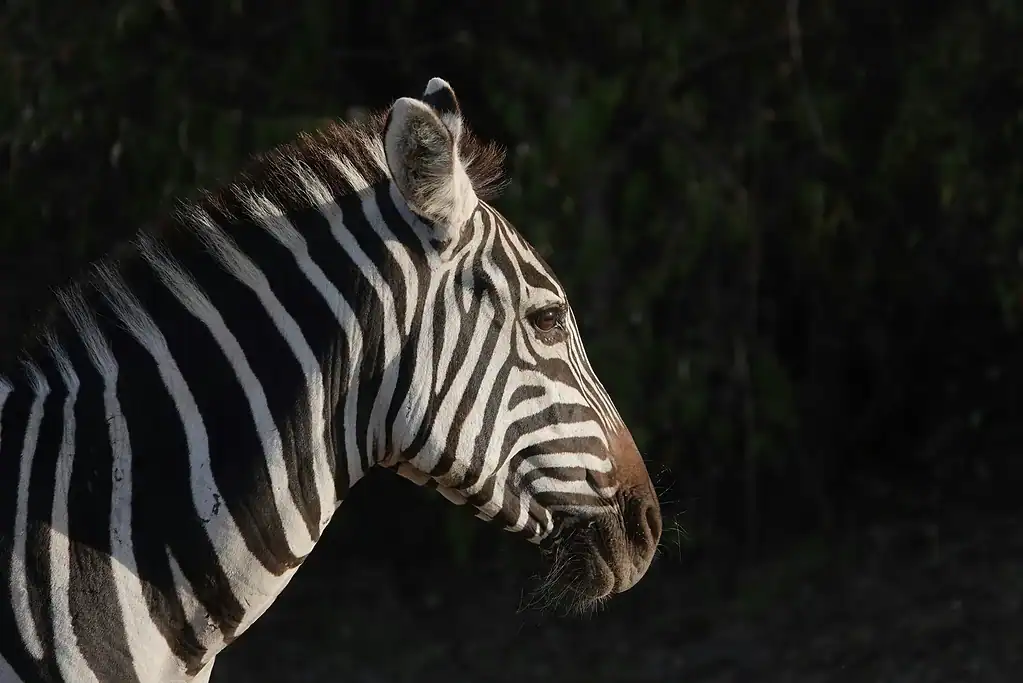
Where are the herds for the rest of the year?
GPS tracking of 62 wildebeest from 1999 to 2022 shows the cycle. Calving takes place on the southern short-grass plains of the Serengeti at the peak of the rains; with the dry season from May the herds move west, to the Western Corridor in June and July, then north. The median move away from the wet-season range runs from 6 May to 29 June.
Calving on the southern Serengeti plains, around Ndutu in Tanzania, runs from late January into March, with hundreds of thousands of calves born in a few weeks. More than 200,000 zebras also migrate through the Serengeti-Mara, and some go as far as the Maasai Mara.
Kenya also has its own, smaller herd. The Mara-Loita wildebeest fell from 120,000–150,000 in the 1970s to about 26,700 in 2024, according to Kenyan government estimates. Collared animals typically stayed in the Mara from mid-July to August and were back on the Loita Plains by March.
The migration now uses less of the Mara
In January 2026 the Mara Conservancy reported that the herds use less of the Mara than they did: the Talek River acted as a barrier in August 2024, the migration has not reached Mara North and the conservancies for five years or more, and most crossings now take place in Tanzania. The Conservancy links the change to camps and development along the rivers.
When is the best time to see a river crossing?
Crossings follow the migration, so the best time to see one is when the herds are in the Mara. The first crossings into the Mara Triangle came on 20–25 July in 2023–2025, and the Main Reserve had about 14 crossing days in 2025, against 29 in 2024 and about 50 historically, the Mara Conservancy reported. With fewer crossing days than there used to be, several days in the migration season give you a better chance than a single game drive.
Crossings also draw crowds: the Mara Conservancy reported over 150 vehicles at a crossing at times in July 2023. It also says most crossings now take place in Tanzania, so a crossing is never guaranteed in the Mara, even in the peak weeks of the migration.
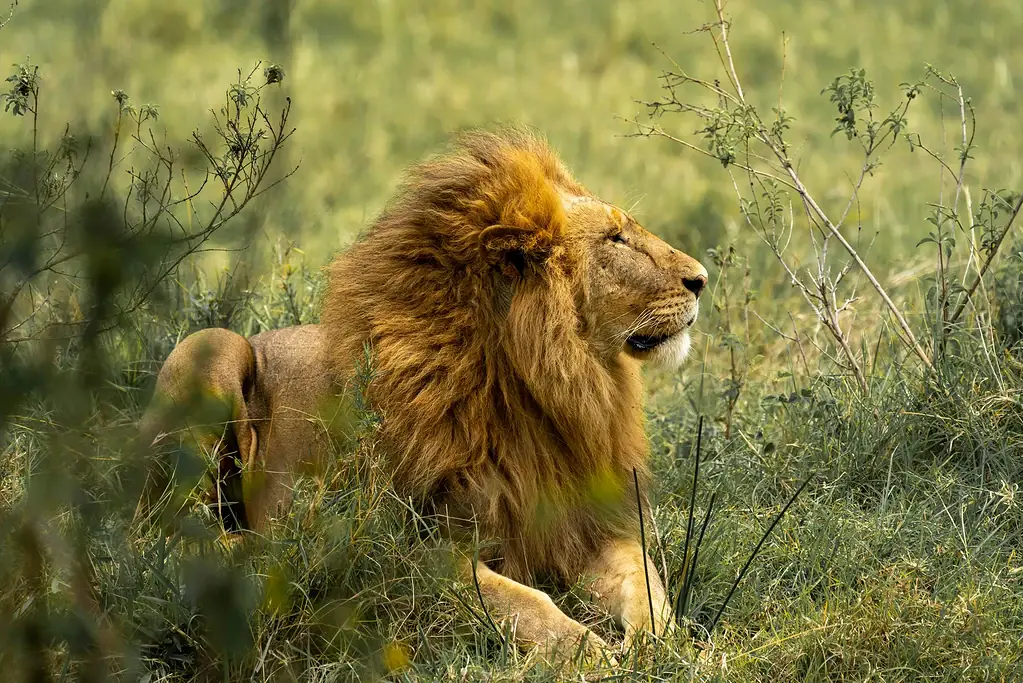
When is the Mara busiest, and when is it quiet?
August is the busiest month: the Mara Triangle had 41,992 visitors in August 2023, the Conservancy’s record, and in each of 2023–2026 numbers fell from the last week of August. In the high season more than 1,000 people a day use the toilets at Look Out, the Mara River viewpoint, with queues of up to 70 vehicles at times, the Mara Conservancy reported in August 2024 and August 2026.
If the best time for you means fewer vehicles, look at the low season: visitor numbers normally fall from March after a busy January and February. April and May are the quietest months of the year, and May usually brings the lowest revenue. June has become busy: the Conservancy put record June 2025 numbers down largely to visitors using the lower park fees before the increase on 1 July.
The Mara Triangle had 171,478 visitors in 2023, 129,410 in 2024 and 138,539 in 2025. KAPS ticketing figures quoted by the Mara Conservancy show visitor numbers to the Reserve down 20.4% in the July 2024–June 2025 financial year, with the steepest drop (30.6%) in July–December 2024, the first high season at the higher fee; the Conservancy said it was unclear whether the fee was the only cause.
When are the rainy seasons in the Maasai Mara?
Rain in the Mara falls in two seasons: the dry season is July to October, and the wet season runs from November to June, made up of the short rains (November–December) and the long rains (January–June), according to Mara rain-gauge records from 1965 to 2015. Long-term, Mara gauges average 53 mm a month in the dry season and 96 mm a month in the wet season, so the dry months are the best time for dry roads.
Those records count January–June as the long rains, but the heaviest rain usually falls from March to May, Kenya’s main rainy season, peaking in April; Governors’ Camp says the long rains typically begin in mid-March. The short rains vary from year to year: rain set in from mid-October in 2024, while November 2025 was the driest in the Mara Conservancy’s records.
The Mara Conservancy gives the Mara Triangle’s average yearly rainfall as 1,200 mm. It measured 1,111.87 mm in 2023, 1,903 mm in 2024 and 1,280.11 mm in 2025. Rain also varies sharply over short distances: in January 2024 the escarpment had at least double Serena’s rainfall.
How warm is the Maasai Mara each month?
No official long-term temperature averages for the Reserve could be found, so these are dated readings from Governors’ Camp at Musiara, in the north of the Reserve. Recorded early mornings were 11–16 °C (January and July–November), so pack a warm layer for early game drives.
| Month | Recorded temperatures |
|---|---|
| January | Mornings as low as 14 °C, rising to about 30 °C by midday (2024) |
| February | Average daily temperature 28 °C (2024); up to 33 °C on some days (2025) |
| March | Average 29 °C a day (2024); average daytime temperature 26 °C (2025) |
| April | Average 26 °C a day (2024); highs around 26 °C (2025) |
| July | Daytime highs of 25–28 °C, mornings and evenings of 11–15 °C (2025) |
| August | Mornings about 13 °C, days about 25 °C (2024); days 25–28 °C (2025) |
| September | Lows of 13 °C, highs of 26 °C (2024); lows of 12 °C, highs of 28 °C (2025) |
| October | Midday around 30 °C, early mornings about 16 °C (2024) |
| November | Mornings averaging 16 °C with highs up to 30 °C, around 24–26 °C in the wetter second half (2024) |
May, June and December are left out: we found no usable dated readings from Governors’ Camp for them. One camp’s readings are not an average for the whole Reserve.
When does the park fee change?
Narok County’s 2025/26 park fees have two seasons: the Low Season from January to June and the High Season from July to December. Non-resident adults pay USD 100 per person in the Low Season and USD 200 in the High Season. Kenyan citizens pay KSh 1,500 and KSh 3,000, and East African residents KSh 2,500 and KSh 5,000. Children aged 8 and under enter free in every category.
The switch on 1 July matters if your best time falls in June: the Mara Conservancy reported record June 2025 visitor numbers as people came before the increase. See our park fees guide for every category, children’s rates and how the 12-hour ticket works.
Which month is the best time for you?
- The migration: July to September gives the best chance. The herds usually arrive in July and were in the Mara in early August in every year from 2023 to 2026, though August storms sent them south for a while in 2024, 2025 and 2026.
- Fewer vehicles: April and May are the quietest months, but they are the heart of the long rains and some camps close: Asilia’s Rekero Camp in April and May, and its Encounter Mara in May.
- The lower fee with a chance of early herds: late June, if you accept busy roads; herds reached the Main Reserve on 28 June in 2026 but not until July in 2024 and 2025.
- Calving: late January to March, but in Tanzania’s southern Serengeti, not the Mara.
- Kenyan holidays: Kenyan visitors make New Year and Christmas busy, the Mara Conservancy reported in December 2023 and 2024.
Whatever the month, the Mara’s resident wildlife is there, and the migration is never guaranteed: the timing has shifted from year to year in every recent season.
Planning around the season
- Decide what the best time means for you: the migration (July to September), quiet roads (April and May) or the lower fee (January to June).
- Check that your camp is open: some close for part of the long rains.
- In the wet months, allow extra time for travel: heavy rain can flood roads in the Mara.
- Pack a warm layer for early game drives: recorded early mornings were 11–16 °C.
- Budget for the park fee season that applies to each day of your stay.
More help planning your Maasai Mara safari
- The Great Migration in the Maasai Mara – how the migration works
- Maasai Mara weather – rain and temperatures month by month
- Maasai Mara park fees – rates for every visitor and season
- Plan your Maasai Mara safari – the step-by-step guide
- Flights to the Maasai Mara – airlines, times and baggage
- Nairobi to the Maasai Mara by road – route, drive times and road conditions
- Where to stay in the Maasai Mara – camps and lodges
Not sure which month suits you?
Tell us what you want to see and when you can travel. MaasaiMara.ke quotes and books safaris through authorised, highly rated tour operator partners, and we will suggest the best dates for your trip.
