
Maasai Mara in October: weather, wildlife, crowds and prices
Maasai Mara in October means the end of the dry season and, in some years, the last of the migration: in recent years most herds left between late September and early November, and the high-season park fee still applies.
October in the Maasai Mara is the turn of the seasons. Long-term rain-gauge records count it as the last dry-season month, but rain often returns: the Mara Triangle measured 42 mm in 2023, 97.2 mm in 2024 and over 110 mm in 2025. The migration varies too: the herds had left before the month began in 2023 and nearly all had gone by 15 October in 2024, but in 2025 a few thousand stayed until 30 October. The park fee is in its high season, USD 200 per non-resident adult a day, and the Mara is quieter than in July–September.
Park tickets for both the Main Reserve and the Mara Triangle are sold on the KAPS ticket portal.
The observations below come from the Mara Conservancy, which manages the Mara Triangle, and from Governors’ Camp at Musiara, in the north of the Reserve, for each October from 2023 to 2025, the latest with published reports.
Maasai Mara in October at a glance
Rain: 42 to over 110 mm
Mara Triangle totals for 2023–2025: one exceptionally dry year, two wetter ones.
Mornings about 16 °C, around 30 °C at midday
Recorded at Governors' Camp, Musiara, in 2024.
The migration's last weeks
Herds gone before the month began in 2023 and by the 15th in 2024; some stayed into November in 2025.
High-season park fee
USD 200 per non-resident adult a day, from 1 July to 31 December.
Quieter than the peak
Overseas visitors to the Mara Triangle in the month: 6,547 in 2024 and 7,023 in 2025.
Fresh grass after showers
In 2025 early showers at Musiara brought out fireball lilies and refreshed the short-grass plains.
What is the weather like in the Maasai Mara in October?
Long-term Mara rain-gauge records count October as the last month of the dry season (July–October), when months average 53 mm of rain. Across Kenya, October to December is known as the short-rains season, and in the Mara the first rain comes at different times: in 2024 it set in from about 14 October for a week, while 2023 was exceptionally dry. The Mara Triangle measured 42 mm at Serena in 2023, 97.2 mm in 2024 and over 110 mm in 2025, and Governors’ Camp at Musiara 82 mm, 99.5 mm and 54 mm.
Rain varies sharply over short distances: in 2023 some parts of the Triangle had more than Serena and others had none. Days are warm and mornings cool. Governors’ Camp recorded middays around 30 °C and early mornings of about 16 °C in 2024. Pack a warm layer for early drives and a light waterproof in case the rains start early. Our Maasai Mara weather guide compares every month.
How much rain fell in recent Octobers?
Measured totals for the month, in millimetres, at two gauges in different parts of the Mara.
| Year | Mara Triangle (Serena) | Governors' Camp, Musiara | What it meant |
|---|---|---|---|
| 2023 | 42; some parts of the Triangle had more, others none | 82 | Exceptionally dry; the herds had left before the end of September |
| 2024 | 97.2 | 99.5, with 34 mm on the 7th and 32 mm on the 17th | Storms early in the month sent the wildebeest back to the Serengeti; rain set in from about the 14th for a week |
| 2025 | Over 110 | 54, with showers on the 3rd, 4th and 5th | The wildebeest came back at the start of the month; a few thousand stayed in the Triangle until the 30th |
Where is the migration in October?
This is usually the end of the migration in the Mara. GPS tracking of the herds shows the Mara River is their main water source from August to October, and they go back south when the rains return, generally by November. In recent years most herds left the Mara between late September and early November: before the end of September in 2023, by 15 October in 2024 and in early November in 2025. The Mara Conservancy notes they no longer stay until November as they used to. See our month-by-month guide for when the herds usually arrive.
Some camp guides describe the last wildebeest filing south late in the month, with a few staying into early November; dated reports for 2023–2025 show most herds gone between late September and early November, often after August storms had pushed them out. River crossings have also become fewer: the Main Reserve had about 14 crossing days in 2025, against 29 in 2024 and about 50 historically. In January 2026 the Mara Conservancy reported that the migration had not reached Mara North and the other conservancies for five years or more, and that most crossings now take place in Tanzania.
In 2024 zebra lingered: they stayed in large numbers until 18 October, after the wildebeest had gone. The Mara’s resident wildlife stays all year. Resident lion prides hold the same territories for generations, and the big cats breed all year round. Look out for young antelope too: at Musiara, impala, topi and gazelle young were born in October 2024, Governors’ Camp reported.
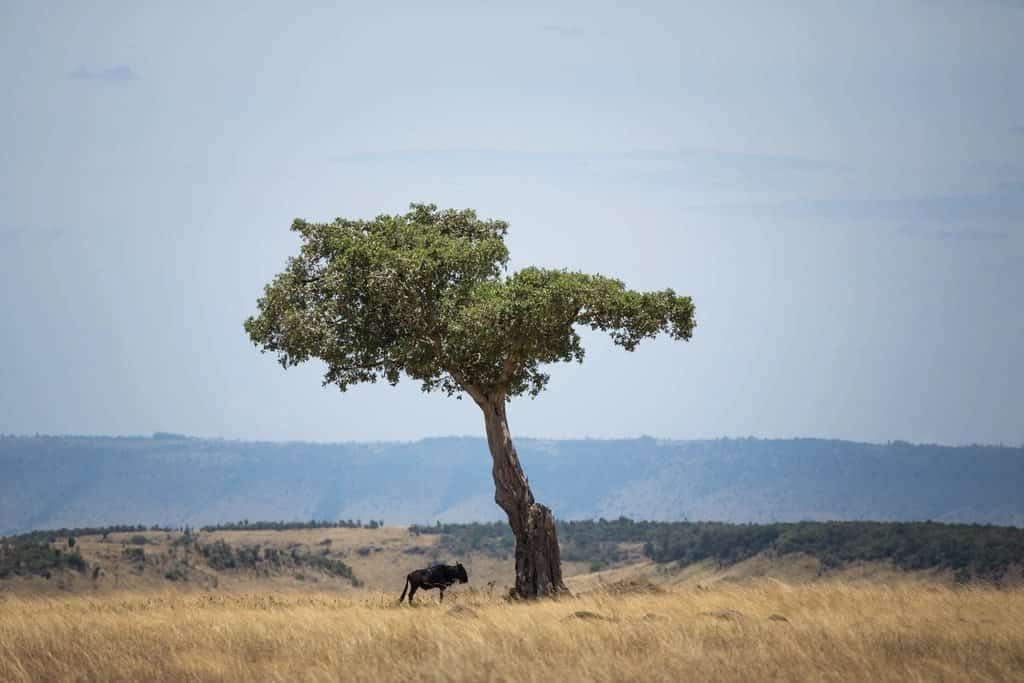
What did observers see in the Mara in October?
October 2023. The Mara Conservancy called the month exceptionally dry, with only 42 mm at Serena; some parts of the Triangle had more and others none. The herds had already left before the end of September, in what the Conservancy ranked one of the worst migration years in recent times. Governors’ Camp at Musiara recorded 82 mm.
October 2024. The Conservancy reported scattered storms early in the month that sent the wildebeest back to the Serengeti. By the 15th there was hardly a wildebeest in the Mara, though zebra stayed in large numbers until the 18th, and rain set in from about the 14th for a week. The herds had stayed three weeks longer than in 2023. Governors’ Camp recorded 99.5 mm, middays around 30 °C, and a Mara River so shallow that bedrock showed in places.
October 2025. After heavy rain from 9 August had emptied the Mara, the wildebeest returned to the Triangle in reasonable numbers at the start of the month, with wildebeest and zebra along the border and through the middle of the Triangle. A few thousand stayed until the 30th. The Conservancy measured over 110 mm of rain and called the month relatively busy. At Musiara, Governors’ Camp recorded 54 mm, enough to bring out fireball lilies, with topi, Coke’s hartebeest and Grant’s gazelle grazing the refreshed short-grass plains.
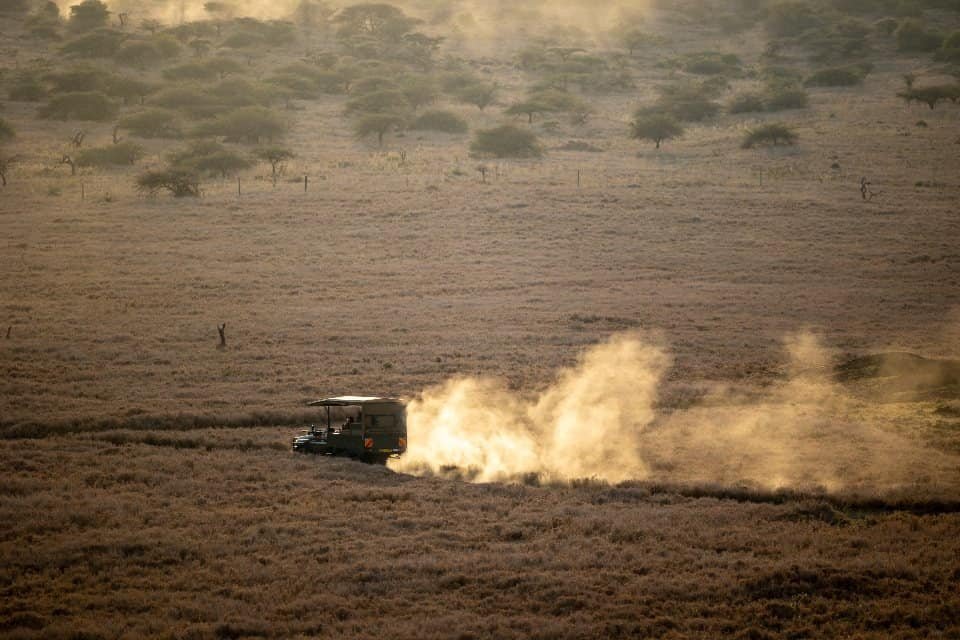
How busy is the Maasai Mara in October?
The Mara is quieter than in the July–September peak. The Mara Triangle had 6,547 overseas visitors in October 2024 and 7,023 a year later, when the Mara Conservancy still called the month relatively busy. In September of those years it counted 9,760 and 9,786 non-resident adults, a count made differently, so compare with care. Ticketing figures quoted by the Conservancy show visitor numbers fell most steeply, by 30.6%, in July–December 2024, the first high season at the higher park fee; it said it was unclear whether the fee was the only cause.
Two Kenyan public holidays fall in the month: Mazingira Day on 10 October and Mashujaa Day on 20 October. In 2026 the last school term ends on 23 October, and the school holiday runs from 26 October to 1 January 2027.
How much does a Maasai Mara safari cost in October?
Park fee. The high season runs from 1 July to 31 December. Non-resident adults pay USD 200 a day, twice the January–June fee; children aged 9 to 17 pay USD 50, and children aged 8 and under enter free. Kenyan citizens pay KSh 3,000 and East African residents KSh 5,000 per adult a day.
Camps. Camp seasons part ways this month. Some camps keep their peak rates to the end of the month: published 2026 rates per person per night sharing are USD 998 at Governors’ Camp and USD 1,095 at Kicheche Bush Camp (1 July–31 October). Others charge a mid-season rate all month: USD 300 at Basecamp Masai Mara (with meals and shared drives) and USD 700 at Saruni Mara, against USD 500 and USD 900 at the same camps in July–September. Camps inside the Main Reserve may also add a nightly Narok County bed-night or community charge of USD 40–80 per adult, on top of the park fee; the amount differs between camps, so ask your camp.
A few change halfway through. In 2026 Sentinel Mara Camp charges USD 960 until 15 October and USD 780 from the 16th, and Mara West’s inclusive package (no game drives) falls from USD 438 to USD 350 on the same day. At the top end, Angama Mara’s 2026 standard-season rate of USD 1,850 per guest (park fees extra) runs from 1 October to 22 December (in 2027 October is a shoulder month at USD 2,450), against USD 2,750 in its July–September peak. Conservancy camps add a nightly conservancy fee: USD 130 per adult at Kicheche Bush Camp, and USD 130 or USD 150 at Mara North camps such as Saruni Mara; confirm with your camp.
A shared three-day group safari by road from Nairobi is published at USD 1,065 per person for 1 October–22 December, park fees included, against USD 1,200 for 16 June–30 September. Porini Mara Camp’s two-night fly-in package from Nairobi, with flights and conservancy fees, is USD 2,560 per person for 1–31 October 2026 and USD 1,890 for 1 November–19 December; the July–September price, USD 2,760, also includes one day’s Reserve entry fee.
For East African residents, Mara Serena Safari Lodge’s 2026 resident package for 1 October–22 December is KSh 35,550 per person for the first night and KSh 31,550 for each extra night, with full board and two game drives, park fees extra; in July–September it is KSh 43,800 and KSh 39,800.
Our guide to what a Maasai Mara safari costs has worked budgets for every style.
Are the camps open in October?
The seasonal camp closures we found are in the long rains of April and May, not this month. The Mara Triangle’s seasonal camp, Enkishui, opens from July to November, so it is open throughout. Some closures are one-offs: Keekorok was listed as closed in September 2026, which lowered the Mara Conservancy’s count of beds in the Reserve, and no reason or reopening date was given. In July 2026 the Conservancy listed the Triangle’s permanent camps as Mara Serena and Mara Wilderness, formerly Little Governors’. Ask your camp whether it is open for your dates.
Is October a good time to visit the Maasai Mara?
- Good for: the last of the migration in some years, fewer vehicles than in July–September, mid-season rates at some camps, and the Mara’s resident wildlife.
- Less good for: a sure sighting of the herds: in 2023 they had gone before the month began, and in 2024 nearly all had left by the 15th.
- Plan for: the high-season park fee of USD 200 a day, and rain that has ranged from 42 mm to over 110 mm in the Mara Triangle in recent years.
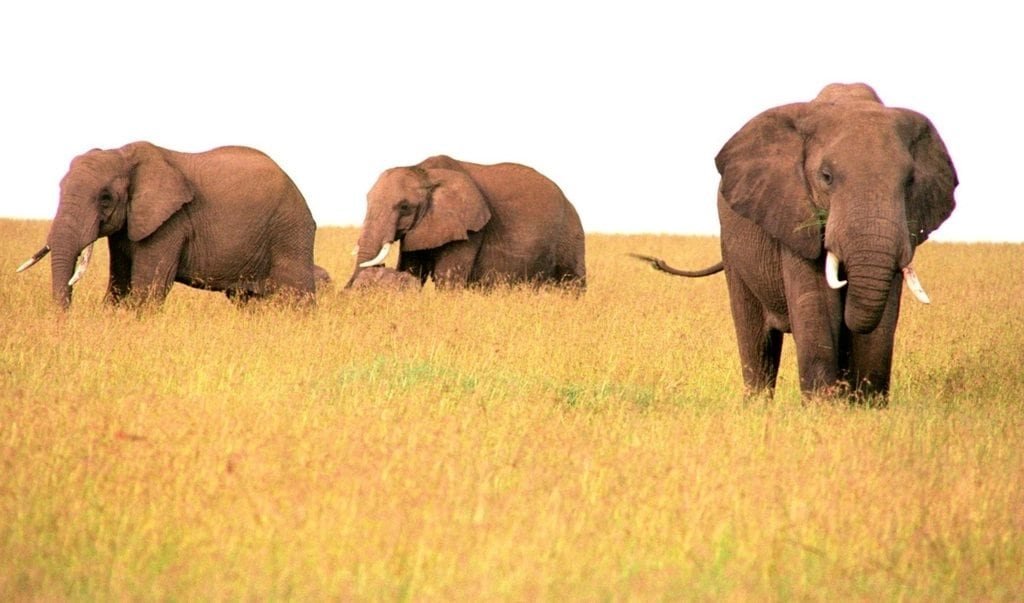
Planning an October safari
- If the migration matters most, ask where the herds are before you book: in recent years most left between late September and early November.
- Check your camp's season dates: some charge peak rates to the end of the month, others change on the 1st or the 16th.
- Budget the high-season park fee: USD 200 per non-resident adult a day.
- Pack a warm layer for cool mornings and a light waterproof in case the rains start early.
- Ask your camp how recent rain has affected the roads and river crossings.
More help choosing your month
- Best time to visit the Maasai Mara – all 12 months compared
- Maasai Mara in November – the next month
- Maasai Mara in September – the month before
- Maasai Mara weather – rain and temperature month by month
- Maasai Mara park fees – rates for every visitor and season
- How much a Maasai Mara safari costs – worked budgets
Thinking of an October safari?
Tell us your dates and what you want to see. MaasaiMara.ke quotes and books safaris through authorised, highly rated tour operator partners, and we will suggest camps that suit the season.
