
Maasai Mara weather: rain and temperature month by month
Maasai Mara weather follows two rainy seasons and one dry season: the long rains peak in April, the short rains fall in November and December, and July to October is dry.
Maasai Mara weather has two rainy seasons, warm days and, in the months with morning readings, cool dawns. The long rains usually run from March to May and peak in April; the short rains usually fall in November and December; and July to October is the dry season. Recorded daytime temperatures at a camp in the north of the Reserve mostly run from 25 °C to 30 °C, reaching 33 °C on some days, and early mornings from 11 °C to 16 °C. The Mara Triangle averages 1,200 mm of rain a year, but the total swings widely: 1,111.87 mm in 2023, 1,903 mm in 2024 and 1,280.11 mm in 2025.
The rainfall figures on this page are measured totals from the Mara Conservancy, which manages the Mara Triangle and keeps a rain gauge at Serena, and from Governors’ Camp at Musiara, in the north of the Reserve. Rain varies sharply across the Mara, so treat any one gauge as an example, not an average for the whole Reserve.
Maasai Mara weather at a glance
Dry season: July to October
Long-term gauge records put the Mara's dry months here.
Long rains: March to May
Usually the wettest spell, peaking in April.
Short rains: November and December
Their timing and amount vary a lot from year to year.
Days mostly 25–30 °C
Recorded at Governors' Camp, Musiara; up to 33 °C on some days.
Mornings 11–16 °C
Recorded early-morning lows: pack a warm layer.
About 1,200 mm a year
The Mara Triangle's average yearly rainfall.
What are the Maasai Mara's seasons?
About 50 years of Mara rain-gauge records show two seasons: a dry season from July to October, and a wet season from November to June made up of the short rains (November–December) and the long rains (January–June). Long-term, Mara gauges average 53 mm of rain a month in the dry season and 96 mm a month in the wet season, with 82 mm a month across the year.
Within the long rains, the heaviest rain usually falls from March to May, Kenya’s main rainy season: it typically starts in mid-March and peaks in April. Across Kenya, October to December is known as the short-rains season, but in the Mara the gauges put the short rains in November and December.
How much rain falls in the Maasai Mara each month?
Recorded monthly totals, in millimetres. The Mara Triangle figures come from the Mara Conservancy, and Governors’ Camp’s from its camp at Musiara. Not every month has a total for every year: where a report described the weather without a figure, the cell says so.
| Month | Mara Triangle | Governors' Camp, Musiara | Season |
|---|---|---|---|
| January | 272 (2024; the January report said over 275), 190 (2025), 80 (2026) | 405.5 (2024), 253 (2025), 33.7 (2026, the camp’s driest January since 2017) | Long rains (January–June) |
| February | 118.7 (2024; the February report said 117), mostly dry and hot in 2025, over 200 (2026) | ‘Little rainfall’ (2024), 77 (2025, 60 of it on 1 February), 109 (2026) | Long rains |
| March | 41.2 (2024), slightly over 100 (2025), huge storms in 2026 | 135 (2024), 135.5 (2025), 138 in the first 12 days of 2026 | Long rains; heavy rain usually starts mid-March |
| April | 370 (2024; the April report said 300), 205 (2025) | 227 (2024), 183.5 (2025), around 140 (2026) | Long rains; usually the wettest month |
| May | 156.81 (2024; the May report said about 160); rain only in the first half of 2026 | 112 (2024), 163.5 or 168.5 (2025), 21 (2026, unusually dry) | Long rains ending |
| June | 20.2 (2024); sporadic all month (2025); the driest month in 25 years (2026) | 88 (2024), 47 (2025), 9.4 (2026) | End of the long rains |
| July | 64.9 (2024); one heavy shower at Serena (2023) | 40 (2024) | Dry season |
| August | 85.7 (2024); around 5 at Serena (2023) | 84 (2024), 81 (2025) | Dry season |
| September | 152 (2024), 130 (2025) | 95 (2022), 162.5 (2023), 142 (2024) | Dry season |
| October | 42 (2023), 97.2 (2024), over 110 (2025) | 82 (2023), 99.5 (2024), 54 (2025) | Dry season; short rains can start mid-October |
| November | 271.1 (2024; the November report said 270); the driest November in over 24 years (2025) | 230 (2024), 22 (2025) | Short rains |
| December | 253 (2024); 126.8 in several days of heavy rain (2025) | 200.8 (2023), 205.5 (2024), 67.5 (2025) | Short rains |
The 2024 Mara Triangle figures come from the Conservancy’s year-end chart, which is titled “Rainfall 2025” but holds the 2024 data; for January, February, April, May and November it differs from the monthly reports, shown in brackets. Governors’ Camp gave two figures for May 2025 in two reports. The two gauges are in different parts of the Mara, so their totals for the same month often differ.
How much rain falls in a year?
The Mara Conservancy gives the Mara Triangle’s average yearly rainfall as 1,200 mm. Its gauge measured 1,111.87 mm in 2023, 1,903 mm in 2024 and 1,280.11 mm in 2025, so a wet year can bring well over half as much rain again as a dry one.
The Conservancy describes the years up to 2025 as exceptionally wet, with above-average rainfall. Many trees died from waterlogging, and red oat grass gave way to other grasses, including some the grazers do not eat.
Does it rain everywhere in the Mara at once?
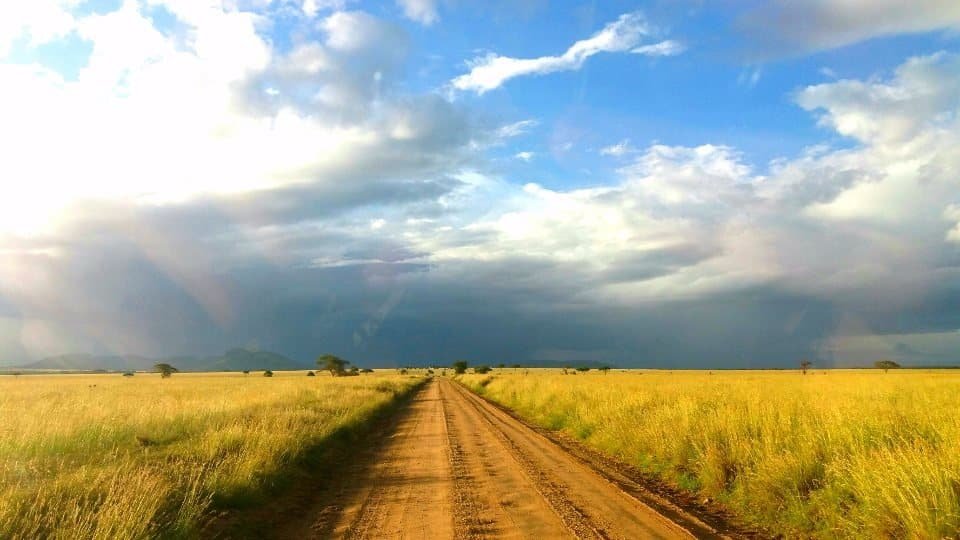
No. Rain varies sharply over short distances. In 2023 the Mara Conservancy reported rain concentrated near Oloololo and along the escarpment, with very little from Serena to Mara Bridge, and in January 2024 the escarpment had at least double Serena’s rainfall.
Across the whole Reserve, rain increases towards the north-west, though published figures for the yearly totals differ: one study gives about 650 mm a year in the south-east rising to about 1,300 mm in the north-west, and another about 800 mm in the east to about 1,200 mm in the west. Both agree that the west and north-west are the wettest parts of the Mara.
How warm is the Maasai Mara?
No official long-term temperature averages for the Reserve could be found, so these are dated readings from Governors’ Camp at Musiara, in the north of the Reserve. Recorded early mornings were 11–16 °C in the months that have them, so pack a warm layer for early game drives in any month.
| Month | Recorded temperatures |
|---|---|
| January | Mornings as low as 14 °C, rising to about 30 °C by midday (2024); cold, frosty, misty mornings (2025) |
| February | Average daily temperature 28 °C (2024); up to 33 °C on some days, hotter than usual (2025) |
| March | Average 29 °C a day (2024); average daytime temperature 26 °C (2025) |
| April | Average 26 °C a day (2024); highs around 26 °C, slightly cooler than March (2025) |
| July | Mornings averaging 14 °C in the first half of the month (2024); daytime highs of 25–28 °C, mornings and evenings of 11–15 °C (2025) |
| August | Mornings about 13 °C, days about 25 °C (2024); days 25–28 °C, mornings and evenings 11–15 °C (2025) |
| September | Lows of 13 °C and highs of 26 °C (2024); lows of 12 °C and highs of 28 °C (2025) |
| October | Midday around 30 °C, early mornings about 16 °C (2024) |
| November | Mornings averaging 16 °C, highs up to 30 °C, around 24–26 °C in the wetter second half (2024) |
May, June and December are left out: we found no dated readings for May and June, and too few dated readings for a range in December. One camp’s readings are not an average for the whole Reserve.
How high is the Maasai Mara?
Published figures for the Reserve’s altitude differ: about 1,450 m to about 2,100 m above sea level in one study, and 1,500–2,170 m for the wider Maasai Mara area in another.
How does the weather affect a Maasai Mara safari?
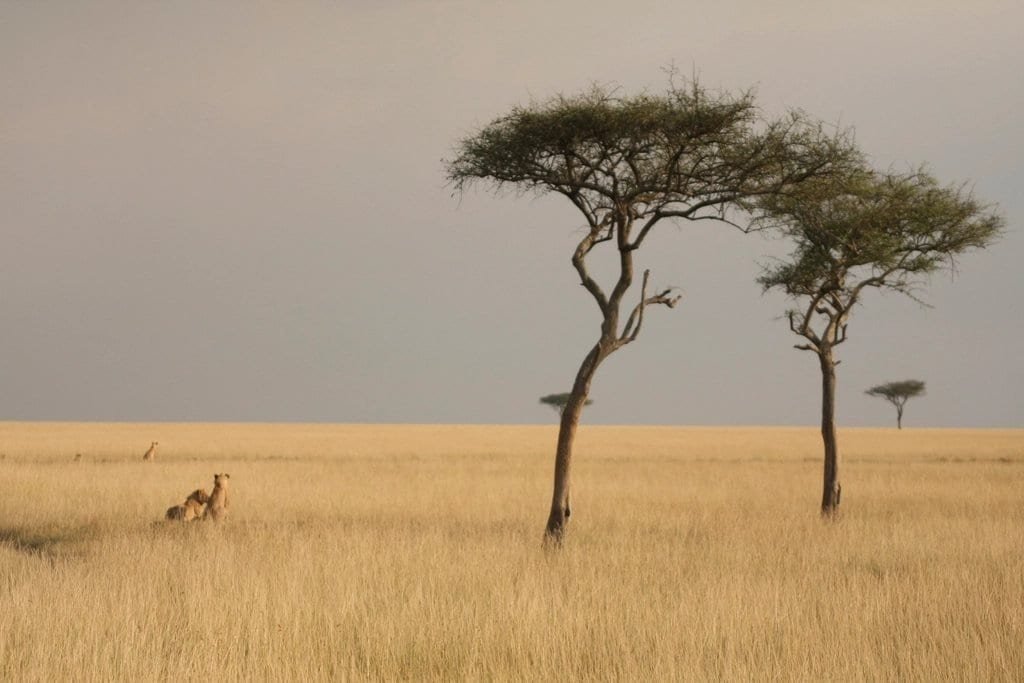
Roads and rivers. Heavy rain can cut roads and flood rivers. In April 2024 the Mara Conservancy reported rain all month, sections of the escarpment road impassable, and the Talek River flooding over a new bridge into several camps on 30 April. In March 2026 huge storms left the Mara Triangle cut off by road for days, with its bridges damaged or flooded.
The migration. Rain moves the herds. In August of 2024, 2025 and 2026 storms sent the wildebeest back to Tanzania for a while, and in 2024 and 2025 many returned in September or early October.
Crowds. The wettest months are also the quietest: the Mara Conservancy calls April and May the quietest months of the year.
When is the driest time to visit?
July to October is the dry season, and the long-term gauge average for those months is 53 mm a month. Recorded July and August totals were all under 90 mm: 64.9 mm in the Mara Triangle and 40 mm at Governors’ Camp in July 2024, and 85.7 mm in the Triangle in August 2024. September and October have been wetter in recent years: 152 mm and 130 mm fell in the Mara Triangle in September 2024 and 2025, and over 110 mm in October 2025.
June can be very dry too: June 2026 was the driest month in the Mara Triangle in 25 years. See our best time to visit guide for how the dry season lines up with the migration and the crowds.
What to pack for Maasai Mara weather
- A warm fleece or jacket for early-morning game drives, in every month.
- A light waterproof jacket in the long rains (March–May) and the short rains (November–December).
- Sun protection for the warm middle of the day: a hat, sunglasses and sunscreen.
- Long sleeves and long trousers for the evenings, which also help against mosquito bites.
- Check the current forecast before you travel, especially in the rainy months.
Where can I check the forecast?
This page describes how the Mara’s weather usually behaves. For the weeks before your trip, check the seasonal and daily forecasts from the Kenya Meteorological Department, and ask your camp how recent rain has affected the roads and river crossings.
More help planning your Maasai Mara safari
- Best time to visit the Maasai Mara – migration, rain and crowds month by month
- Maasai Mara in April – usually the wettest month
- Maasai Mara in September – a dry-season month that has turned wet in recent years
- Maasai Mara in November – the start of the wet season
- Nairobi to the Maasai Mara by road – route, drive times and road conditions
- Flights to the Maasai Mara – airlines, times and baggage
- Maasai Mara frequently asked questions – health, safety, rules and more
- Plan your Maasai Mara safari – the step-by-step guide
Planning around the weather?
Tell us when you can travel and what you want to see. MaasaiMara.ke quotes and books safaris through authorised, highly rated tour operator partners, and we will suggest the best dates for the weather you want.
