
Maasai Mara in November: weather, wildlife, crowds and prices
Maasai Mara in November brings the short rains, the quietest weeks of the high season and lower camp rates, while the migratory herds head back south to Tanzania.
November in the Maasai Mara usually brings the short rains, but how much rain falls changes a lot from year to year: the Mara Triangle measured 271.1 mm in 2024, while 2025 was the driest November in the Mara Conservancy’s 24-year record. The migratory herds go back south to Tanzania as the rains return, and in 2025 most of the last wildebeest left early in the month. The park fee is still in its high season, USD 200 per non-resident adult a day, but many camps lower their rates from the start of the month, and the Conservancy calls it always a quiet month.
Park tickets for both the Main Reserve and the Mara Triangle are sold on the KAPS ticket portal.
The observations below come from the Mara Conservancy, which manages the Mara Triangle, and from Governors’ Camp at Musiara, in the north of the Reserve, for each year from 2023 to 2025, the latest with published reports.
Maasai Mara in November at a glance
Rain: 22–230 mm
Governors' Camp totals at Musiara for 2024 and 2025: one wet year, one very dry.
Mornings 16 °C, highs up to 30 °C
Recorded at Governors' Camp in 2024; around 24–26 °C in the wetter second half.
Herds heading south
In 2025 most of the last wildebeest left early in the month; zebra and elephants stayed.
High-season park fee
USD 200 per non-resident adult a day, until 31 December.
Always a quiet month
So says the Mara Conservancy; in 2024 visitors ran about 35% below the year before.
Lower camp rates
Many camps lower their rates on 1 November.
What is the weather like in the Maasai Mara in November?
Long-term Mara rain-gauge records put this month at the start of the wet season, in the short rains that run into December, with wet-season months averaging 96 mm of rain. The last two years swung from very wet to very dry. The Mara Triangle measured 271.1 mm in 2024, most of it in heavy storms in the second half of the month, while 2025 was the driest since the Mara Conservancy began work there over 24 years earlier. Governors’ Camp at Musiara recorded 230 mm in 2024 and 22 mm in 2025.
The wet month of 2024 came in a very wet year: the Triangle measured 1,903 mm of rain in 2024, against its average of 1,200 mm a year. Days are warm and mornings cool. In 2024 Governors’ Camp recorded mornings averaging 16 °C and highs up to 30 °C, falling to around 24–26 °C in the wetter second half; in 2025 it had clear, bright days. Pack a warm layer for early drives and a waterproof for the storms. Our Maasai Mara weather guide compares every month.
How much rain fell in recent Novembers?
Measured totals for the month, in millimetres, at two gauges in different parts of the Mara.
| Year | Mara Triangle (Serena) | Governors' Camp, Musiara | What it meant |
|---|---|---|---|
| 2024 | 271.1 (the monthly report said 270), mostly in heavy storms in the second half | 230 | Damaged roads, a Mara Bridge that was impassable for days at a time, and a Mara River that rose dramatically |
| 2025 | No total given: the driest in the Mara Conservancy’s 24-year record | 22, with 9.5 mm on the 14th | Clear, bright days; scattered showers kept most of the Triangle green |
Where is the migration in November?
By now the migratory herds are usually heading back south into Tanzania. GPS tracking of the herds shows the Mara River is their main water source from August to October; the rains generally return by this month, and the herds then go back south to the Serengeti, where calving begins on the southern short-grass plains in late January. See our month-by-month guide for when they usually return to the Mara.
In 2025 most of the remaining wildebeest left early in the month, leaving a thousand or so near the border, and the Mara Conservancy notes that the herds no longer stay until November as they used to. Some camp guides describe wildebeest staying into early November; dated reports for 2023–2025 show most herds gone between late September and early November, often after August storms had pushed them out.
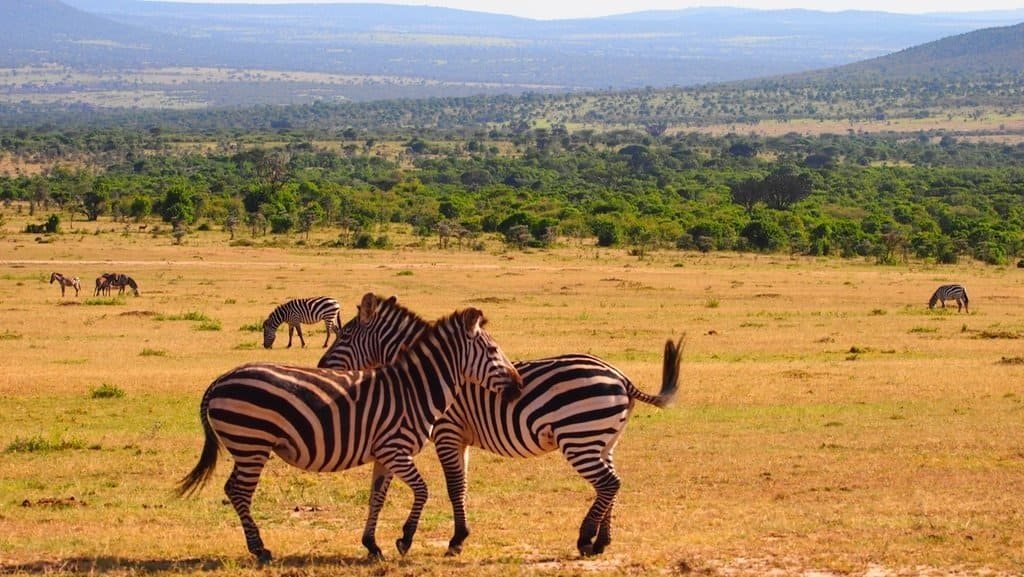
Plenty stays behind. More than 200,000 zebras migrate through the Serengeti-Mara, and in 2025 they remained in good numbers in the Mara Triangle, with hundreds of elephants; black rhino, of which the Reserve had around 50 in 2023, were seen crossing the low river between the Triangle and the Reserve. Kenya also has its own, much smaller wildebeest herd, the Mara-Loita herd, about 26,700 animals in 2024, and many of them now stay in the conservancies north and east of the Reserve. Resident lion prides hold the same territories for generations, and the big cats breed all year round.

What did observers see in the Mara in November?
November 2023. The Mara Conservancy reported the rains starting in earnest on 2 November, pausing, then returning towards the end of the month, with an exceptionally heavy storm near Oloololo on the 30th. Visitor numbers dropped considerably, and the Conservancy noted that this is always a quiet month.
November 2024. The Conservancy recorded heavy storms, mostly in the second half of the month. They damaged roads and made Mara Bridge impassable for days at a time, and one storm washed away the approach to the drift near Kichwa airstrip. Visitor numbers ran about 35% below 2023. At Musiara, Governors’ Camp recorded 230 mm and saw the Mara River rise dramatically, while the impala, topi and gazelle young born in October were thriving.
November 2025. The Conservancy recorded its driest November since it began operating over 24 years earlier, though scattered showers kept most of the Triangle green. Most of the remaining wildebeest left early in the month, while zebra stayed in good numbers alongside hundreds of elephants. Visitor numbers dropped sharply, and those who came had excellent game viewing and good weather. Governors’ Camp measured 22 mm and reported clear, bright days with hardly any other vehicles, giving near-private sightings; with the river low, black rhino were seen crossing between the Triangle and the Reserve.
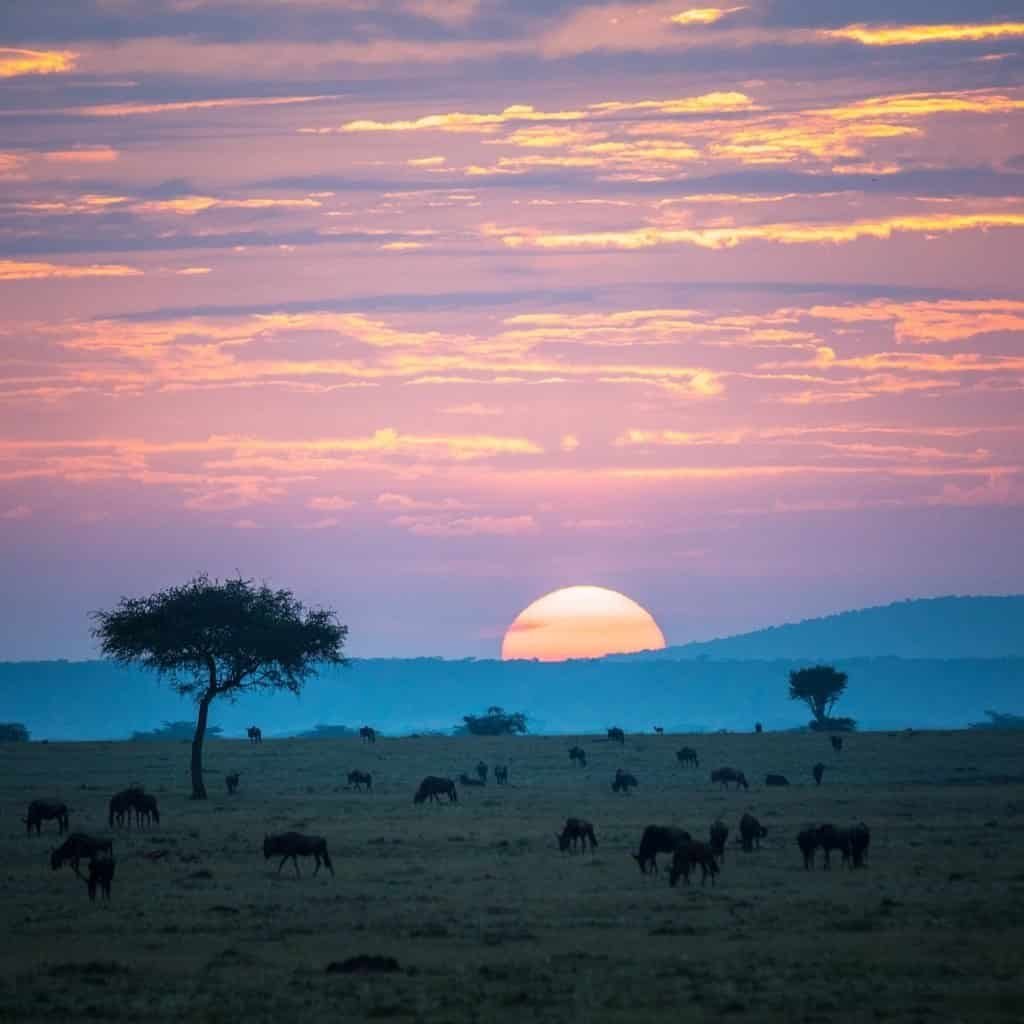
How busy is the Maasai Mara in November?
This is the quietest month of the second half of the year. The Mara Conservancy calls it always a quiet month: visitor numbers dropped considerably in 2023, ran about 35% below the year before in 2024 and dropped sharply again in 2025. Ticketing figures quoted by the Conservancy show visitor numbers fell most steeply, by 30.6%, in July–December 2024, the first high season at the higher park fee; it said it was unclear whether the fee was the only cause.
The result is space: in 2025 Governors’ Camp reported hardly any other vehicles and near-private sightings. For Kenyan families, the 2026 school holiday runs from 26 October to 1 January 2027, while the KCSE exams run from 2 to 20 November 2026.
How much does a Maasai Mara safari cost in November?
Park fee. The high season runs from 1 July to 31 December. Non-resident adults pay USD 200 a day, twice the January–June fee; children aged 9 to 17 pay USD 50, and children aged 8 and under enter free. Kenyan citizens pay KSh 3,000 and East African residents KSh 5,000 per adult a day.
Camps. At many camps this and the first weeks of December are the cheapest part of the high season, with lower rates from the 1st. Published 2026 rates per person per night sharing include USD 300 at Basecamp Masai Mara (with meals and shared drives) and USD 500 at Saruni Mara for the whole month, USD 623 at Governors’ Camp (1 November–20 December) and USD 765 at Kicheche Bush Camp (1 November–19 December), against USD 500, USD 900, USD 998 and USD 1,095 at the same camps in their peak seasons.
Rekero Camp drops from USD 1,450 to USD 910, and Porini Mara Camp from USD 955 to USD 620 with conservancy fees included, both for 1 November–19 December. Porini Mara’s two-night fly-in package from Nairobi is USD 1,890 per person for the same dates in 2026, against USD 2,560 in October. At the top end, Ol Seki Hemingways Mara charges USD 810 for 1 November–17 December, against USD 1,195 for 1 September–31 October.
Mid-range camps drop too. In 2026 Kandili Camp’s full-board rate falls from USD 390 to USD 240 for 1 November–22 December, and Julia’s River Camp takes 10% off its high-season rates, which start at USD 146 full board, for 1 November–19 December. A balloon flight with Governors’ Balloon Safaris costs USD 430 per adult for 1 November–15 December 2026, against USD 490 in July–October, plus a USD 80 landing fee and a USD 20 community levy.
Conservancy and community fees. Conservancy camps add a conservancy fee per adult: USD 130 a night at Kicheche Bush Camp and Ol Seki Hemingways Mara (plus a USD 5 Naboisho Reserve Fund fee at Ol Seki), USD 50 a day at Kandili Camp, and USD 130 or USD 150 a night at Mara North camps such as Saruni Mara; confirm with your camp. Camps inside the Main Reserve may also add a nightly Narok County bed-night or community charge of USD 40–80 per adult, on top of the park fee; the amount differs between camps, so ask your camp.
A shared three-day group safari by road from Nairobi is published at USD 1,065 per person for 1 October–22 December, park fees included. In 2026 an exclusive-use vehicle at Governors’ Camp costs USD 385 a day for 1 November–15 December, against USD 512 in July–October. For East African residents, Mara Serena Safari Lodge’s 2026 resident package for 1 October–22 December is KSh 35,550 per person for the first night and KSh 31,550 for each extra night, with full board and two game drives, park fees extra.
Our guide to what a Maasai Mara safari costs has worked budgets for every style.
Are the camps open in November?
The seasonal camp closures we found are in the long rains of April and May, but one camp closes at the end of this month: Enkishui, the Mara Triangle’s only seasonal camp, opens from July to November. Some closures are one-offs: Keekorok was listed as closed in September 2026, which lowered the Mara Conservancy’s count of beds in the Reserve, and no reason or reopening date was given. In July 2026 the Conservancy listed the Triangle’s permanent camps as Mara Serena and Mara Wilderness, formerly Little Governors’. Ask your camp whether it is open for your dates.
Is November a good time to visit the Maasai Mara?
- Good for: quiet game drives with few other vehicles, lower camp rates than in July–October, and the Mara’s resident wildlife, from lion prides to elephants and zebra.
- Less good for: the wildebeest migration, which usually heads back to Tanzania as the rains return; and in a wet year, damaged roads and a Mara Bridge that can be impassable for days.
- Plan for: the high-season park fee of USD 200 a day, and rain that has ranged from 22 mm to 230 mm at Musiara in recent years.
Planning a November safari
- Check when your camp's lower rates end: at the camps above, between 30 November and 22 December.
- Budget the high-season park fee: USD 200 per non-resident adult a day.
- Pack a warm layer for cool mornings and a waterproof for the short rains.
- Ask your camp how recent rain has affected the roads, bridges and river crossings.
- If the wildebeest herds are what you want to see, plan for July to September instead, when they are usually in the Mara, though August rain has sent them back to Tanzania for a while in recent years.
More help choosing your month
- Best time to visit the Maasai Mara – all 12 months compared
- Maasai Mara in December – the next month
- Maasai Mara in October – the month before
- Maasai Mara weather – rain and temperature month by month
- Maasai Mara park fees – rates for every visitor and season
- How much a Maasai Mara safari costs – worked budgets
Thinking of a November safari?
Tell us your dates and what you want to see. MaasaiMara.ke quotes and books safaris through authorised, highly rated tour operator partners, and we will suggest camps that suit the season.
