
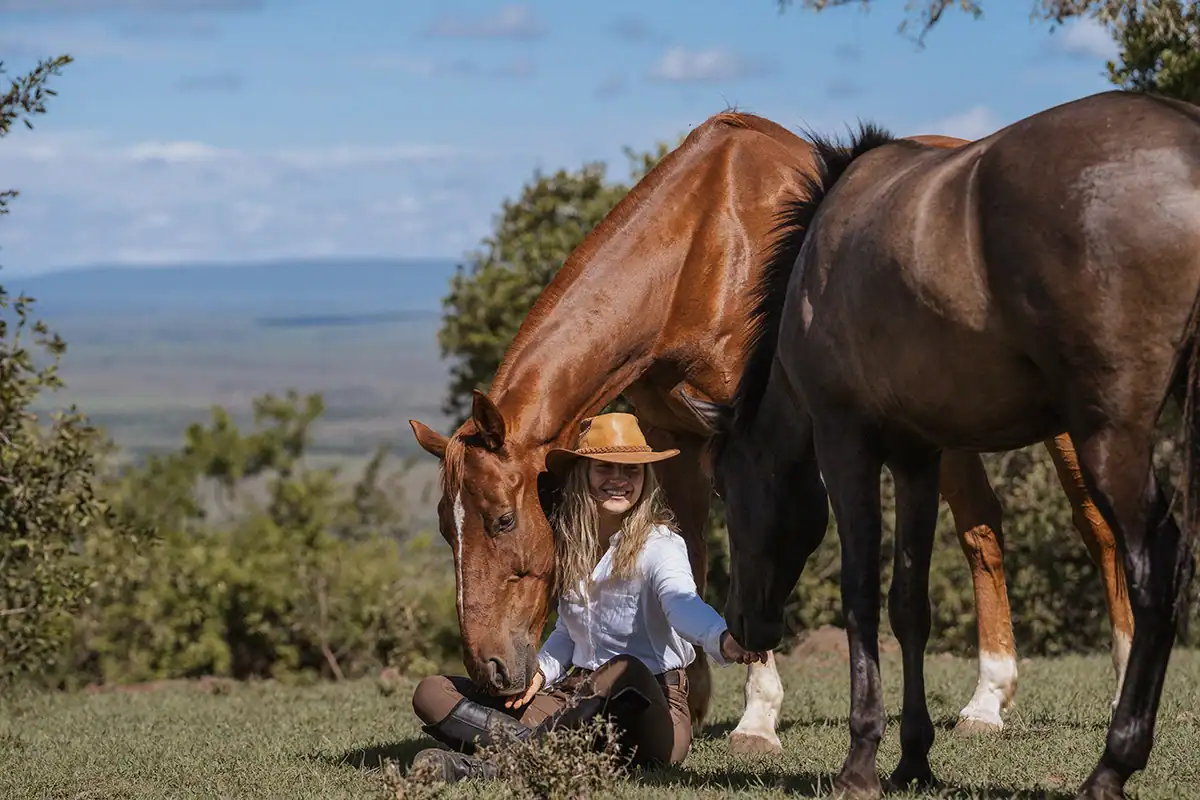
Horseback safaris in the Maasai Mara
Horseback safaris in the Maasai Mara take place through specialist programmes on permitted land in the wider Mara. Choose an outing that matches your riding ability: an introductory ride and a mobile riding safari are very different experiences. The National Reserve management plan excludes horseback safaris, so riding needs its own authorised location and arrangements.
A different view of the Mara
A riding outing changes how you experience the landscape. You follow a guide from the saddle, with your attention divided between the horse, the ground ahead and the wildlife around you. The experience can appeal to visitors who enjoy horses as much as those looking for another way to explore the Mara.
Start with the kind of ride you want rather than a photograph of riders beside animals. A short, steady outing near a riding base has different demands from a journey that moves between overnight camps. The right programme should explain its pace, terrain and expected riding standard before you commit to it.
Treat horseback safaris as a distinct part of your travel plans. Your usual game-drive vehicle and guide do not automatically provide the horse, riding instruction or access needed for an equestrian outing. The organiser needs to connect your preferred ride with the accommodation and transport already in your itinerary.
Permitted riding areas outside the Reserve
The National Reserve and the wider Mara are different settings for activity planning. The Reserve management plan excludes horseback safaris, while surrounding community areas can support specialist experiences under their own arrangements. A Reserve entry ticket therefore does not establish permission to ride inside the protected area.
A suitable programme identifies the land where the ride will take place and the operator responsible for it. Conservancy access is governed by the actual conservancy and activity arrangements; it is not an unrestricted right to enter every nearby area. Choose accommodation with the proposed riding location in mind.
Published itineraries and older descriptions are useful starting points, but they do not establish current permission for every section of a route. The written arrangement should reflect the authorised route actually offered for your dates. Our entry and visitor-rule guide helps distinguish Reserve access from separate activities in the wider ecosystem.

Introductory rides and experienced-rider safaris
Some riding bases offer a lesson followed by an introductory outing. This format gives a novice a chance to become familiar with the horse and the guide’s instructions before travelling farther. It should be described as a beginner arrangement by the actual provider, rather than assumed to be available wherever horses are kept.
Other horseback safaris are designed for experienced riders. A mobile programme can involve substantial time in the saddle, changing terrain and a pace that requires confident control. Previous riding experience is relevant, but its recency and the kind of riding you have done matter as well.
Describe your ability honestly. A visitor who has taken occasional lessons should not present themselves as an experienced trail rider simply to join a more ambitious outing. Matching the ride to the least confident participant helps the travelling party enjoy the experience without relying on skills that have not been established.
Choosing a programme that fits your ability
Give the riding organiser a practical account of your experience. Explain whether you normally ride in an arena or outdoors, how comfortable you feel away from a familiar horse, and whether you have ridden recently. This information helps the provider assess the proposed pace and the type of horse that may suit you.
A riding assessment or introductory session belongs at the beginning of the experience where the provider requires one. Use it to understand the aids, stopping instructions and group formation. It is also the point to mention discomfort or uncertainty, before the party leaves the base for the planned route.
Choose the easier option when members of the party have different confidence levels. Separate arrangements may be more suitable than placing everyone on the same demanding ride. A rewarding outing comes from being comfortable enough to notice the setting, rather than spending the whole experience trying to keep up.
Short outings, camp-based rides and mobile journeys
A short outing can fit into a safari otherwise centred on vehicle-based wildlife viewing. It usually works best when the riding base is practical to reach from your accommodation and the transfer leaves enough time for the introduction, ride and return. Avoid judging feasibility from the riding duration alone.
A camp-based programme can make riding a larger part of the stay, while a mobile journey is organised around moving through the landscape with its own overnight arrangements. Those formats affect where you sleep, how luggage travels and how non-riding time is spent. They should be chosen as travel programmes, not treated as interchangeable add-ons.
Keep the format explicit in the enquiry. State whether you want a gentle introduction, an experienced-rider outing or a trip built around horses. The organiser can then assess a suitable specialist arrangement without changing the rest of your safari around an experience that does not fit your party.
Horses, equipment and the first briefing
The provider should allocate the horse and explain the equipment used for the proposed ride. Let the riding team handle saddling and adjustments, and describe any discomfort before departure. Equipment that feels unfamiliar is easier to discuss at the base than once the group has moved away.
Use the riding helmet and other protective equipment specified by the provider. A safari hat is useful for time out of the saddle, but it should not be treated as riding protection. Establish the helmet arrangements before travelling, especially where fit, personal equipment or a child’s requirements need advance attention.
Listen to the briefing even if you ride regularly at home. The horse, terrain and wildlife setting may be unfamiliar, and the guide’s instructions define how the group moves together. Make sure you understand how to stop, maintain spacing and respond when the guide changes the pace or route.
Clothing and small items for the ride
Wear clothing suited to riding rather than dress only for a vehicle safari. Comfortable long trousers, footwear appropriate to the provider’s stirrups and a secure outer layer are practical starting points. Get the organiser’s equipment guidance before packing specialist boots or assuming ordinary walking shoes will be suitable.
Keep loose items under control. A swinging shoulder bag, unsecured scarf or camera strap can distract you and complicate handling the horse. Carry only what the provider allows during the ride, using the agreed storage arrangement for water and small personal belongings.
Prepare for the difference between the cool start and warmer conditions later in an outing. Layers make it easier to stay comfortable without carrying a bulky collection of clothes in the saddle. Leave valuables and larger luggage at the agreed base or with the support arrangements, rather than trying to bring everything onto the horse.

Wildlife encounters from the saddle
Wildlife determines the encounters on horseback safaris. Giraffes, plains game, birds and other animals may be part of the setting, but a species list is not a promise of a close approach. The guide chooses how the party moves and when to give animals more space.
Stay with the riding group and follow the guide’s direction. Do not leave the formation to pursue an animal or create a photograph, and do not use the horse to move wildlife out of your way. Observing behaviour at an appropriate distance is more valuable than trying to recreate a dramatic promotional image.
Keep expectations flexible. An interesting ride can include quiet stretches, changing light and the details of the surrounding habitat. For concentrated wildlife observation, combine the experience with private game drives, where the vehicle offers a different setting for patient viewing and photography.
Photography without distracting the ride
Riding and photography compete for your attention. Give control of the horse priority, and use the guide’s agreed stops or ground-based opportunities for photographs. A camera should not become a reason to release control unexpectedly, drop back from the group or approach wildlife independently.
Choose simple equipment for the outing. Heavy lenses and large bags are usually better suited to a vehicle-based photography session, where they can be managed without interfering with riding. Establish how a phone or small camera can be carried before leaving the base.
Plan your main wildlife photography separately if that is a priority. Our photography guide explains how to build time for observation and light into a safari. A riding outing can add another perspective to the trip without needing to deliver all of its important photographs.
Children, mixed abilities and non-riding companions
Family suitability depends on the actual riding programme. Child eligibility, the available horses, protective equipment and the expected riding standard are provider-specific. Supply children’s ages and experience early so the organiser can assess an appropriate arrangement rather than make a decision at the riding base.
Non-riding companions need a worthwhile plan of their own. Their options may include staying at camp or taking an agreed vehicle outing, depending on the programme. Do not assume that every mobile riding safari has a parallel game-drive schedule or that everyone can rejoin the group at any point.
For mixed-ability parties, a short introductory outing may fit better than a journey built around experienced riders. Another option is to arrange riding for interested members while the rest of the party follows a separate activity. Keep meeting points, transfers and the rest of the day’s itinerary clear.
Choosing between a ride and a walking safari
A horse carries you through the setting, while a guided walk puts you on foot with a different focus on the ground around you. Neither format replaces a game drive, and both need their own authorised programme. Choose between them according to your interest in horses, comfort with the activity and the experience offered by the guide.
A walk may suit visitors who want to pause over tracks, plants and smaller details without also handling a horse. A ride suits those who want time in the saddle as part of the outing. Familiarity with hiking does not establish equestrian ability, just as confidence around horses does not remove the demands of walking outdoors.
Consider how much active time you want in the trip as a whole. Alternating a specialist outing with a less demanding camp period can give the party room to enjoy both. Leave the destination’s permissions in place when comparing formats: the Reserve is not an unrestricted setting for either activity.
The decision can also vary within your party. Interested riders can take an appropriate equestrian outing while companions choose another agreed programme. Build the meeting and transfer arrangements into the itinerary so each person has a complete experience, rather than an unexplained period waiting for the others to return.

Transfers and accommodation location
The distance between your camp and the riding base affects how comfortably the activity fits into the day. A transfer may take time away from wildlife viewing or rest, and its route can cross separately managed areas. Choose the riding arrangement before committing to accommodation solely for its appearance or advertised proximity to the Mara.
The itinerary should state where you will be collected and where you return after the outing. Keep arrival and departure travel in view; a ride that fits on a settled camp day may be difficult to combine with an onward flight or a road transfer. Leave space for the briefing and preparation as well as the ride itself.
Our accommodation overview helps compare settings. Reserve-based stays and conservancy stays support different activity choices, so match the camp to the experiences that matter most to your party. An attractive camp is only useful for riding if the practical arrangements also work.
Conditions, pace and changes to the plan
The riding guide assesses the route and conditions for the actual outing. Ground conditions, weather and wildlife can affect where the group travels and how quickly it moves. A planned route should therefore allow the provider to make appropriate changes instead of promising a fixed sequence regardless of the setting.
Choose an itinerary with some flexibility around the ride. Avoid arranging a demanding outing immediately before another activity with a tight pickup, especially when you are unfamiliar with riding outdoors. Time for rest, changing clothes and a calm transfer makes the experience easier to enjoy.
Know the provider’s cancellation and rescheduling terms before accepting the booking. Those terms should explain what happens if the organiser changes or cancels an outing. The best-time guide gives broader seasonal context, while the riding team makes the decision about the conditions on the day.
Horse care and responsible participation
Choose a provider that can explain how it matches horses to riders and manages their work. Ask for the actual riding arrangements rather than select a programme only because it promises proximity to wildlife. The condition of the horses and the professionalism of the riding team are part of the experience you are booking.
Follow the team’s directions around the horses at the base. Do not feed them, enter their space or handle equipment without instruction. A quiet introduction allows the provider to manage the horses and gives visitors time to learn how the planned outing will begin.
During the ride, respect the guide’s pace and route. The outing should work for the horse as well as the rider, with no pressure to stage a gallop or force a particular encounter for a photograph. A considerate participant supports the programme by following instructions and communicating clearly about their ability.
Inclusions and a clear written arrangement
The riding quotation should identify the programme, actual riding area and transport arrangement. It should also make clear how horses, guiding, equipment and any associated meal or overnight stay fit into the booking. A broad activity name is not enough to compare otherwise different experiences.
Separate riding from the private vehicle safari included in your main itinerary. Our safari programmes are private to the travelling party, while specialist equestrian arrangements need their own agreed format. Do not assume a public scheduled departure becomes private because the rest of your trip uses a dedicated vehicle.
Use the safari-cost guide for the wider budget context, with the chosen riding programme quoted separately as needed. Reserve tickets can be purchased through the KAPS ticket portal where your itinerary requires a separate purchase; they do not authorise a riding outing.
7 practical steps for horseback safaris
- Choose an introductory ride or an experienced-rider programme.
- Describe your recent riding experience honestly.
- Match accommodation and transfers to the actual riding base.
- Get provider-specific eligibility and equipment requirements.
- Keep the permitted riding area and package inclusions clear.
- Follow the riding guide and leave wildlife undisturbed.
- Allow time for preparation, rest and the return transfer.
Plan the rest of your Mara experience
Plan a safari with a suitable riding experience
Tell us your travel dates, accommodation preferences and the riding experience of everyone who wants to take part. MaasaiMara.ke quotes and books private safaris through authorised tour operator partners. A specialist riding arrangement can be assessed alongside your vehicle safari, with its own suitability, location and inclusions stated in the itinerary.
