
Maasai Mara in March: weather, wildlife, crowds and prices
Maasai Mara in March means the start of the long rains, the lower park fee and falling visitor numbers, with the migratory herds still on the calving grounds in Tanzania.
March in the Maasai Mara is when the long rains usually begin, and recent years have ranged from a fairly dry month to severe floods: the Mara Triangle measured 41.2 mm of rain in March 2024 and slightly over 100 mm in 2025, while huge storms in 2026 cut the Triangle off by road for days on end. The migratory wildebeest herds are in Tanzania, where the calving runs into March, so the Mara’s resident wildlife is the draw. The park fee is in its low season, USD 100 per non-resident adult a day, and visitor numbers normally fall from March after a busy January and February.
Park tickets for both the Main Reserve and the Mara Triangle are sold on the KAPS ticket portal.
The observations below come from the Mara Conservancy, which manages the Mara Triangle, and from Governors’ Camp at Musiara, in the north of the Reserve, for each year from 2024 to 2026.
Maasai Mara in March at a glance
The long rains begin
Recorded totals ran from 41.2 mm (Mara Triangle, 2024) to 138 mm in 12 days (Musiara, 2026).
Average 29 °C a day
Recorded at Governors' Camp, Musiara, in 2024; an average daytime 26 °C in 2025.
Herds in Tanzania
On the southern Serengeti plains, where the calving runs into the month.
Low-season park fee
USD 100 per non-resident adult a day, from 1 January to 30 June.
Visitor numbers fall
Usually quieter than January and February; Good Friday and Easter Monday fall in March or April.
Fresh green grazing
In 2025 burnt areas turned green and drew zebra, buffalo and other plains game.
What is the weather like in the Maasai Mara in March?
The long rains usually run from March to May, with the wettest spell in April, and long-term Mara rain-gauge records put wet-season months at an average of 96 mm of rain. How much falls this month changes a lot. The Mara Triangle measured 41.2 mm in 2024, with two dry weeks from the 10th before very violent storms from the 23rd, and slightly over 100 mm in 2025, with no big storms. The Conservancy gave no total for 2026, when huge storms on the 5th and 6th, and more through the month, sent the Mara River higher than in May 2024.
Governors’ Camp at Musiara recorded 135 mm in 2024, 135.5 mm in 2025 and 138 mm in just the first 12 days of the month in 2026, 117 mm of it on 3–5 March; the rest of that month was largely dry. It recorded an average of 29 °C a day in 2024 and an average daytime temperature of 26 °C in 2025.
Heavy rain can also flood the main road from Nairobi near Suswa, as it did on 7 March 2026, when flooding and silt closed the Mai Mahiu–Narok road for a time. Pack a light waterproof, and allow spare time on the road after storms. Our Maasai Mara weather guide compares every month.
How much rain fell in recent Marches?
Measured totals for the month, in millimetres, at two gauges in different parts of the Mara.
| Year | Mara Triangle (Serena) | Governors' Camp, Musiara | What it meant |
|---|---|---|---|
| 2024 | 41.2 | 135 | Two dry weeks from the 10th, then very violent storms; at Musiara a mostly hot, dry month |
| 2025 | Slightly over 100 | 135.5 | No big storms in the Triangle; heavy rain at Musiara from the 8th |
| 2026 | No total: huge storms | 138 in the first 12 days | The Triangle was cut off by road for days; the second half was largely dry at Musiara |
Where is the migration in March?
This month the migratory wildebeest herds are still in Tanzania, on the short-grass plains of the southern Serengeti, not in the Mara. Calving there runs from late January into March, with hundreds of thousands of calves born within a few weeks. With the dry season from May the herds move west, and they usually reach the Mara in July: see our month-by-month guide for when.
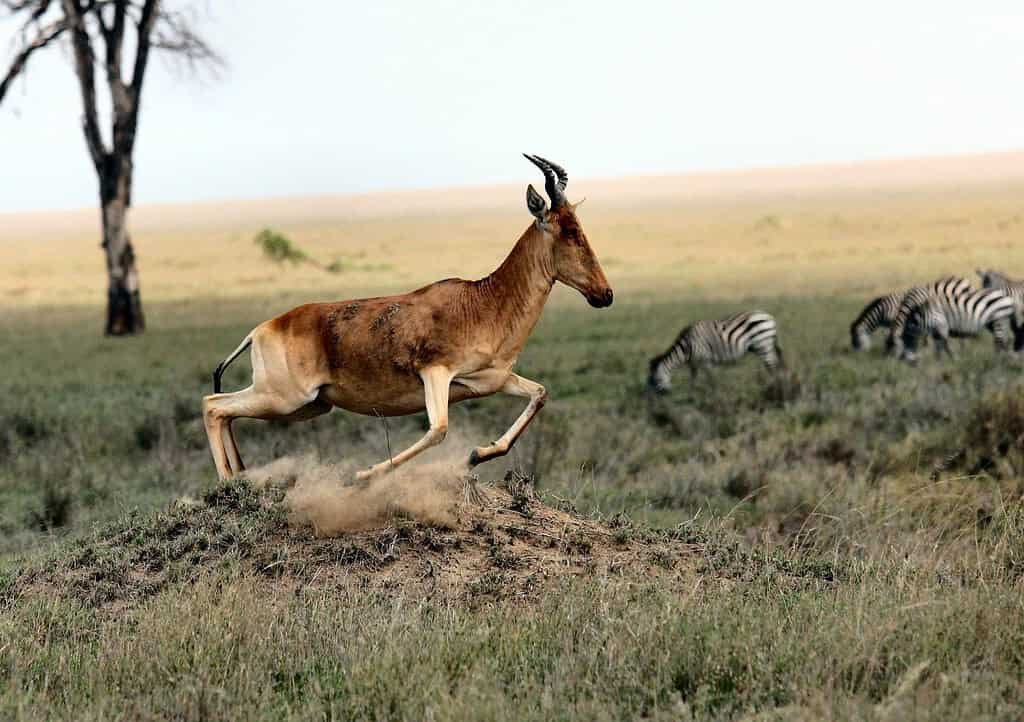
Zebras sometimes cross the Mara River inside Kenya. In the first week of the month in 2025, Governors’ Camp watched hundreds cross at Main Crossing, and late in the month in 2024 it saw zebra and topi herds moving in towards Bila Shaka and the Musiara airstrip. Collared animals from Kenya’s own Mara-Loita wildebeest herd, about 26,700 in 2024, were typically back on the Loita Plains by March.
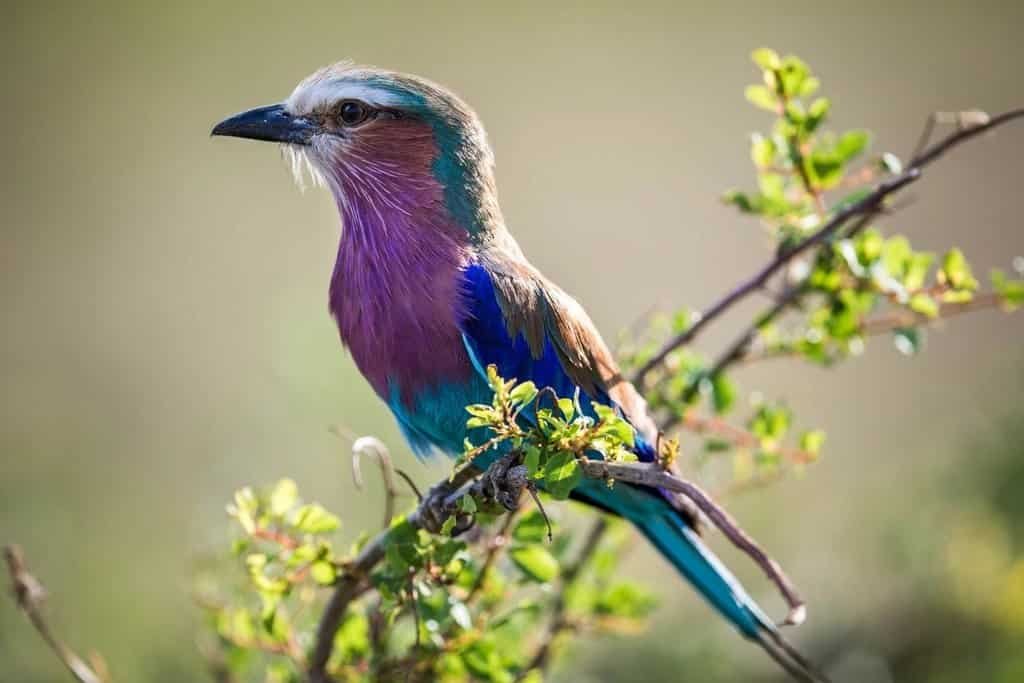
The resident wildlife stays all year. Resident lion prides hold the same territories for generations, the big cats breed all year round, and elephants breed all year with a peak in March and April. In 2024 the Mara Conservancy recorded seven different cheetahs in the Triangle during the month, and Governors’ Camp saw the cheetah Nashipai with four cubs near Double Crossing on the 27th.
What did observers see in the Mara in March?
March 2024. The Mara Conservancy closed the Triangle’s border area, where lions, leopard and cheetah could be seen within a small area, to off-road driving because of the number of vehicles. Tourist numbers began to drop after a record January and February. At Musiara, Governors’ Camp had 135 mm of rain but a mostly hot, dry month, averaging 29 °C a day; it saw a black rhino near Main Crossing on the 1st, and zebra and topi herds coming in late in the month.
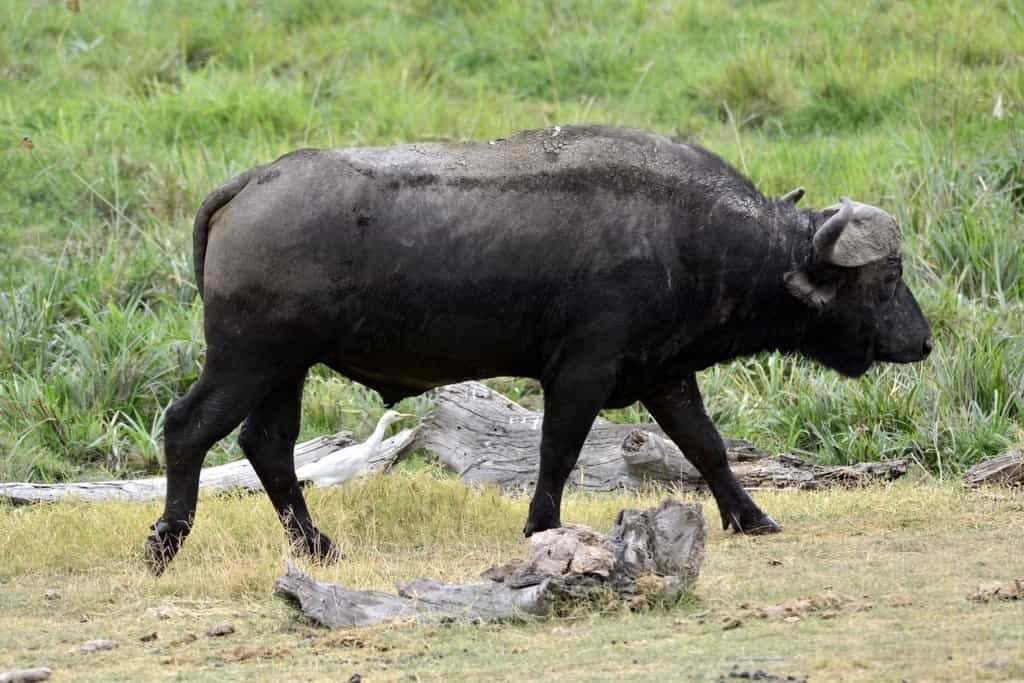
March 2025. The Conservancy had slightly over 100 mm with no big storms. Burnt areas turned green, and parts along the border drew large numbers of plains game, while tourist numbers were well down, with about 20% fewer visitors than a year before. Governors’ Camp recorded 135.5 mm, with heavy rain from the 8th; short green grass after burning drew zebra and buffalo, and a black rhino was seen near the camp on the 22nd.
March 2026. Huge storms on the 5th and 6th, and more through the month, left the Triangle unreachable by road for days on end. All its bridges were damaged or flooded, Purungat gate was under water and its ticketing equipment destroyed, and the Mogor River bridge outside the Triangle was damaged twice in a month. The Conservancy received numerous cancellations because of the flooding and the war in the Middle East.
At Musiara, Governors’ Camp had a very wet first half, with 138 mm by the 12th, then a largely dry second half. The Mara River broke its banks in places and the Musiara Marsh spread far beyond its usual edges. Driving was hard and some areas could not be reached, but sightings stayed good.
How busy is the Maasai Mara in March?
Visitor numbers normally fall from March, after a busy January and February, and April and May are the quietest months of the year. Recent years have varied: the Mara Triangle had 4,561 non-resident adult visitors in March 2024, a record for the month (the previous high was 3,701 in 2018); in 2025 the Conservancy reported about 20% fewer visitors than a year before, and overseas visitors in 2026 were 16% down on 2025.
Popular sightings can still draw many vehicles, as on the Triangle’s border in 2024, when the Conservancy closed its busiest sighting area to off-road driving. Good Friday and Easter Monday, Kenyan public holidays, fall in March or April, so check the dates for your year.
How much does a Maasai Mara safari cost in March?
Park fee. March is in the low season, which runs from 1 January to 30 June. Non-resident adults pay USD 100 a day, half the July–December fee; children aged 9 to 17 pay USD 50, and children aged 8 and under enter free. Kenyan citizens pay KSh 1,500 and East African residents KSh 2,500 per adult a day.
Camps in the Reserve. Published 2026 rates per person per night sharing include USD 300 at Basecamp Masai Mara (low season, March–May, with meals and shared drives), USD 623 at Governors’ Camp (1 January–31 March; USD 654 for the same dates in 2027) and USD 780 at Sentinel Mara Camp (4 January–14 July), against USD 500, USD 998 and USD 960 at the same camps in their 2026 peak seasons; Governors’ Camp drops to USD 453 from 1 April 2026 (USD 476 in 2027). On top of the park fee, camps inside the Main Reserve may add a nightly Narok County bed-night or community charge of USD 40–80 per adult; the amount differs between camps, so ask yours.
Outside the Reserve. Kilima Camp, on the Oloololo Escarpment, charges from USD 355 full board in its 2026 mid season (6 January–31 March) and from USD 475 in its high season. Kandili Camp, in the Leopard Gorge Conservancy, charges USD 300 full board in its 2026 mid season (7 January–31 March), against USD 390 at peak, plus a conservancy fee of USD 50 per adult a day.
Conservancy camps. Several move to their lowest 2026 rates this month: USD 500 at Saruni Mara (March–May), USD 580 at Offbeat Mara Camp (green season, March–May; USD 600 in 2027) and USD 765 at Kicheche Bush Camp (regular season, which includes this month), against USD 900, USD 950 and USD 1,095 in their 2026 peak seasons. These camps add a nightly conservancy fee of USD 130 or USD 150 per adult in 2026, depending on the camp; ask your camp.
Packages and extras. A shared three-day group safari by road from Nairobi is published from USD 840 per person (economy camp) for 3 January–31 March, park fees included. A balloon flight with Governors’ Balloon Safaris is USD 430 per adult in January–March 2026 and USD 400 in April–May, plus a USD 80 landing fee and a USD 20 community levy. Our guide to what a Maasai Mara safari costs has worked budgets for every style.
Are the camps open in March?
The seasonal camp closures we found start in April. Rekero Camp, on the Talek River, is open from June to March and closed in April and May, and Kicheche Valley Camp stayed open until 9 April in 2026. The Mara Triangle’s seasonal camp, Enkishui, opens only from July to November.
Some closures are one-offs: Little Governors’ camp in the Triangle closed for a complete makeover by December 2025, with reopening planned for June 2026, and by July 2026 the Conservancy listed it as Mara Wilderness. In a wet month, as in 2026, roads and bridges can be cut for days, so ask your camp how you will reach it.
Is March a good time to visit the Maasai Mara?
- Good for: the low-season park fee and falling camp rates, fewer visitors than in January and February, fresh grazing that draws plains game, and the Mara’s resident big cats.
- Less good for: the wildebeest migration, which is in Tanzania; and in a wet year, like 2026, flooded rivers, damaged bridges and days when parts of the Mara cannot be reached by road.
- Plan for: the start of the long rains, which can bring two dry weeks or huge storms, and the Easter holidays if Easter falls this month.
Planning a March safari
- Check whether Easter falls this month in your year: Good Friday and Easter Monday are Kenyan public holidays.
- Pack a light waterproof: the long rains usually begin this month.
- Budget the low-season park fee: USD 100 per non-resident adult a day.
- Ask your camp how recent rain has affected the roads, bridges and river crossings, and allow spare time on the road.
- Compare camp seasons: several conservancy camps charge their lowest rates from this month.
- If you want to see the calving herds, plan a trip to Tanzania's southern Serengeti instead.
More help choosing your month
- Best time to visit the Maasai Mara – all 12 months compared
- Maasai Mara in April – the next month
- Maasai Mara in February – the month before
- Maasai Mara weather – rain and temperature month by month
- Maasai Mara park fees – rates for every visitor and season
- How much a Maasai Mara safari costs – worked budgets
Thinking of a March safari?
Tell us your dates and what you want to see. MaasaiMara.ke quotes and books safaris through authorised, highly rated tour operator partners, and we will suggest camps that suit the season.
