
Maasai Mara in February: weather, wildlife, crowds and prices
Maasai Mara in February means the lower park fee, the Mara's resident wildlife and weather that swings from hot and dry to very wet, with the migratory herds calving in Tanzania.
February in the Maasai Mara falls in the long rains, but some years it is hot and dry and others very wet: the Mara Triangle measured 118.7 mm of rain in February 2024 (the monthly report said 117 mm), had a mostly dry, hot month in 2025 and over 200 mm in 2026. The migratory wildebeest herds are in Tanzania, where the calving is at its height, so the Mara’s resident wildlife is the draw. The park fee is in its low season, USD 100 per non-resident adult a day, but February is often busy: in 2024 the Triangle had a record number of visitors for the month.
Park tickets for both the Main Reserve and the Mara Triangle are sold on the KAPS ticket portal.
The observations below come from the Mara Conservancy, which manages the Mara Triangle, and from Governors’ Camp at Musiara, in the north of the Reserve, for each year from 2024 to 2026.
Maasai Mara in February at a glance
Rain: dry to over 200 mm
February 2025 was mostly dry and hot; the Mara Triangle had over 200 mm in 2026.
Average 28 °C a day
Recorded at Governors' Camp, Musiara, in 2024; up to 33 °C on some days in 2025.
Calving in Tanzania
The herds are around Ndutu on the southern Serengeti plains, at the height of the calving.
Low-season park fee
USD 100 per non-resident adult a day, from 1 January to 30 June.
Often busy
Record visitor numbers for the month in the Mara Triangle in 2024, and a rush at Chinese New Year in 2025 and 2026.
Green or golden grass
Rain turns the plains bright green; a dry spell, as in 2025, turns the grass golden.
What is the weather like in the Maasai Mara in February?
Long-term Mara rain-gauge records count February as part of the long rains (January–June), with wet-season months averaging 96 mm of rain, although the heaviest rain usually falls from March to May. Recent Februaries have ranged from dry to very wet. The Mara Triangle measured 118.7 mm in 2024 (the monthly report said 117 mm); 2025 was mostly dry and hot, with no total given; and in 2026 the long rains started very early, with over 200 mm.
Governors’ Camp at Musiara had little rain in 2024, 77 mm in 2025, 60 mm of it on the 1st, and 109 mm in 2026. Rain also varies sharply over short distances: in 2024 other parts of the Reserve had far more rain than Serena, in the Triangle. The years up to 2025 brought exceptional, above-average rainfall to the Mara, and many trees died from waterlogging.
Days are warm to hot. Governors’ Camp recorded an average daily temperature of 28 °C in 2024, and up to 33 °C on some days in 2025, hotter than usual. Pack sun protection for hot days and a light waterproof for storms. Our Maasai Mara weather guide compares every month.
How much rain fell in recent Februaries?
Measured February totals, in millimetres, at two gauges in different parts of the Mara.
| Year | Mara Triangle (Serena) | Governors' Camp, Musiara | What it meant |
|---|---|---|---|
| 2024 | 118.7 (the monthly report said 117) | No total: little rain | Heavy storms in the Triangle in the first half of the month, while the roads at Musiara dried out |
| 2025 | No total: mostly dry and hot | 77, 60 of it on the 1st | Golden grass, up to 33 °C on some days and an extremely low Mara River |
| 2026 | Over 200 | 109 | The long rains started very early: the Mara turned bright green and floods washed away a bridge’s approaches |
Where is the migration in February?
In February the migratory wildebeest herds are in Tanzania, around Ndutu on the short-grass plains of the southern Serengeti, not in the Mara. This is the height of the calving season, which runs from late January into March, with hundreds of thousands of calves born within a few weeks. The herds usually reach the Mara again in July: see our month-by-month guide for when.
Zebras move too: more than 200,000 migrate through the Serengeti-Mara. On 12 February 2026 Governors’ Camp watched about a thousand cross the Mara River from the Mara Triangle into the Main Reserve, with crocodiles taking several; the camp thought they had come up from the Tanzanian border, drawn by the rains. Collared animals from Kenya’s own Mara-Loita wildebeest herd, about 26,700 in 2024, were typically back on the Loita Plains by March.
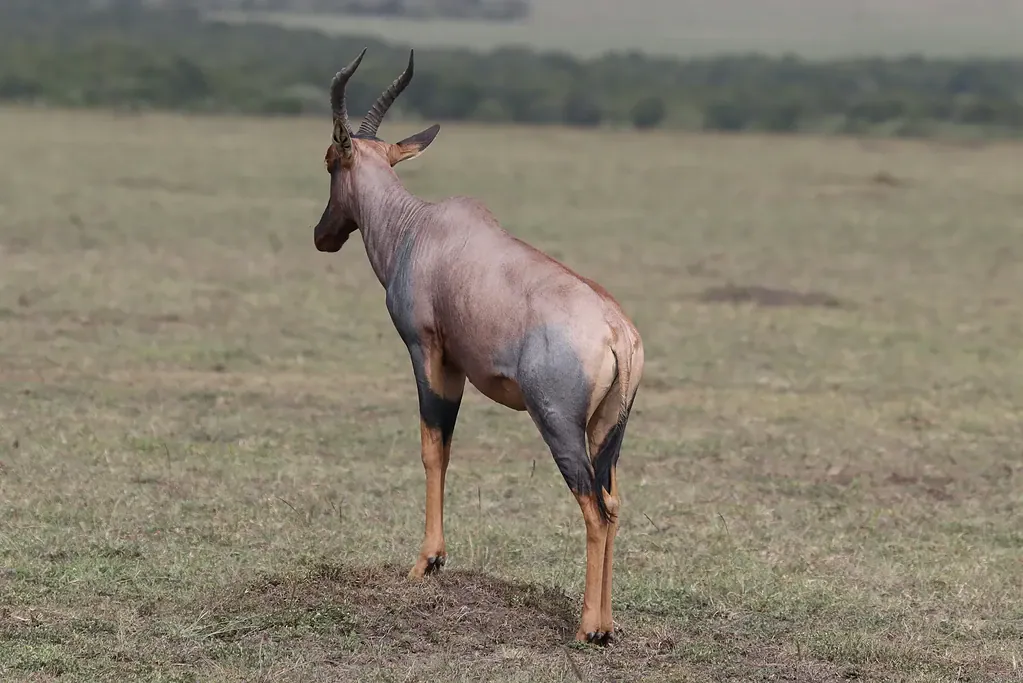
The Mara’s resident wildlife stays all year. Resident lion prides hold the same territories for generations, and lions, leopards, cheetahs, elephants and buffalo breed all year round. Governors’ Camp saw the Paradise Pride on a giraffe kill on 11 February 2024, and in 2025 it reported large zebra herds on the plains and a black rhino on Paradise Plains on 27 February.

What did observers see in the Mara in February?
February 2024. The Mara Conservancy reported that the rains continued, with heavy storms in the first half of the month, a few days of sun, then more rain. Rangers burned the Oloololo area, which had not been burnt for over 20 years, and the first half of the month was extremely busy with visitors. At Musiara, Governors’ Camp had little rain, so the roads dried out; the grass stayed green with hints of gold, and the average daily temperature was 28 °C.
February 2025. The Conservancy called the month mostly dry and hot, with one or two storms at the very start that allowed some grass burning before the rains. A rush of Chinese visitors came for Chinese New Year at the start of the month, then numbers dropped, with a quiet spell expected until June. Governors’ Camp recorded 77 mm, temperatures as high as 33 °C on some days and golden grass, and by the 21st the Mara River was extremely low.
February 2026. The long rains started very early, with over 200 mm in the Triangle. On 23 February a vehicle was washed over the Mara Rianta bridge and its two occupants were never found, and the approaches to the Mogor River bridge were washed away. Grazing in the Triangle was stopped on the 15th after weeks of good rain, and most camps and lodges were busy in the second half of the month. Governors’ Camp recorded 109 mm, which turned the Mara bright green.
How busy is the Maasai Mara in February?
February is usually busy for the low season: visitor numbers normally fall only from March, after a busy January and February. In 2024 the month set a record, with 10,386 visitors to the Mara Triangle, 6,905 of them non-resident adults, against the previous high for the month of 8,602 (4,705 non-resident) in 2019. The Conservancy counted 4,937 non-resident adults in 2025 and 6,087 in 2026.
Chinese New Year brought a rush of Chinese visitors in 2025 and again in 2026, and in 2026 most camps and lodges were busy in the second half of the month. If you prefer fewer vehicles, the long-rains months that follow are quieter: April and May are the quietest months of the year.
How much does a Maasai Mara safari cost in February?
Park fee. February is in the low season, which runs from 1 January to 30 June. Non-resident adults pay USD 100 a day, half the July–December fee; children aged 9 to 17 pay USD 50, and children aged 8 and under enter free. Kenyan citizens pay KSh 1,500 and East African residents KSh 2,500 per adult a day.
Camps in the Reserve. Many camps price February as a mid season, below their peak season. Published 2026 rates per person per night sharing include USD 300 at Basecamp Masai Mara (3 January–February, with meals and shared drives), USD 623 at Governors’ Camp (1 January–31 March; USD 654 for the same dates in 2027) and USD 780 at Sentinel Mara Camp (4 January–14 July), against USD 500, USD 998 and USD 960 at the same camps in their 2026 peak seasons. On top of the park fee, camps inside the Main Reserve may add a nightly Narok County bed-night or community charge of USD 40–80 per adult; the amount differs between camps, so ask yours.
Outside the Reserve. Kilima Camp, on the Oloololo Escarpment, charges from USD 355 full board in its 2026 mid season (6 January–31 March) and from USD 475 in its high season, and Mara West charges USD 350 for its inclusive package (meals and drinks, no game drives) from 10 January to 15 June 2026, against USD 547 at peak; at Mara West, Reserve fees are extra.
Conservancy camps. Published 2026 rates include USD 700 at Saruni Mara (3 January–February), USD 670 at Offbeat Mara Camp (February; USD 700 in 2027) and USD 840 at Kicheche Bush Camp (3 January–28 February), against USD 900, USD 950 and USD 1,095 in their 2026 peak seasons. These camps add a nightly conservancy fee of USD 130 or USD 150 per adult in 2026, depending on the camp; ask your camp.
Packages and extras. A shared three-day group safari by road from Nairobi is published from USD 840 per person (economy camp) for 3 January–31 March, park fees included. A balloon flight with Governors’ Balloon Safaris is USD 430 per adult in January–March 2026, plus a USD 80 landing fee and a USD 20 community levy. Our guide to what a Maasai Mara safari costs has worked budgets for every style.
Are the camps open in February?
The seasonal camp closures we found are in the long rains of April and May, not February. The Mara Triangle’s seasonal camp, Enkishui, opens only from July to November. Some closures are one-offs: Little Governors’ camp in the Triangle closed for a complete makeover by December 2025, with reopening planned for June 2026, and by July 2026 the Conservancy listed it as Mara Wilderness.
Heavy rain can cut the way to a camp: in February 2026 floodwater washed away the approaches to the Mogor River bridge. Ask your camp whether it is open for your dates, and how recent rain has left the roads.
Is February a good time to visit the Maasai Mara?
- Good for: the low-season park fee and mid-season camp rates, the Mara’s resident big cats, zebra herds and, in a dry year, golden plains and dry roads.
- Less good for: the wildebeest migration, which is in Tanzania for the calving; and in a wet year, like 2026, swollen rivers and washed-out bridge approaches.
- Plan for: more visitors than later in the low season, with a rush around Chinese New Year, and weather that can be hot and dry or very wet.
Planning a February safari
- Book early: February is often busy, with a rush of visitors around Chinese New Year.
- Pack sun protection for hot days and a light waterproof for storms.
- Budget the low-season park fee: USD 100 per non-resident adult a day.
- If you stay at a conservancy camp, add its nightly conservancy fee (USD 130 or USD 150 per adult in 2026 at the camps above); ask your camp.
- Ask your camp how recent rain has affected the roads, bridges and river crossings.
- If you want to see the calving herds, plan a trip to Tanzania's southern Serengeti instead.
More help choosing your month
- Best time to visit the Maasai Mara – all 12 months compared
- Maasai Mara in March – the next month
- Maasai Mara in January – the month before
- Maasai Mara weather – rain and temperature month by month
- Maasai Mara park fees – rates for every visitor and season
- How much a Maasai Mara safari costs – worked budgets
Thinking of a February safari?
Tell us your dates and what you want to see. MaasaiMara.ke quotes and books safaris through authorised, highly rated tour operator partners, and we will suggest camps that suit the season.
