
Maasai Mara in July: weather, wildlife, crowds and prices
Maasai Mara in July means the start of the dry season, the arrival of the wildebeest migration and its first river crossings, and the high-season park fee from 1 July.
July is when the wildebeest migration usually arrives in the Maasai Mara. In 2023–2026 the first herds entered between 28 June and about 20 July, and the first crossings into the Mara Triangle came on 20–25 July in 2023–2025, the Mara Conservancy reported. The month opens the dry season: in 2023 the Conservancy called it one of the driest in 20 years, and Governors’ Camp recorded 40 mm of rain in 2024. The high season starts on 1 July, when the park fee doubles to USD 200 per non-resident adult a day, and the crowds build: at times there were over 150 vehicles at a crossing in 2023.
Park tickets for both the Main Reserve and the Mara Triangle are sold on the KAPS ticket portal.
The observations below come from the Mara Conservancy, which manages the Mara Triangle, and from Governors’ Camp at Musiara, in the north of the Reserve, for each July from 2023 to 2026.
Maasai Mara in July at a glance
Rain: 40–64.9 mm
Governors' Camp and Mara Triangle totals for 2024; dry-season months average 53 mm.
Mornings 11–15 °C, days 25–28 °C
Recorded at Governors' Camp, Musiara, in 2025.
The herds arrive
First crossings into the Mara Triangle came on 20–25 July in 2023–2025.
High-season fee from 1 July
USD 200 per non-resident adult a day, double the low-season fee.
Busy at the crossings
Over 150 vehicles at a crossing at times in 2023.
Zebras lead the way
They crossed into the Triangle on 10 July 2023, about ten days before the wildebeest.
What is the weather like in the Maasai Mara in July?
Long-term Mara rain-gauge records make July the first month of the dry season (July–October), when months average 53 mm of rain. In 2023 the Mara Conservancy called it one of the driest in 20 years, with one heavy shower at Serena on the 29th. In 2024 it described a very dry month with a few isolated showers; its year-end chart gives 64.9 mm for the Triangle, and Governors’ Camp at Musiara recorded 40 mm. In 2025 the Triangle’s first three weeks were overcast with evening showers, and Governors’ Camp measured 12 mm on the 3rd and 27 mm over several days in mid-month.
Mornings are cool and the days warm. Governors’ Camp recorded mornings averaging 14 °C in the first half of the month in 2024, and daytime highs of 25–28 °C with mornings and evenings of 11–15 °C in 2025. Pack a warm layer for early game drives. Fires can bring smoke: in 2024 a heavy haze from fires in the Main Reserve and the northern Serengeti hung over the Triangle for much of the month. Our Maasai Mara weather guide compares every month.
How much rain fell in recent Julys?
Measured totals for the month, in millimetres, at two gauges in different parts of the Mara.
| Year | Mara Triangle (Serena) | Governors' Camp, Musiara | What it meant |
|---|---|---|---|
| 2023 | No total given; one heavy shower at Serena on the 29th | No figure | One of the driest Julys in 20 years |
| 2024 | 64.9 | 40 | Very dry, with a few isolated showers and a smoke haze from fires |
| 2025 | No total given; overcast with evening showers for three weeks | 12 on the 3rd and 27 in mid-month; no monthly total | Green grass kept the wildebeest out of the Triangle until late in the month |
| 2026 | No figure | No figure | No weather notes in the Conservancy’s July report |
The 2024 Mara Triangle figure comes from the Conservancy’s year-end rain chart, which is titled “Rainfall 2025” but holds the 2024 data.
When does the migration arrive in July?
The herds usually reach the Mara in July, and Governors’ Camp describes arrival as usually mid to late July. The date changes every year. In 2023 zebras first crossed into the Mara Triangle from Mara North on the 10th and the first wildebeest about ten days later near Look Out, although the main herds arrived only in early August. In 2024 the first wildebeest crossed from Tanzania by mid-month. In 2025 the herds entered the Reserve over the Sand River on 6 July, and in 2026 the first crossed the Sand River on 28 June, with a few thousand already in the Triangle by the end of June.
They come from Tanzania: GPS tracking places the herds in Tanzania’s Western Corridor in June and July before they move north, and from August to October the Mara River is their main water source. Estimates of their size differ: the traditional figure is about 1.3 million wildebeest, while a 2025 satellite count of a 4,000 km² area found 503,000–533,000, from images taken in August 2023.
Zebras come in large numbers too. More than 200,000 migrate through the Serengeti-Mara, and Governors’ Camp saw several thousand stream in during July 2024, most from the Loita Plains to the east. Kenya’s own Mara-Loita wildebeest herd has fallen from 120,000–150,000 in the 1970s to about 26,700 in 2024; its collared animals typically stayed in the Mara from mid-July to August.
When do the river crossings start?
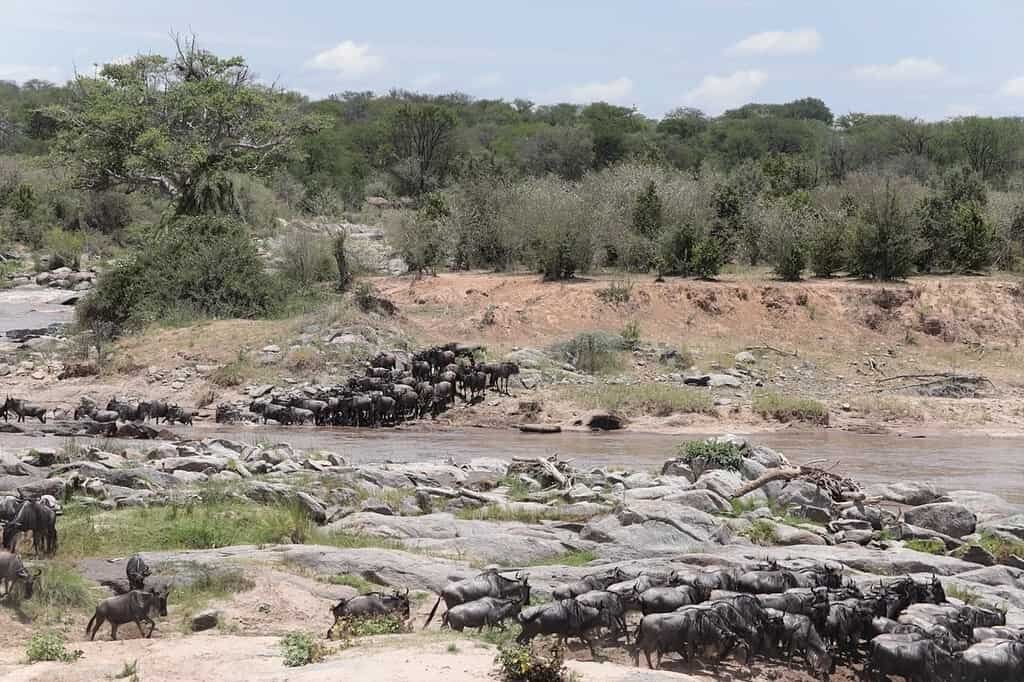
In 2023–2025 the first crossings into the Mara Triangle came between 20 and 25 July, the Mara Conservancy reported. In 2023 the wildebeest started crossing near Look Out about ten days after the zebras, and in 2024 the first river crossings into the Triangle came on the 20th. For 2025 the two observers differ: the Conservancy recorded the first crossing into the Triangle on 25 July at the U crossing, followed by three days of huge crossings, while Governors’ Camp reported a notable crossing there on the 20th.
Crossings can start earlier elsewhere in the Reserve. In 2025 Governors’ Camp recorded the season’s first major crossing on the 8th, at the “mchanga mchanga” site on the Sand River, with the first Mara River crossings a few days later. After the first big crossings into the Triangle that year, many wildebeest went back into Tanzania.
Crossings are fewer than they used to be. The Main Reserve had about 14 crossing days in 2025, against 29 in 2024 and about 50 historically. The Mara Conservancy reports next to no crossings at Main Crossing above Serena and says most crossings now take place in Tanzania, a change it links to camps and development along the rivers. Sites named in recent reports include Look Out and the U crossing into the Triangle, crossing points 7 and 10 on the Mara River, Double Crossing and the Sand River. Reserve rules ban off-road driving in the Mara River Zone.
What did observers see in the Mara in July?
July 2023. The Mara Conservancy called it one of the driest Julys in 20 years, with one heavy shower at Serena on the 29th. Zebras first crossed into the Triangle from Mara North on the 10th, and the wildebeest started crossing about ten days later near Look Out. At times there were over 150 vehicles at a crossing.
July 2024. A very dry month in the Triangle, with a few isolated showers and a heavy smoke haze for much of the month from fires in the Main Reserve and the northern Serengeti. The first wildebeest crossed from Tanzania by mid-month and the first river crossings into the Triangle came on the 20th. The Reserve was very busy, possibly a little less than a year earlier. At Musiara, Governors’ Camp had a dry first fortnight with mornings averaging 14 °C, then more cloud and some overnight rain, 40 mm in all, and several thousand zebras streaming in.
July 2025. In the Triangle the first three weeks were overcast with evening showers, which kept the grass green and the wildebeest away; the last week was hot and sunny. The Conservancy recorded the first crossing into the Triangle on the 25th (Governors’ Camp reported one on the 20th), followed by three days of huge crossings, and it described head-on collisions, overcrowding at sightings and rule-breaking by drivers. Governors’ Camp recorded the first major crossing, on the Sand River, on the 8th, with daytime highs of 25–28 °C and mornings of 11–15 °C.
July 2026. A few thousand wildebeest were already in the Triangle at the end of June, the Mara Conservancy reported, and the Triangle had 10,818 non-resident adult visitors that month, against 10,521 a year earlier. Across Kenya, the Kenya Meteorological Department reported below-average rain over most of the country in June–August 2026.
How busy is the Maasai Mara in July?
This is high season, and the Mara Conservancy’s reports describe crowding every year: over 150 vehicles at a crossing at times in 2023, hundreds and at times thousands of visitors a day at the Look Out toilets in 2024, and overcrowding at sightings in 2025. The Mara Triangle had 14,007 non-resident adult visitors in July 2023, 9,011 in 2024, 10,521 in 2025 and 10,818 in 2026.
Numbers fell after the park fee rose. The Mara Conservancy reported visitors down 20.4% in the July 2024–June 2025 financial year, with the steepest drop (30.6%) in July–December 2024, the first high season at the higher fee; the Conservancy said it was unclear whether the fee was the only cause.
The park rules allow a maximum of five vehicles at a lion, leopard, cheetah or rhino sighting, with others waiting at least 100 metres away. In 2026 the Kenyan school term ended on 31 July, and August, the Triangle’s busiest month, follows.
How much does a Maasai Mara safari cost in July?
Park fee. The high season starts on 1 July and runs to 31 December. Non-resident adults then pay USD 200 a day, double the low-season USD 100, so a trip that starts in late June pays the lower fee only for its June days. Children aged 9 to 17 pay USD 50 in both seasons, and children aged 8 and under enter free. Kenyan citizens pay KSh 3,000 and East African residents KSh 5,000 per adult a day in the high season, against KSh 1,500 and KSh 2,500 until 30 June; the Mara Triangle charges the same.
Camps. This is peak season at most camps. Published 2026 rates per person per night sharing include USD 500 at Basecamp Masai Mara (with meals and shared drives) and USD 900 at Saruni Mara, both for July–September, and USD 998 at Governors’ Camp, USD 1,095 at Kicheche Bush Camp and USD 1,450 at Rekero Camp, each for 1 July–31 October. Porini Mara Camp charges USD 955 for the same dates, conservancy fees included, and Angama Mara USD 2,750 per guest for 1 July–30 September, park fees extra.
Fees on top. Except at Porini Mara Camp, conservancy or Reserve charges come on top of these rates: conservancy camps add a conservancy fee per adult a night: USD 130 at Kicheche Bush Camp, USD 130 plus a USD 5 Naboisho Reserve Fund fee at Ol Seki Hemingways Mara, and USD 130 or USD 150 at Mara North camps such as Saruni Mara (confirm with your camp), and camps inside the Main Reserve can add a Narok County bed-night or community charge of USD 40–80 per adult; the amount differs between camps, so ask yours.
Changes during the month. In 2026 Sentinel Mara Camp charges USD 780 until the 14th and USD 960 from 15 July. Ol Seki Hemingways Mara has its highest rate, USD 1,305, from 1 July to 31 August, and Mara West its peak USD 547 (inclusive package, game drives extra) for 1 July–15 September. A shared three-day group safari by road from Nairobi is published at USD 1,200 per person for 16 June–30 September (economy camp), park fees included.
Budget options. In 2026, on the Talek River inside the Reserve, Julia’s River Camp charges USD 146 per person full board in a classic tent in its high season, which starts on 1 July; Reserve fees and the Narok County community fee are extra. Outside the Reserve, by Oloolaimutia Gate, Enchoro Wildlife Camp charges USD 200 per double tent a night, full board, in its 2026 July–September high season; Reserve fees and game drives are extra.
Residents. Mara Serena Safari Lodge’s 2026 resident ground package costs KSh 43,800 per person for the first night and KSh 39,800 for each extra night from 1 July to 30 September, against KSh 32,500 and KSh 28,500 until 30 June, park fees excluded. Our guide to what a Maasai Mara safari costs has worked budgets for every style.
Can you take a balloon flight in July?
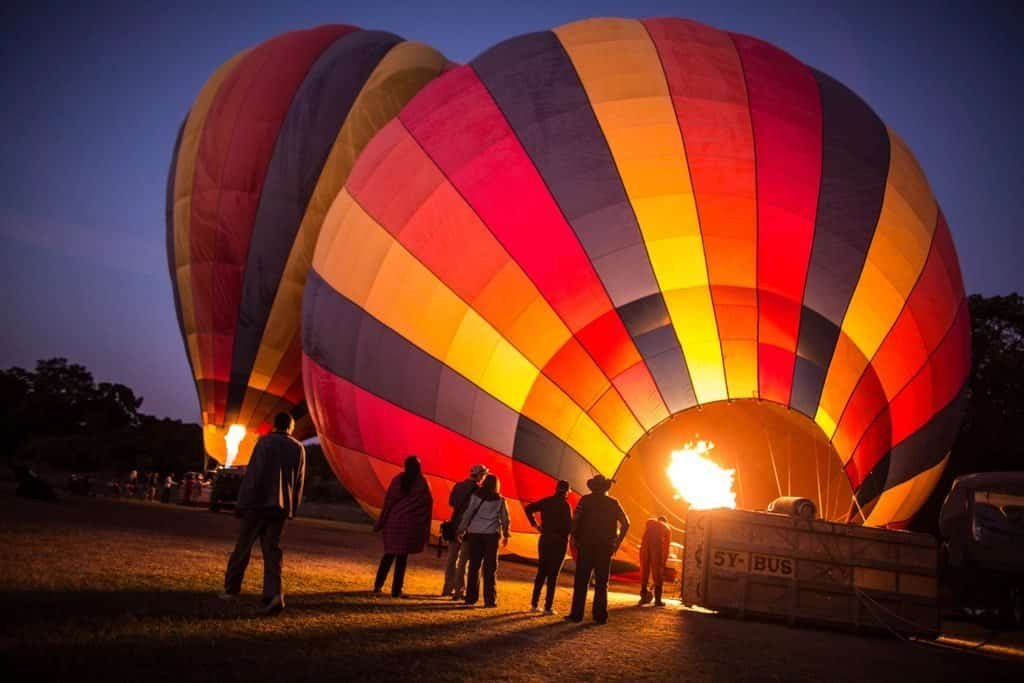
Yes. Governors’ Balloon Safaris publishes 2026 rates of USD 490 per adult for July to October, against USD 430 in June, and USD 275 for a child under 15 all year. On top come Narok County’s landing fee of USD 80 per adult (USD 35 per child), a USD 20 community levy, and USD 5 for medical-evacuation cover if you have none. Children must be at least 8 years old and 1.2 metres tall.
Flights leave at sunrise, between about 6:15 and 6:45 am, and last about an hour, Governors’ Balloon Safaris says; on 95 days out of 100 it flies south over the Mara River. Ask whether the landing fee and the day’s park fee are included in the price you are quoted, and book early: this is the high season.
Are the camps open in July?
Yes. This is the start of the high season, and the seasonal closures with published dates that we found are in April and May. The Mara Triangle’s seasonal camp, Enkishui, opens in July and stays open until November. In July 2026 the Mara Conservancy listed two permanent camps in the Triangle: Mara Serena and Mara Wilderness (formerly Little Governors). The month is busy, so book early and ask your camp to confirm your dates.
Is July a good time to visit the Maasai Mara?
- Good for: the arrival of the migration, with the first crossings into the Mara Triangle on 20–25 July in 2023–2025; the start of the dry season, and cool mornings.
- Less good for: budgets, with the park fee doubled from 1 July and peak camp rates; and quiet game drives, with crowds at crossings and sightings.
- Plan for: herds that arrive on different dates every year and may cross back into Tanzania after the first crossings, as many did in 2025.
Planning a July safari
- Book early: this is high season, with crowds at the crossings.
- Budget the high-season park fee: USD 200 per non-resident adult a day from 1 July.
- Pack a warm layer: recorded mornings at Musiara were 11–15 °C in 2025.
- Allow several days for a chance of a river crossing: the Main Reserve had about 14 crossing days in 2025.
- Ask your camp where the herds are in the days before you travel: arrival dates change every year.
More help choosing your month
- Best time to visit the Maasai Mara – all 12 months compared
- Maasai Mara in August – the next month
- Maasai Mara in June – the month before
- Maasai Mara weather – rain and temperature month by month
- Maasai Mara park fees – rates for every visitor and season
- How much a Maasai Mara safari costs – worked budgets
Thinking of a July safari?
Tell us your dates and what you want to see. MaasaiMara.ke quotes and books safaris through authorised, highly rated tour operator partners, and we will suggest camps that suit the season.
