

The Maasai Mara National Reserve is in Narok County in south-western Kenya, beside the Tanzania border and the neighbouring Serengeti ecosystem. It is not in Tanzania. For a trip, the next step is to identify the actual camp, Reserve sector or conservancy, then choose the correct gate or airstrip rather than a generic Mara map pin.
Locate the destination before choosing a route
Country: Kenya
The Maasai Mara National Reserve is in Kenya. The neighbouring Serengeti National Park is in Tanzania.
County: Narok
The Reserve lies in Narok County, in south-western Kenya near the Tanzania border.
Safari area: the actual base
Identify the Reserve sector, outside-gate location or neighbouring conservancy, then match the camp and access point.
Country, county, ecosystem and camp describe different things
| Location label | What it tells you | What you still need |
|---|---|---|
| Kenya | The country containing the Maasai Mara National Reserve. | Your applicable entry documents and international arrival plan. |
| Narok County | The Kenyan county containing the Reserve. | The actual camp, viewing sector and access route. |
| Serengeti–Mara ecosystem | A connected wildlife landscape across the Kenya–Tanzania border. | A lawful transport and border plan for any cross-country itinerary. |
| Greater Mara | A wider travel and conservation context that includes neighbouring areas. | The named property and exact Reserve or conservancy access. |
| Camp or lodge | The place where you will stay. | Its gate or airstrip, collection arrangement and included wildlife programme. |
Match the access point to the booked area
| Booked setting | Useful question | Next guide |
|---|---|---|
| Reserve stay | Which gate or airstrip serves this exact property and route? | Gate and airstrip hubs, then the named access profile. |
| Mara Triangle stay | Which entry route and payment arrangement apply to this camp? | Triangle area and fees guides. |
| Conservancy stay | Which collection point and visitor permissions are included? | The named conservancy and property guide. |
| Outside-gate stay | How does the programme reach the planned viewing area? | The relevant gate, property and day-by-day itinerary. |
Country, county and safari landscape
Where is the Maasai Mara in relation to Tanzania
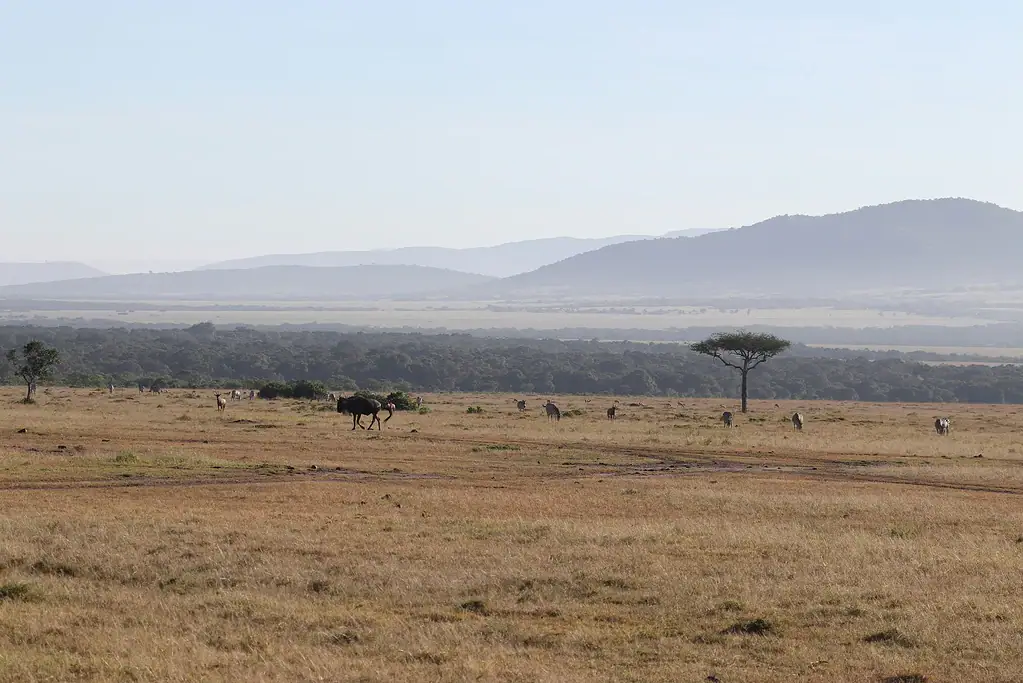
The Maasai Mara National Reserve is in south-western Kenya, in Narok County, beside the border with Tanzania. Serengeti National Park lies on the Tanzanian side of the connected ecosystem. Wildlife can move through that wider landscape, but visitors still travel between separate countries with their own entry and transport arrangements. A shared ecosystem is not a shared national-park ticket or a single immigration area.
This distinction answers much of the country confusion around the name. A safari sold as a Serengeti–Mara journey involves more than moving between neighbouring camps. The transport and border programme must work for the actual accommodation and travel dates. If the holiday is entirely a Kenyan Mara stay, choose the Kenyan entry and transport arrangements that fit it. Do not apply Tanzanian park or immigration information to the Reserve simply because the landscapes are connected.
The Reserve is a destination area, not a town centre
The Maasai Mara is not a single town with one arrival station. The Reserve has several access points, and the wider Mara contains accommodation in different settings. A map pin for the destination can be useful for orientation while still being unsuitable as the final routing instruction. The place you book determines where the journey needs to end.
Narok County and Narok town are different references
The county locates the Reserve within Kenya. Narok town is a separate settlement used in road-route descriptions and travel services. A booking labelled Narok does not by itself place the accommodation beside the wildlife area you intend to visit. Read the full property address and its relationship to the chosen gate, rather than assume the county or town name is a sufficient destination.
The Mara Triangle is part of the National Reserve
The Mara Triangle is the western sector of the Maasai Mara National Reserve, managed by the Mara Conservancy. It is not a separate neighbouring community conservancy simply because its manager uses that word. That distinction matters when reading accommodation descriptions, choosing the entry route and understanding which visitor rules and payment instructions apply.
Neighbouring conservancies belong to the wider safari landscape
Community conservancies around the Reserve are important parts of the wider Mara landscape and have their own tourism and access arrangements. They are not interchangeable with the National Reserve. A camp can provide a Mara safari experience from conservancy land without being inside the Reserve, and the booked programme determines whether Reserve visits are also included.
Use the conservancies guide and Reserve-versus-conservancies comparison to understand those options. The practical issue is the viewing area and permissions included in your stay. Wildlife movement between areas does not create visitor access between them. A place name on a map is not evidence that a road or activity is open to every traveller.
Outside-gate accommodation is another distinct setting
Some camps used for Mara safaris stand outside the Reserve near an entry gate or on surrounding land. That location may suit the budget, room style or travel route. It also means the gate journey and admission arrangement are part of the daily programme. A property can be useful for a safari without being described inaccurately as an inside-Reserve stay.
Reserve size and the wider Mara are different measurements
Published descriptions of the Mara can use different boundaries: the National Reserve, a management sector, neighbouring conservancies or a wider ecosystem. Those figures answer different questions and should not be combined as though they described one identical place. This guide avoids giving a single area total without a clear boundary and source definition.
Choosing the arrival route
Nairobi is a starting point rather than the Mara itself
Many international visitors begin the Kenyan part of the journey in Nairobi, then travel onwards by road or a safari flight. The arrival in the city and the arrival at a Mara camp are separate stages. The itinerary should account for that transition, including any overnight arrangements and the actual collection point. A Kenya arrival date alone does not establish when the wildlife programme begins.
Nairobi’s Jomo Kenyatta International Airport and Wilson Airport are different airports. Safarilink identifies Wilson as its Nairobi base for the relevant safari-flight context. A traveller arriving internationally should not assume that the onward Mara flight leaves from the same terminal or airport. Use the flights guide alongside the booked service and its check-in information.
Choose the road approach for the camp
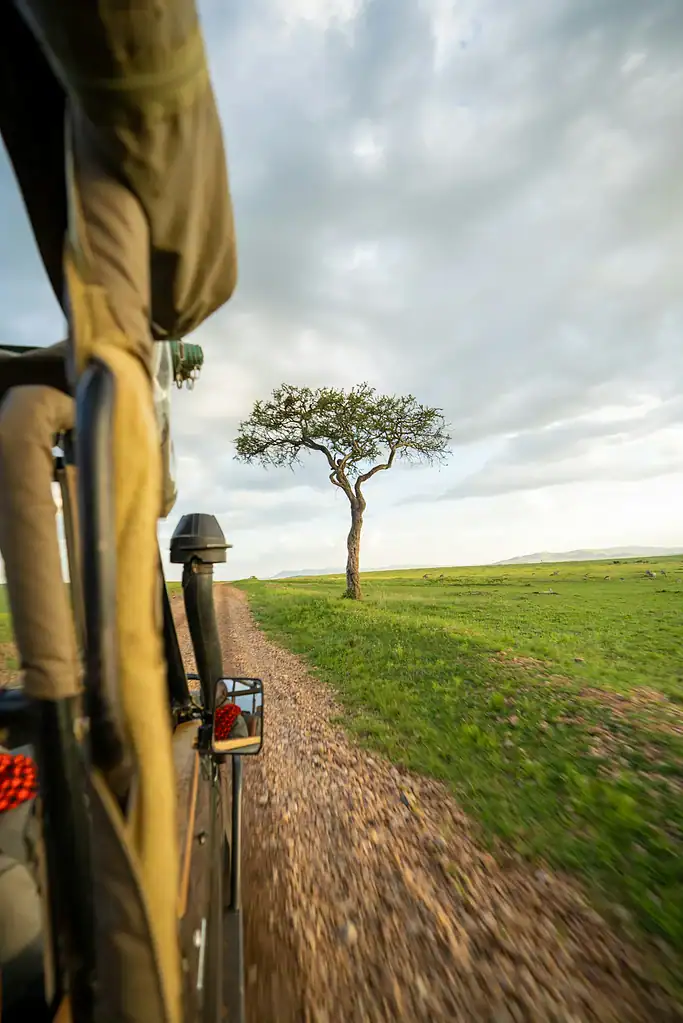
The correct road approach follows the accommodation and viewing area. A route towards a commonly used Mara gate may still be unsuitable for the booked camp. Use the camp’s exact location and the agreed arrival instructions, then build the route around them. General destination directions are useful orientation; they are not a replacement for the final approach plan.
A safari flight needs the correct airstrip
The Mara has multiple airstrips serving different properties and areas. A flight booking to a familiar destination name does not settle which strip is appropriate for the camp. The property, service routing and collection arrangement should agree before the ticket is bought. A short-looking onward drive on a map may cross an access boundary or fail to match the camp’s usual collection programme.
The gate is an access point, not the accommodation
Sekenani, Talek, Musiara, Oloololo and Purungat Bridge appear in Mara travel planning because they identify different access points. Knowing a gate name helps narrow the route, but it does not identify a room, a collection point or every permitted drive. The appropriate choice follows the booked property and the area the programme will use.
The Tanzania border does not provide a casual safari shortcut
The proximity of the Serengeti can make a cross-border trip look simple on a map. In practice, the itinerary needs an authorised route, the appropriate immigration arrangements and transport that works on both sides. Do not assume that a track near the boundary is an open tourist crossing or that a wildlife route is a public road.
Maps, camp identity and the complete itinerary
The migration map explains a landscape, not a visitor route
The Serengeti–Mara migration is often shown as a broad seasonal circuit. That image helps explain how the wildlife landscape extends across the border, but it should not be used as driving directions. The map’s seasonal pattern also does not establish the location of animals on the day of your visit. Herd movement and visitor transport answer different questions.
Location affects fees and included experiences
The Reserve, Triangle and neighbouring conservancies have distinct admission and payment arrangements. A stay marketed under the Mara name does not establish a universal entry pass. Read the complete programme to identify the wildlife area and any additional visit. The entry-fees hub and conservancy-fees guide explain those distinctions without treating them as interchangeable charges.
Activities also depend on their actual setting. A guided walk or night drive offered by a conservancy camp should not be described as a general National Reserve activity. The activities hub helps match experiences with the permitted area. A clear location plan therefore protects both the budget and the expectations for the holiday.
A precise base helps protect a short safari
When the available stay is short, repeated travel between the accommodation and the main viewing area can use a substantial part of the programme. That is a reason to compare locations carefully, rather than assume the most familiar camp name or lowest room amount is automatically the right choice. A practical base can support a relaxed rhythm even when the trip is compact.
Keep map labels and property identities clear
A digital map can contain a destination label, an office, a booking company and several similarly named camps. Those pins serve different purposes. Before using one as the final destination, match the property’s current identity and the agreed collection or arrival instructions. A familiar brand or area name is not enough to establish that the pin refers to the booked room.
For an arranged safari, the itinerary should make the accommodation and transfers clear. Keep those details available during the journey, including the camp name and appropriate access point. For an accommodation-only stay, transport and game drives may need separate arrangements. A precise destination plan reduces confusion without pretending that a map application can settle every local permission or route condition.
Explore safari packages
From USD 1,200 per person sharing
From USD 1,700 per person sharing
From USD 2,450 per person sharing
From USD 3,000 per person sharing
From USD 1,500 per person sharing
From USD 2,000 per person sharing
From USD 2,350 per person sharing
From USD 1,950 per person sharing
From USD 1,700 per person sharing
From USD 2,900 per person sharing
From USD 3,800 per person sharing
From USD 4,900 per person sharing
From USD 4,550 per person sharing
From USD 3,350 per person sharing
From USD 3,000 per person sharing
From USD 3,150 per person sharing
From USD 3,750 per person sharing
Plan the right Mara base and arrival route
Tell MaasaiMara.ke your dates, party, wildlife interests and preferred way to travel. We quote and book private safaris through authorised tour operator partners, with accommodation, access and included outings matched to your trip.