
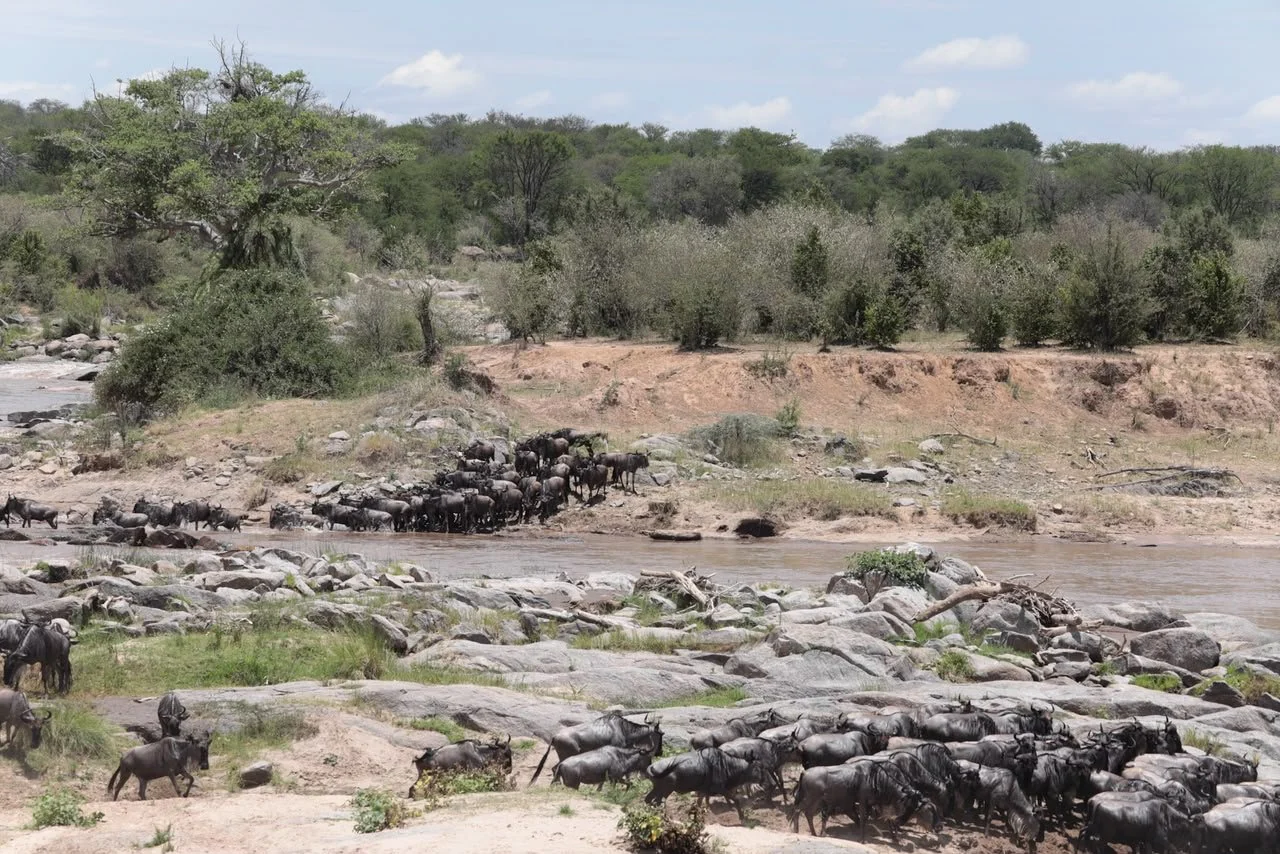
Mara River crossing points
Mara River crossing points are places where migrating wildebeest and zebra sometimes enter the river, rather than scheduled attractions. In Kenya, documented names include Look Out, the U crossing and Main Crossing above Serena. The wider migration also uses the Mara River in Tanzania and the separate Sand River on the Kenya–Tanzania boundary. A named crossing point helps explain the geography; rainfall, grazing, the herd and local conditions decide whether anything crosses during your visit.
What matters before you travel
Different rivers
The Mara River and Sand River describe different stages of the migration.
Seasonal, not scheduled
A seasonal window or a gathering herd does not guarantee a crossing.
Watch without obstruction
Stay in the vehicle and leave the animals’ route clear.
The river landscape and the migration route
The migration moves through an ecosystem that includes the Serengeti in Tanzania and the Maasai Mara in Kenya. Crossing the international boundary and crossing the Mara River are different events. Wildebeest can enter the Kenyan Reserve over the Sand River, spend time grazing, move towards the Mara River, and later change direction. A report of animals reaching Kenya therefore does not establish that a Mara River crossing has happened, or that herds have reached every part of the Reserve.
The Mara River also continues through northern Tanzania. Photographs labelled “Mara River crossing” may show a Tanzanian location rather than a Kenyan one. Before choosing accommodation around a photograph or a sighting report, establish which country, riverbank and sector it describes. The hero photograph on this guide shows the Mara River in the Serengeti; it illustrates gathering herds and river terrain rather than identifying a Kenyan viewing point.
The river separates the Mara Triangle from the Main Reserve along their shared boundary. That distinction matters for the approach road, the side from which you watch and the ticket arrangements. A short line across a map is not a vehicle crossing. A safari drive must follow the permitted road network and usable bridges, taking account of weather, entry conditions and the location of the camp.
Start with our Great Migration guide and seasonal map for the ecosystem picture. The migration month-by-month calendar explains the seasonal pattern without presenting it as a current herd location. The local guide then interprets what is happening on the ground during your safari.
Named Mara River crossing points
Crossing names are useful geographic references, but they are not a complete, permanent register of places animals may enter the water. Reports may use a landmark, a locally recognised name or a numbered point. Names and numbering should not be treated as interchangeable unless the location has been independently established. This guide keeps the documented names and avoids assigning precise pins to unverified labels.
Look Out and the river below Look-Out Hill
Look Out appears in Mara Conservancy reports describing movement towards the river and crossings below the hill. It is a useful reference for discussing the southern river landscape and the approach of migrating herds. A hill viewpoint, a road junction and the place where animals enter the river are distinct features; the name alone does not identify a particular vehicle position on a bank.
Treat a Look Out sighting as an area description. On a drive, the guide considers whether the animals are moving towards water, grazing away from it or dispersing along the river. Reaching the area is not the same as finding a crossing under way. The viewing decision should follow permitted access and animal behaviour, rather than a promise attached to a viewpoint name.
The U crossing
The U crossing is explicitly named in dated reports of wildebeest entering the Mara Triangle. In July 2025, the Mara Conservancy recorded its first crossing into the Triangle on 25 July at this location. That is evidence of an event in a particular season. It is not a timetable for later years, nor proof that the same site will be the first to receive crossing herds on your trip.
A separately recorded Governors’ Camp observation gives a different first-crossing date for that season. The reports should not be combined into a single certain arrival day. Differences in observation area, what is counted as an arrival and which groups were seen can affect descriptions. Use the historical example to understand variation, while retaining the date and observer whenever discussing the actual event.
Main Crossing above Serena
Main Crossing above Serena is another name used in the Conservancy’s accounts. Its familiarity should not be read as evidence that it is consistently the busiest location. The published record includes crossings at this site in some seasons and reduced use in later observations. A well-known place can be quiet while animals use another part of the ecosystem.
For a visitor, the practical value of the name is to orient a conversation about the river and surrounding drives. It does not establish a fixed viewing success rate, a permanent concentration of animals or a guaranteed relationship with any nearby property. Choose a camp for the complete safari and realistic access to the river landscape, rather than a claim that a particular crossing happens beside it every day.
Crossings near Kichwa airstrip
A September 2024 Mara Conservancy report described some herds crossing into the Main Reserve near Kichwa airstrip. The wording identifies a vicinity, rather than a surveyed viewing point. It supports including that river area in the historical picture, but it does not justify creating an exact map pin or treating an airstrip itself as a public crossing viewpoint.
The airstrip reference also illustrates why location names need context. Aviation access, roads and animal movement use different networks. Booking a flight to a named strip does not promise a crossing on arrival, and a transfer to camp should not be described as a river-viewing excursion unless that activity is actually part of the written itinerary.
Numbered crossing points and Double Crossing
Governors’ Camp reports refer to Mara River crossing points 7 and 10. Other wildlife observations use the name Double Crossing. These labels belong to their reporting context. A number on one operator’s map should not automatically be matched to a number on another map, or to a familiar place name in a visitor’s photograph.
We retain these documented labels without claiming precise coordinates or universal numbering. When discussing a dated sighting, the useful information is the observer, date, river, sector and direction of movement. For an actual drive, the guide uses current local knowledge and permitted routes. A visitor does not need an invented pin to understand that crossing activity can shift along the river.
Sand River crossings and entering Kenya
The Sand River is separate from the Mara River. It lies along the southern boundary landscape, where herds entering the Main Reserve have been observed. Published reports name crossings between Sala’s and the K&D camp, and a site called “mchanga mchanga”. These are animal-movement references, not instructions for visitors to drive through an international border.
In July 2025, the Mara Conservancy described wildebeest crossing Sand River before moving north towards Talek. Governors’ Camp also recorded a notable Sand River crossing that month. The observations help explain the progression from entering Kenya to using the Mara River. They do not imply that every herd follows a single route or that each stage happens within a predictable interval.
Keep Sand River gate access separate from migration geography. A name on an older tourist map is not evidence that a border route is available to travellers. Kenya–Tanzania itineraries require approved immigration arrangements and a lawful transport route. Our flights guide explains the distinction between safari airstrips and the arrangements used for a Serengeti connection.
The same care applies to photographs. Animals crossing a shallow boundary river are not necessarily crossing the Mara River. A caption should name the place only when its identity is known. Visitors can still appreciate a migration scene without giving it a misleading location or suggesting that it shows the current position of the herds.
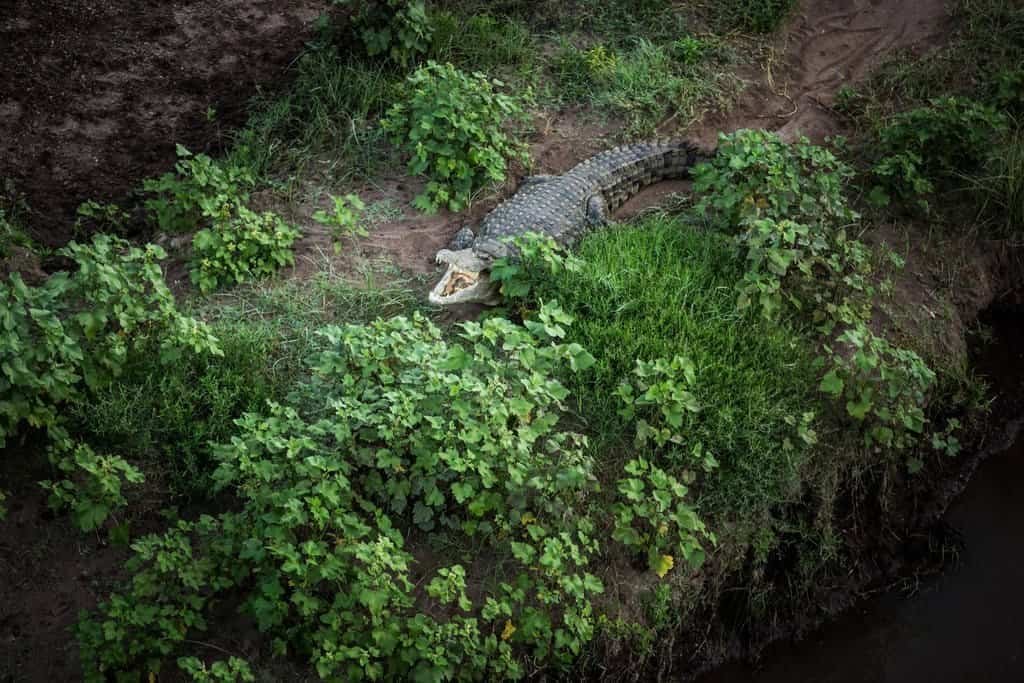
Seasonal timing and the limits of a calendar
July is the usual arrival month for the main Serengeti migration in the Maasai Mara, with substantial variation between years. The migration continues throughout the year elsewhere in the ecosystem. A Kenya trip outside the main arrival and river-crossing period can still offer a worthwhile safari focused on resident wildlife, landscapes and the activities permitted in the chosen sector.
Rainfall affects grazing and movement, and herds can return south during the season or reappear later. A broad seasonal window does not mean continuous river action throughout that window. It also does not mean that all animals leave Tanzania or occupy the Triangle and Main Reserve at the same time. The movement is spread across different groups and places.
Historical examples are more useful than a fixed arrival promise. A past report can show an early or late crossing, a temporary departure or animals concentrated in one sector. It cannot establish tomorrow’s viewing conditions. Read the date before interpreting a report, and distinguish an observed event from a general seasonal outlook.
For choosing travel dates, compare the best time to visit the Maasai Mara with the detailed month guides. Consider weather, access, crowds and the full wildlife experience alongside migration hopes. A safari centred entirely on a single anticipated crossing leaves less room to enjoy what the landscape and animals are actually doing.
Choosing accommodation for river access
A location near the river can reduce some journeys, but a straight-line map distance does not establish drive time. The camp entrance, road network, riverbank, sector boundary and condition of the route all affect access. A property on a river is not necessarily beside an active crossing point. Its name or marketing photograph cannot substitute for a clear description of the itinerary.
Reserve and Triangle stays should be assessed by the areas included in the safari. A conservancy stay may offer a different mix of guiding and activities, with a separate Reserve excursion for river viewing. That excursion needs its own realistic driving plan and applicable entry arrangements. Conservancy access does not automatically include access to the Reserve or a guarantee that migration herds will be present around the camp.
Compare camps through the accommodation guide, then consider the transport and guiding included in the trip. The useful choice is one that suits your comfort needs, time on safari and preferred mix of experiences. Nearby lodges should be presented as accommodation options, rather than ranked by unsupported crossing probabilities.
Our safaris are private to the travelling party, with dedicated vehicles and guiding. That allows the daily plan to reflect the group’s interests within the agreed route, permissions and services. Flexibility does not override park rules, access restrictions or wildlife behaviour. The safari catalogue gives the actual trip outlines and accommodation choices.
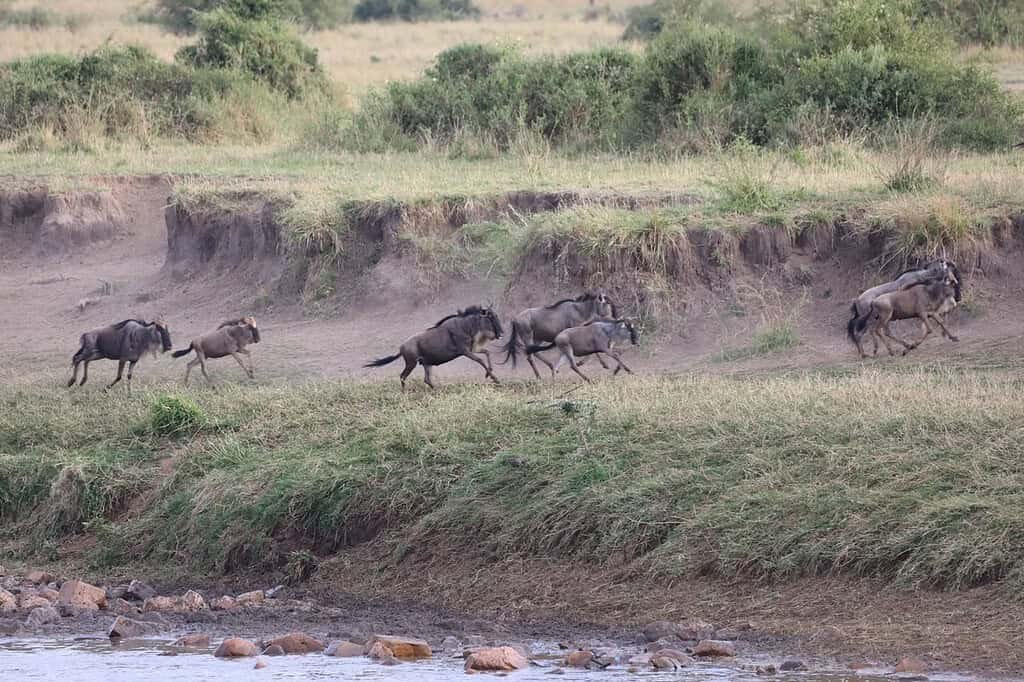
Watching a gathering herd responsibly
A gathering of wildebeest may indicate the possibility of a crossing, but the animals can wait, graze, turn away or move to another place. The viewing vehicle must leave their route clear. Positioning a car between the herd and water changes the encounter and can put the animals at risk. A good view should come from a permitted, considerate position.
The Mara Conservancy requires visitors to stay inside the vehicle at crossing points, avoid noise and refrain from blocking animals. Sitting on the window or standing on the roof is not permitted. Follow the guide’s instructions and any ranger directions. These rules protect visitors as well as the movement of the herd.
Waiting at a crossing is a safari choice, rather than a compulsory test of patience. Discuss whether the group prefers to remain with a gathering herd or continue exploring. Children, photography interests, comfort and other wildlife opportunities can shape that decision. The aim is a rewarding day with realistic expectations, even when a crossing does not take place.
Photography from a lawful viewing position
Prepare the camera while the vehicle is settled, keeping straps and equipment inside. A comfortable, stable position is more useful than leaning into the animals’ route or asking the driver to squeeze past another vehicle. Keep movements quiet and allow others in your party a clear view. Do not use the vehicle roof or window as an improvised platform.
Photographs can tell more than the moment animals enter the water. A wide view shows the river landscape and scale of the herd; closer images can record gathering, hesitation, dust, wet coats and the climb away from the bank. Including those stages gives a more complete account of the encounter than treating every quiet moment as wasted time.
Carry equipment you can manage without rearranging the whole vehicle whenever the herd moves. A small accessible bag, spare battery, memory card and protection from dust or a shower are practical choices. Check the Maasai Mara packing list before travel, especially if camera equipment shares the baggage allowance on a light-aircraft flight.
For more detailed equipment and field guidance, use our safari photography guide. The best photograph should not depend on pressuring animals, trespassing onto a bank or turning a viewing stop into a race between vehicles. Record the location and date accurately when sharing images afterwards.
Tickets, roads and the shape of the day
The Main Reserve and Mara Triangle have distinct ticketing and access arrangements. River geography does not remove those requirements. The camp’s sector, where the drive enters and whether the itinerary changes sectors should be clear before travel. Read the park fees and entry rules and ticket payment guide for the applicable arrangements.
Park tickets are sold through the KAPS ticket portal. Use the actual visit details and the correct ticket arrangement; this guide does not introduce a separate river-crossing admission product. Package quotations should make the included scheduled entries and any optional additional outing clear.
Road journeys and transfers should be planned around the destination sector. Do not assume that an arrival day offers the same viewing time as a full safari day. Our standard road packages finish with breakfast and a direct early return, without a departure-day Reserve entry or game drive. An additional morning outing requires an explicit quote and a route that fits the applicable exit and return conditions.
See travel from Nairobi by road for route planning. Within the Mara, the guide chooses usable, permitted roads. A flooded crossing, changing weather or a ranger instruction can affect access; no guide should be read as permission to use a closed track or drive through water simply because a map shows a connection.
Reading reports and planning a balanced safari
Before relying on a migration report, identify its date, observer and location. Check whether it describes the Serengeti, the Main Reserve or the Triangle, and whether the event was a boundary crossing, a river crossing or a grazing concentration. A photograph may be historical even when it appears beside a recent planning article.
The migration explorer on our hub presents a seasonal outlook from verified historical patterns. It is not a GPS feed or a confirmed current herd-position map. Named Mara River crossing points on this guide likewise explain documented geography, rather than offering live directions to an event. Keeping those distinctions clear helps visitors choose a trip without being sold certainty that wildlife cannot provide.
Build the day around more than the river. Resident wildlife, birds, grassland, wooded drainage lines and the wider landscape can make a drive worthwhile while migrating animals are elsewhere. Use our game-drive guide to understand that broader experience, and allow sightings to develop without turning every drive into a search for a single spectacle.
When comparing itineraries, state whether your priority is migration herds, river photography, varied wildlife or a combination. Explain your travel dates and preferred comfort level. That gives the safari planner useful information for a route and accommodation recommendation, while preserving honest expectations about what can be arranged and what remains dependent on nature.
Explore safari packages






From USD 2,000 per person sharing



From USD 2,350 per person sharing

From USD 1,950 per person sharing

From USD 2,350 per person sharing

From USD 1,700 per person sharing

From USD 2,900 per person sharing

From USD 3,800 per person sharing
From USD 4,550 per person sharing
From USD 3,000 per person sharing
From USD 3,150 per person sharing
Plan your private Maasai Mara safari
Tell MaasaiMara.ke your travel dates, party size and interests. We quote and book private safaris through authorised tour operator partners, with the agreed route and services set out in writing.