
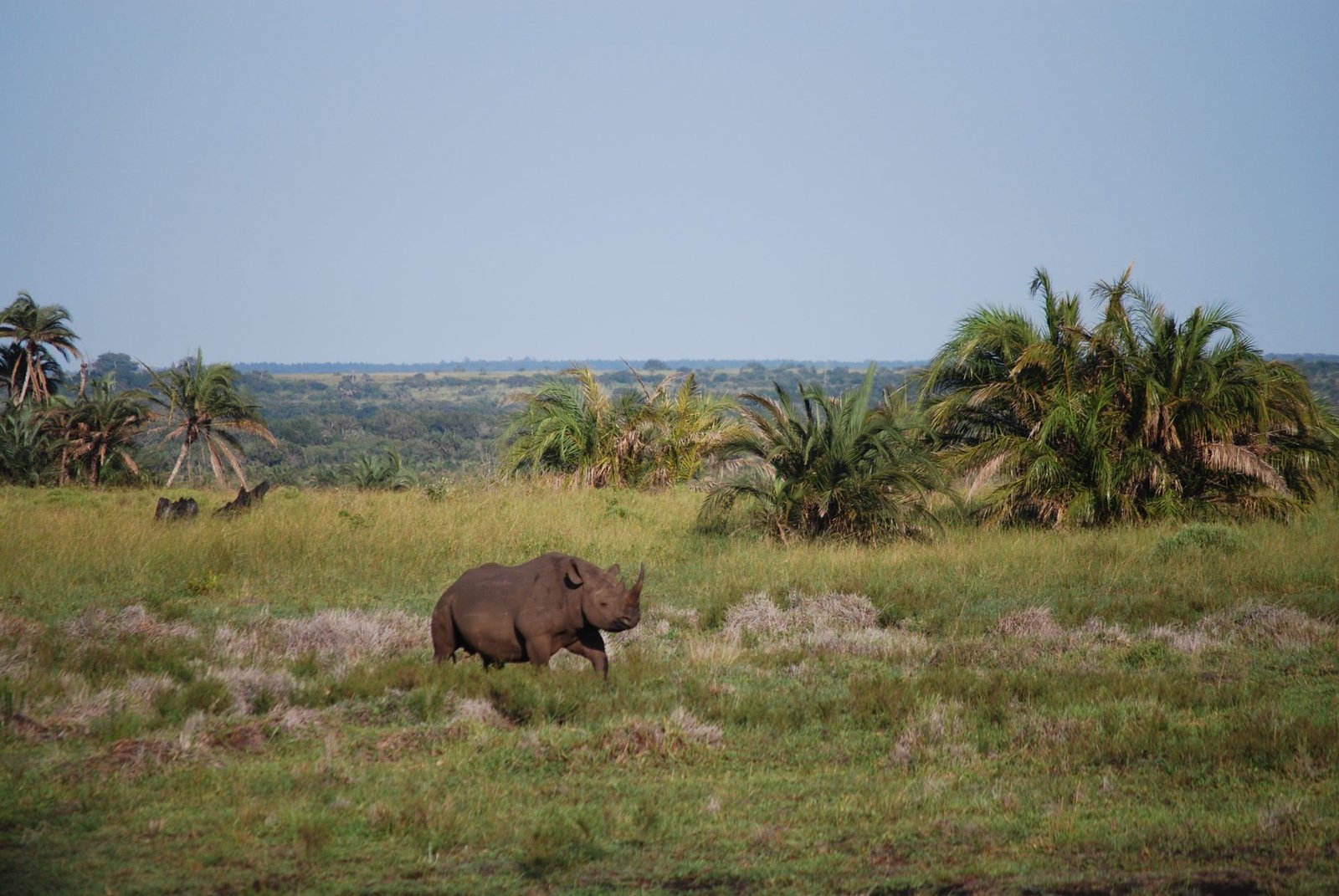
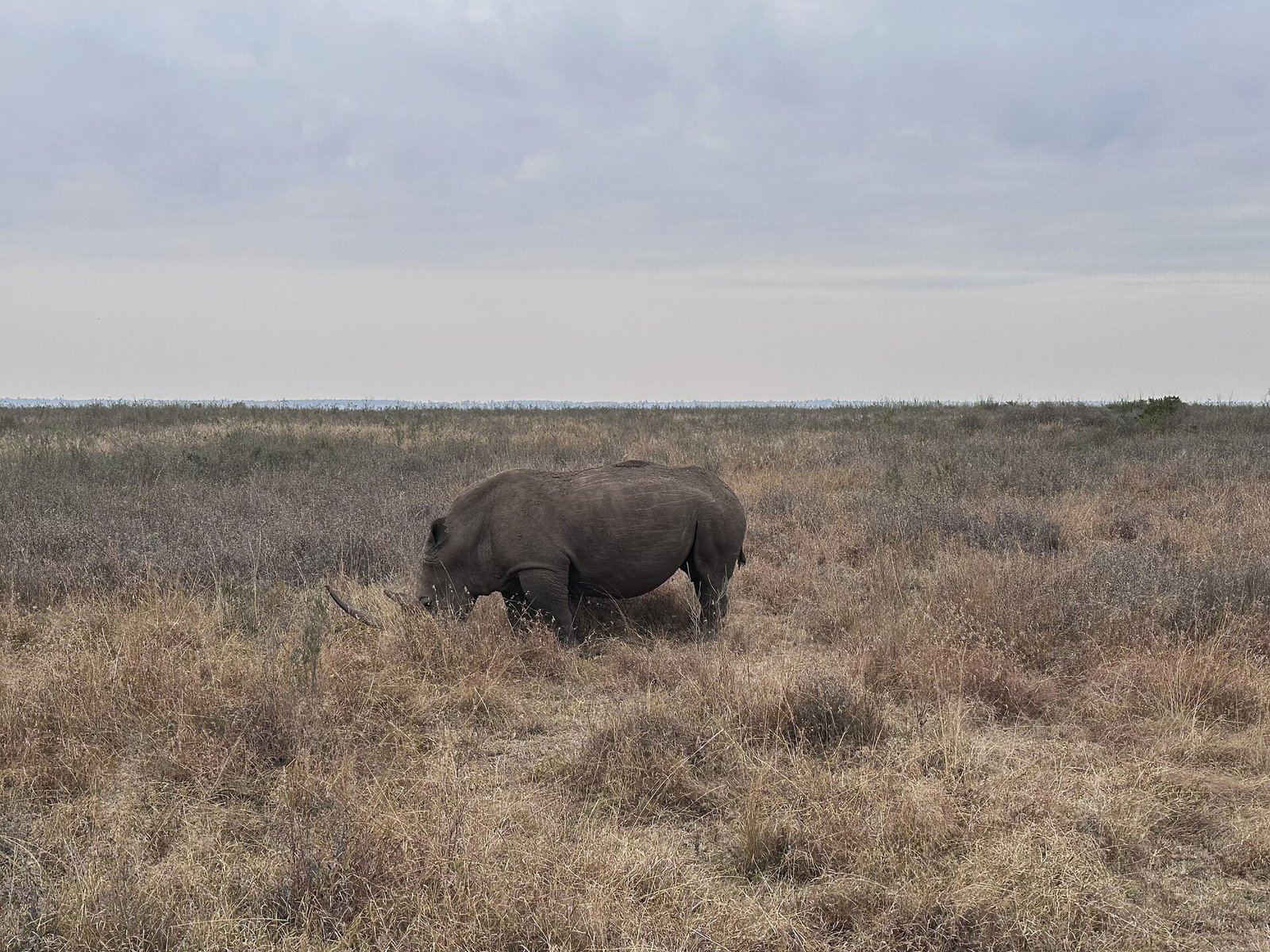
The Maasai Mara’s wild rhino is the black rhinoceros. It is a browser associated with bush and riverine habitat, and a sighting requires patient, responsible wildlife viewing. This is a conservation-sensitive animal; no location or itinerary guarantees an encounter.
Rhinos in the Maasai Mara at a glance
Identity
Black rhinoceros, Diceros bicornis.
Feeding
Browser with a pointed, grasping upper lip.
Viewing
Sensitive wildlife; keep distance and follow ranger instructions.
Black and white describe species, not skin colour
Both black and white rhinos have grey skin. The black rhino’s pointed upper lip is adapted to browsing on leaves and twigs, while the white rhino’s broad mouth is adapted to grazing. Identify the animal through its features and context, rather than skin colour or a photograph’s lighting.
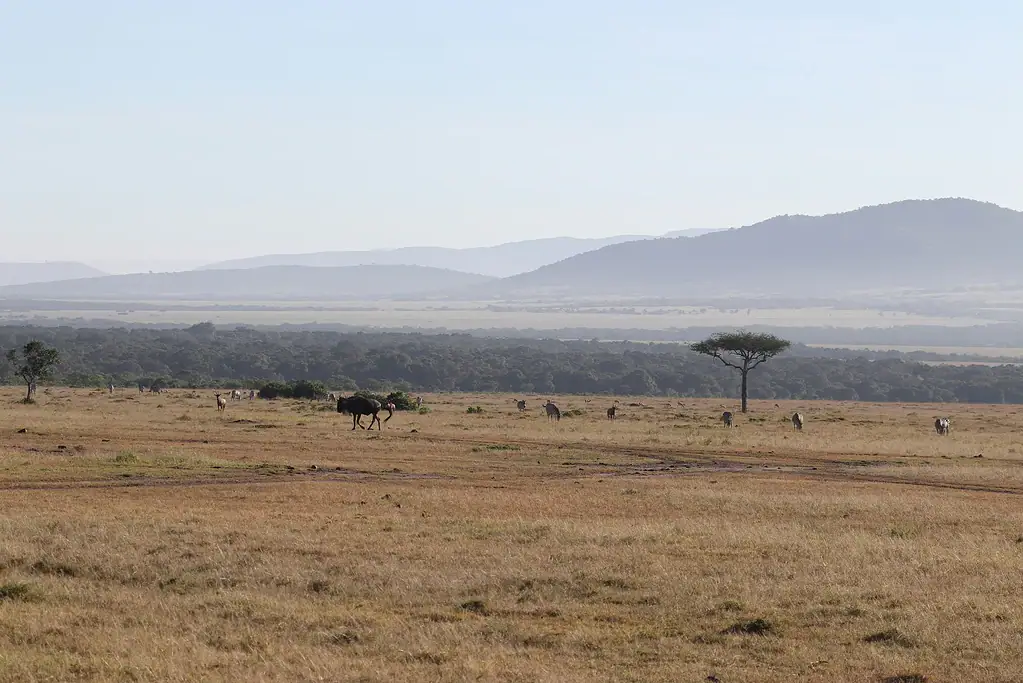
Riverine cover is important habitat
Black rhinos use wooded and bush habitats within the Mara landscape. Cover can make them difficult to see from a vehicle even when they are nearby. The wider Reserve and adjoining ecosystem are not divided into permanent visitor sighting stations; habitat and current animal movements determine the opportunity.
Keep population figures and promises out of the booking
Published surveys and reports cover different dates, boundaries and methods. A historic figure is not a current total for every rhino in the Mara. The practical visitor fact is that black rhinos belong to this ecosystem and require protection; a booking cannot convert their presence into a guaranteed Big Five checklist.
Protect the animal during and after viewing
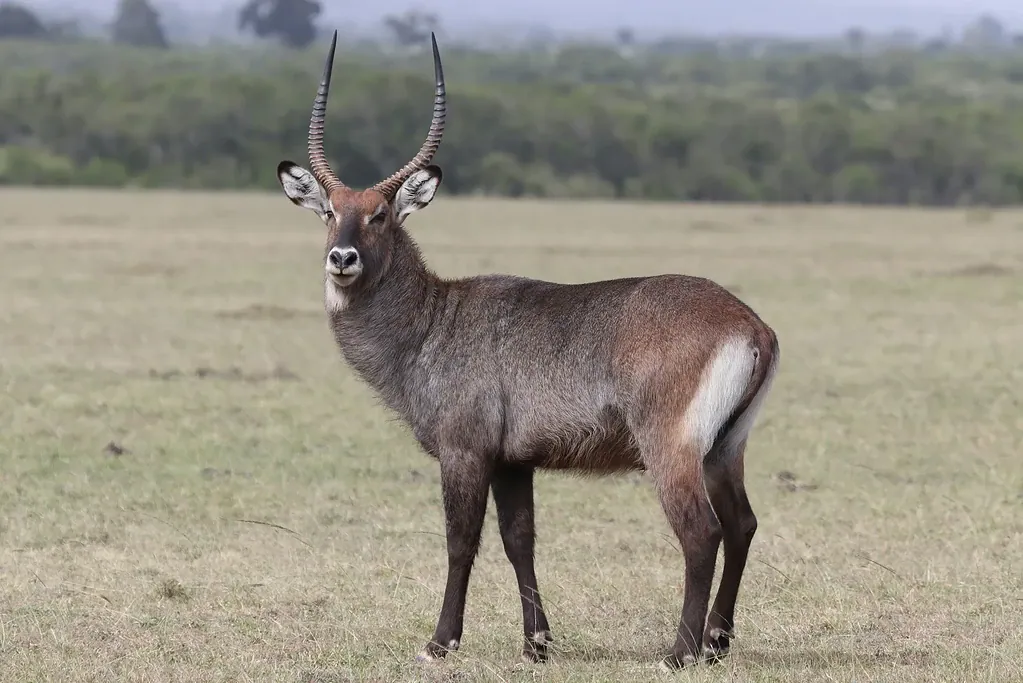
Keep the guide’s chosen distance, remain inside the vehicle and leave space for the rhino to move away. Do not seek a closer approach on foot. Avoid publishing precise sensitive animal locations or encouraging vehicles to converge on a hidden individual. Conservation takes priority over filling a photograph frame.
Build a wildlife-focused stay
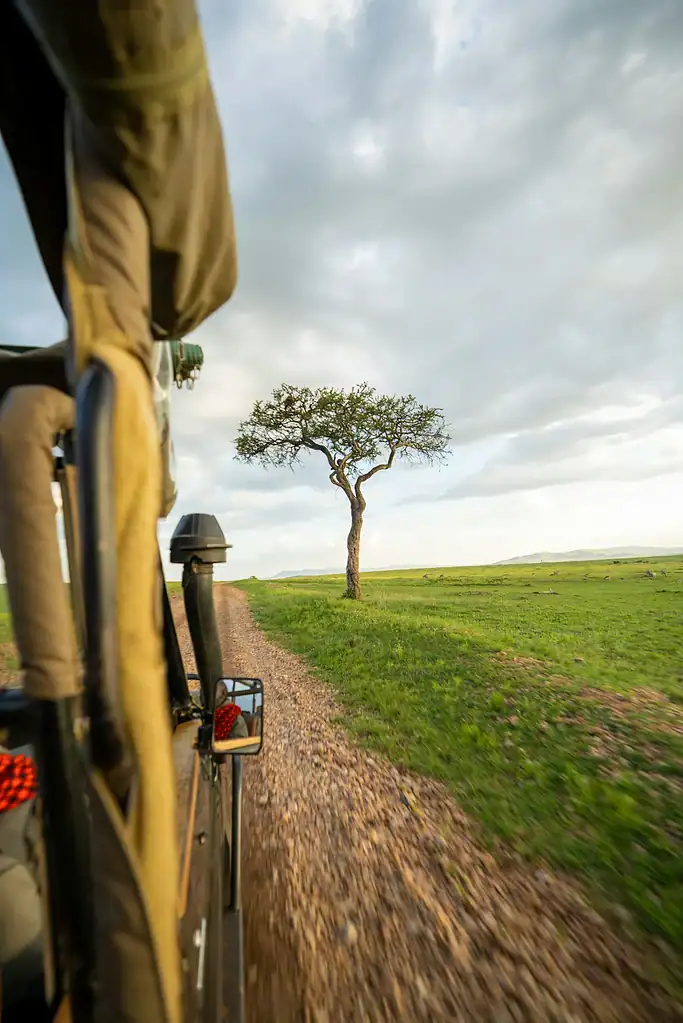
Combine this interest with the wider Maasai Mara wildlife guide and allow time to revisit suitable habitat. The stay-length guide separates nights from full wildlife days. Extra time creates flexibility; it does not establish a numerical probability of a sighting.
Continue planning your Maasai Mara safari
Book the correct arrival service
For a flight-based stay, use the airline’s airstrip and baggage information for the booked service. The correct strip follows the named camp and collection arrangement.
Explore safari packages






From USD 2,000 per person sharing



From USD 2,350 per person sharing

From USD 1,950 per person sharing

From USD 2,350 per person sharing

From USD 1,700 per person sharing

From USD 2,900 per person sharing

From USD 3,800 per person sharing
From USD 4,550 per person sharing
From USD 3,000 per person sharing
From USD 3,150 per person sharing
Plan your private Maasai Mara safari
Share your dates, party and interests with MaasaiMara.ke. We quote and book private safaris through authorised tour operator partners, with dedicated vehicles and guiding for your travelling party.