
Maasai Mara Areas
The most useful Maasai Mara areas to compare for a first itinerary are the Mara Triangle, Talek, Musiara Marsh and Sand River. They offer different camp settings, wildlife habitats and arrival arrangements within or beside the National Reserve. Choose a safari base around your interests and the access included in the trip; there is no single sector that guarantees the best sightings. Conservancies outside the Reserve have separate permissions and are another deliberate accommodation choice.
Explore this guide
Compare Reserve safari bases
Western Reserve, plains and river habitat. Sector payment instructions and camp boundary.
Accommodation choice and Reserve drives. Outside/inside location and daily admission.
Northern wetland, birds and resident lions. Reserve rules and sensitive wetland routes.
Southern border landscape and resident wildlife. Reserve access; no assumed international shortcut.
Choose by the experience you want
| Place | Useful focus | Access to establish |
|---|---|---|
| Mara Triangle | Western Reserve, plains and river habitat | Sector payment instructions and camp boundary |
| Talek | Accommodation choice and Reserve drives | Outside/inside location and daily admission |
| Musiara Marsh | Northern wetland, birds and resident lions | Reserve rules and sensitive wetland routes |
| Sand River | Southern border landscape and resident wildlife | Reserve access; no assumed international shortcut |
Understanding Maasai Mara areas
Area names help visitors make sense of a large wildlife landscape, but they do not all describe equivalent administrative units. The Mara Triangle is a managed sector of the National Reserve. Musiara Marsh and Sand River describe recognisable habitats and surrounding safari country. Talek can mean the settlement, gate, river or nearby accommodation zone. Clarifying which meaning a quotation uses is more useful than assuming every named area has its own ticket, boundary and camp system.
The National Reserve and neighbouring conservancies also need to be distinguished. Wildlife can move through connected habitat while visitor access remains controlled by management, tickets and camp partnerships. A safari base outside the Reserve can be convenient without including admission automatically. A conservancy stay can offer particular permitted activities without giving unlimited Reserve access. Location, permission and the booked programme all matter when comparing places that look close together on a map.
Start with the experience your party values most: varied resident wildlife, river viewing, birding, landscape photography, accommodation flexibility or a specific permitted activity. Then match a base to that interest and a practical arrival route. Our Maasai Mara destination guide explains the wider ecosystem. The area descriptions here make that picture useful for choosing where to spend the safari, rather than presenting a ranking that cannot predict animal movements on your dates.
Mara Triangle: a distinct Reserve sector
The Mara Triangle lies in the western part of the National Reserve and is managed by the Mara Conservancy. It is not a private conservancy outside the Reserve. Its visitor arrangements include particular gates, ticket procedures and wildlife rules. For travellers choosing a safari base, this distinction affects road approach, entry payment and how accommodation inside or outside the sector connects with the daily wildlife programme.
The Triangle offers open plains, river-associated habitat and a varied wildlife experience. Migration travel can bring particular interest to the Mara River, while resident animals remain a reason to visit beyond crossing-focused dates. A guide’s route depends on fresh activity and conditions. The Triangle should not be selected on a promise that every river visit produces a crossing, or that a camp’s western location guarantees a particular species beside the accommodation.
Choose the Triangle when its habitat, management and a suitable camp fit the trip. A stay within the sector and one outside its boundary can have different entry and daily-travel arrangements. Establish those before comparing accommodation figures. It is a strong option for visitors who want a coherent Reserve experience with clear rules and a deliberately planned access route, rather than a place to add automatically because its name appears on a migration brochure.
Talek: access, the river and accommodation choice
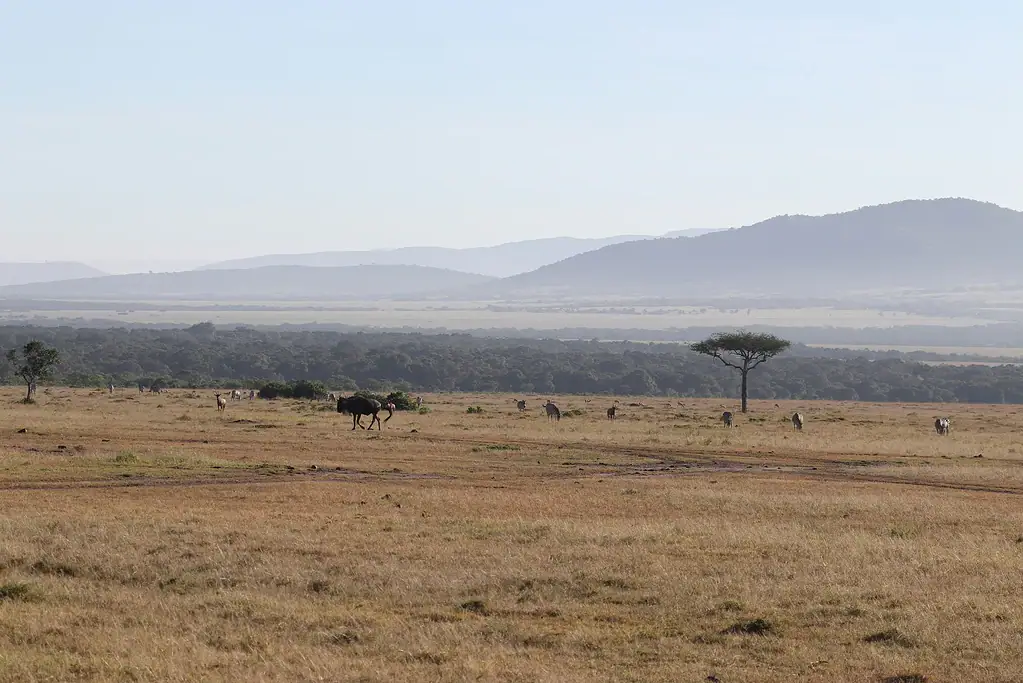
Talek is useful to understand as a cluster of settlement, gate, river and safari accommodation around the Reserve boundary. Its attraction as a safari base often lies in the range of places to stay and the connection to Reserve game drives. A room beside the Talek River can still be outside the Reserve, so the accommodation description and daily entry arrangement need to be read together.
The riverine setting provides a different atmosphere from an open-plains camp. Trees, water and neighbouring grazing habitat create varied wildlife interest, while the wider drive programme can explore Reserve country according to conditions. Talek is not a promise that every famous Mara sighting is nearby or that all river crossings use the same watercourse. The Talek River and Mara River are distinct, and a migration-focused itinerary should identify the actual viewing area it intends to visit.
Choose Talek when accommodation flexibility and a practical Reserve programme are important. It can serve different budgets and party styles, provided transport, guiding and admission are explicit. An accommodation-only booking and a complete private safari are different products. Our accommodation guide helps compare the stay itself, while the Talek guide explains why the side of the boundary and the actual vehicle arrangement matter to the daily experience.
Musiara Marsh: wetland, woodland and resident wildlife
Musiara Marsh is a habitat-rich part of the northern Reserve, associated with wetland, riverine vegetation and surrounding grassland. It is well known for the Marsh Pride, but the area’s value is broader than a named lion group. Birds, grazers and other wildlife use the different habitats as conditions change. A safari base serving this area can suit visitors interested in natural behaviour and returning to productive places over successive drives.
The marsh changes with rainfall. Wetter ground can affect where vehicles may go and where animals rest, feed or hunt. This makes local guiding especially useful: an apparently familiar landscape can require a different route or viewing approach on another visit. A guide should not enter sensitive wetland for a photograph, and visitors should not expect a pride’s territory to provide a guaranteed sighting at a fixed point beside the accommodation.
Musiara is attractive for birders, photographers and travellers who enjoy a mixture of habitat rather than one headline event. River-viewing opportunities can form part of the wider programme when appropriate, but they still depend on current conditions and movements. The area is a Reserve setting with Reserve rules; its marshland does not create permission for independent walking, night drives or unarranged activity. Match the camp’s location and access to the experiences you actually want.
Sand River: the southern border landscape
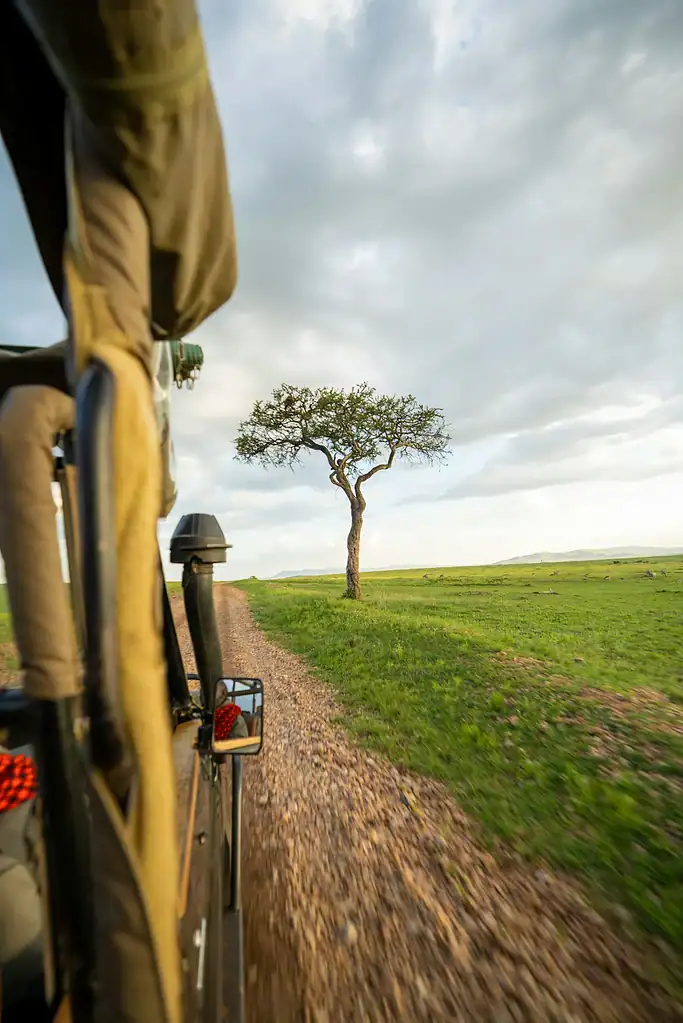
Sand River describes the river and safari country near the Tanzania border in the southern Reserve. The setting is part of the connected Serengeti–Mara ecosystem and has a role in seasonal herd movements. It offers a different geographical focus from the northern marsh and the western Triangle. A safari base here should be selected for its southern landscape and the accommodation programme, rather than as a convenient substitute for every Mara River site.
The Sand River and Mara River are different watercourses. Migration movement near the border is not the same event as a crossing at a recognised Mara River viewing point. Rain, grazing and animal choices influence both, and the calendar cannot promise what happens beside a particular camp. Give the guide room to respond to resident wildlife and the wider landscape even when the main reason for travel is seasonal herd movement.
The international boundary also needs careful planning. A border pillar in a safari photograph is not proof of an open visitor crossing or permission to drive directly into the Serengeti. Kenya and Tanzania travel requires the actual immigration and transport arrangements for an authorised route. Sand River should be chosen as a Mara safari base on its own merits, with any cross-border itinerary planned separately rather than implied by proximity to the boundary.
Matching areas to your main wildlife interest
For resident-wildlife travel, choose a camp with access to varied habitat and enough time for repeated outings. A named animal or famous pride can draw interest, but wild animals use their ranges naturally and may be elsewhere when you visit. The strongest safari programme allows the guide to work with fresh signs and the party’s priorities. This approach suits all the areas described here, even though their habitats and starting points differ.
For migration travel, identify the actual experience you hope to see: large herds on the plains, movement across the border landscape or a possible river crossing. These interests can lead to different safari bases. The Great Migration guide explains the broad seasonal pattern. Combine it with the relevant area page rather than choose accommodation solely from a dramatic crossing image whose location and timing may be unrelated to that stay.
For birding and photography, habitat and pace deserve particular attention. Marsh, woodland, river margins and open plains offer different subjects. A private programme can allow more time with those interests, within the wildlife rules. Let the guide know whether you prefer smaller species, behaviour or landscapes, so the itinerary is not built entirely around big cats. A useful area choice creates opportunities to enjoy those priorities rather than simply shorten the route to a famous name.
Conservancies as an alternative safari base
The conservancies outside the Reserve offer another way to plan a Mara stay. They are landowner and tourism partnerships with controlled access, participating camps and their own rules. Some permitted activities, including guided walking or night drives, can be an important reason to choose them. The conservancies guide compares that model with a Reserve stay. The fact that a place is nearby does not merge the visitor systems.
Compare Mara North, Naboisho and Olare Motorogi through the actual camp, guiding and activities. A conservancy safari may focus on resident wildlife and a quieter camp-based rhythm, while a Reserve safari base may serve wider sector exploration. Neither arrangement is universally best. The choice should follow what the party wants to do and the access attached to the booking.
A combined stay can make sense when each place has a clear purpose. Include the transfers, conservation charges, Reserve entry and useful time at both bases. Avoid moving simply to add names to the itinerary, especially when the party would gain more from another unhurried drive in the existing area. Areas and conservancies are planning tools for a better safari, rather than a checklist that every visitor needs to complete.
Camps inside, outside and beside the Reserve
Location descriptions need to be precise. A camp can be beside a river, near a gate or marketed as being in the Maasai Mara while standing outside the Reserve. Another can be inside a managed sector or within a private conservancy. Those settings affect admission, daily travel and activities. Establish the actual boundary relationship before comparing accommodation, so that the wildlife programme and compulsory charges are understood on the same basis.
The accommodation itself also varies. Traditional tented camps, larger lodge-style properties, family arrangements and different comfort tiers can occur across the wider Mara. A safari base should suit the party between outings as well as on drives. Room layout, meal arrangements, accessibility and privacy deserve attention. These features cannot be inferred from the area name, and a higher accommodation tier does not guarantee better natural sightings outside the room.
Use the accommodation hub to compare stay types and comfort, then use the area guide to understand access and habitat. A complete private safari and an accommodation-only stay should not be compared as if they include identical transport and guiding. The written programme should name the property and show how its location serves the planned activities. This makes the safari base a concrete choice rather than a vague promise of staying close to wildlife.

Road routes and arrival planning
Road arrival should follow the chosen camp and sector, with local approach information supplied by the actual operation. The shortest route on a digital map can be unsuitable because of access rights, ground conditions or watercourses. Different areas can require different gates or approaches even when they share the National Reserve name. A practical transfer plan therefore begins with the destination and permission, not with a general estimate for reaching the Mara.
The journey should fit the first and last safari days. After a long road transfer, settling into camp and a realistic local outing can be more comfortable than another ambitious drive to a distant attraction. Departure likewise needs to connect reliably with onward plans. This matters for every safari base, and particularly for families or parties who prefer a slower pace. A well-designed route protects useful viewing time rather than treating transfers as incidental.
Our road travel guide explains the wider journey. The selected property provides the final approach arrangement. When combining areas, show the move in the itinerary and leave space for the conditions. A road transfer may provide wildlife observations along the way, but it should not be sold as guaranteed uninterrupted game viewing or used to justify unrealistic sightseeing expectations on a day whose main purpose is travel.
Airstrips, flights and local transfers
The appropriate airstrip depends on the camp, booked service and meeting arrangement. A map of all Mara airstrips cannot establish the correct landing point for every safari base. Scheduled flights may make intermediate stops, and the local camp transfer is a separate part of arrival. Coordinate both before selecting a flight solely because its destination label includes Maasai Mara. The actual strip and pickup should be visible in the booking.
Baggage conditions and the return transfer also belong in that planning. Photographers should check how equipment fits the booked service; families should consider the full journey rather than only the airborne leg. When moving between camps, determine whether an authorised road transfer is the practical connection. A different area name does not automatically require another flight, nor does a nearby airstrip automatically create a scheduled route to the next property.
The flight guide explains the broader options and booking considerations. Use it alongside the property’s current arrival instructions. A fly-in trip can be convenient, but the area choice should still serve the wildlife and accommodation experience once you arrive. The best safari base is one whose access, stay and guiding make sense together, rather than one chosen from a headline flight duration alone.
Seasons, rain and changing routes
The broader Mara calendar is helpful, but different areas can respond differently to the same conditions. Marshland, river margins and open plains change as rain and grazing affect water and vegetation. A route productive on one visit may be unsuitable or less rewarding on another. Guides adapt to those changes. Visitors benefit from leaving space in the programme rather than expecting a fixed wildlife circuit to work identically every day of the year.
Drier periods can make movement and open-country viewing easier, while greener periods offer different light, scenery and birding interest. Migration travel often focuses on the broader July-to-October pattern, but that does not promise a crossing on a selected day. A camp may also close for seasonal operation or maintenance. Wildlife timing, accommodation availability and access conditions are separate considerations that need to fit the same safari plan.
Read the best-time guide with the relevant area page. If dates are fixed, choose a safari base and programme that work with the expected conditions and the party’s interests. A wet day can favour another habitat or a different pace, rather than make the entire trip unsuccessful. Good planning creates practical flexibility without claiming current conditions or animal locations that have not been confirmed.
Fees and clear access inclusions
Reserve entry, vehicle charges, conservancy charges and accommodation are different parts of the trip. Their treatment depends on where you stay and where the itinerary goes. Do not assume a room price includes daily Reserve admission simply because the property markets itself as a Mara camp. Equally, a camp inside a particular area does not make every optional excursion or activity part of its ordinary rate.
The Reserve entry-fee guide explains the published visitor categories and conditions. For travellers arranging entry directly, use the KAPS ticketing service and follow the relevant sector’s instructions. The Mara Triangle has its own staying-location payment arrangements, while conservancy access is attached to the participating operation. The area pages explain the relevant distinction without treating a ticket for one place as admission to the whole ecosystem.
A complete private safari quote should name the accommodation, dedicated vehicle and guiding, transfers, scheduled admission and compulsory selected-property charges. Optional activities should be identified separately. Our safari cost guide helps compare complete programmes. This provides a fair basis for choosing between safari bases even when their headline room rates, locations and supplier inclusion lists look very different.
Responsible viewing in every area
Wildlife rules protect animals and habitats as well as the visitor experience. Give animals space, keep noise low and follow the guide’s instructions. Do not feed wildlife, block its movement or push for a closer photograph that requires breaking the local code. The Mara Triangle has specific published rules, while other Reserve areas and conservancies follow their applicable management arrangements. Do not copy a numeric limit from one place and assume it applies everywhere.
Sensitive habitat deserves particular care. Wetland, riverbanks, thickets and erodible ground are not shortcuts to a better view. A guide may wait or change route when an approach would disturb animals or damage the environment. Remain within the authorised visitor arrangements and leave vehicles only where permitted. A safari base in a famous wildlife area does not create permission for independent walking or nighttime activity outside the applicable programme.
Respect also extends to local communities and camp staff. Ask before photographing people, follow hosted-visit arrangements and keep litter with the vehicle until it can be disposed of properly. Visitors can enjoy different areas while accepting that not every sighting or photographic angle is available. Thoughtful conduct supports the landscape and makes it possible to observe behaviour naturally, which is often more rewarding than forcing a brief close encounter.
Choosing a coherent safari programme
Begin with a suitable base and enough time to appreciate it. The Triangle can offer a distinct managed Reserve experience; Talek can provide accommodation flexibility and Reserve access; Musiara serves wetland and northern habitat interests; Sand River gives a southern border-landscape focus. These are practical starting points. The selected camp, guiding and dates ultimately determine how each option works for the party.
For a combined programme, give every move a reason: another habitat, a different permitted activity or better access to the experience that matters most. Include the transfer and admission arrangements and avoid filling travel days with unrealistic promises. Families may prefer fewer moves, photographers may value repeated observations, and returning visitors may want a contrasting conservancy stay. Different areas can serve each approach when the itinerary is designed around the traveller rather than a fixed circuit.
The final written plan should make the choice easy to assess: where you sleep, where you drive, how you arrive and what is included. A good safari base connects those details with your interests. It cannot guarantee where wildlife will be, but it can give the guide and party a practical, comfortable framework for enjoying the Maasai Mara and the distinctive habitats that make its areas worth exploring.
Explore safari packages






From USD 2,000 per person sharing



From USD 2,350 per person sharing

From USD 1,950 per person sharing

From USD 2,350 per person sharing

From USD 1,700 per person sharing

From USD 2,900 per person sharing

From USD 3,800 per person sharing
Plan your Maasai Mara safari
Tell us your travel dates, party and wildlife interests. MaasaiMara.ke quotes and books private safaris through authorised tour operator partners, with dedicated vehicles and guiding. Your written quote names the accommodation and includes the scheduled park fees and compulsory selected-property charges.
