
Olare Motorogi Conservancy
Olare Motorogi Conservancy is a landowner and tourism partnership beside the Maasai Mara National Reserve. Its controlled camp-based access, wildlife habitat and partner camps suit visitors interested in resident animals and unhurried big-cat viewing. Choose the exact accommodation and private guiding arrangement, rather than assume every stay includes the same activities. A conservancy safari here can be combined with the Reserve, but the relevant entry, transfer and conservation charges need to be included explicitly in the itinerary.
Olare Motorogi Conservancy at a glance
Wildlife landscape
A camp-based conservancy stay outside the National Reserve.
Natural observations
Resident wildlife, changing habitat and seasonal possibilities; sightings remain conditional.
Practical access
Use the selected camp’s actual road or air arrival and authorised guiding arrangement.
Seven useful planning decisions
- Choose the exact camp and establish its boundary location.
- Match the wildlife programme to your party’s interests.
- Include the correct entry or conservation charges.
- Specify the private vehicle and guiding arrangement.
- Coordinate the actual road or air arrival and camp transfer.
- Select permitted activities that suit the party and season.
- Allow flexibility for weather, wildlife movement and viewing rules.
Access and fee basis
| Item | Applicable basis |
|---|---|
| Managing arrangement | Landowner and tourism conservancy partnership |
| Entry / conservation | Published 2026 adult non-resident charge: USD 130 per person per day/night according to camp tariff; see the detailed conditions below. |
| Accommodation | Selected-property tariff; compare the full occupancy, board and compulsory-charge conditions. |
| Complete private safari | Written quote names the accommodation and includes scheduled entry and compulsory selected-property charges. |
Olare Motorogi Conservancy and its management
Olare Motorogi is managed by Olpurkel Ltd, a not-for-profit company within the partnership of Maasai landowners and tourism operators. Its board brings equal landowner and tourism-partner representation alongside representatives of The Maa Trust. Land agreements help keep habitat available for wildlife, while the participating operations support the conservation model. Grazing and environmental management are part of this working landscape, whose wildlife value depends on its relationship with the people who own and use the land.
The conservancy lies outside the National Reserve, with its own visitor permissions and tourism code. A Reserve ticket does not automatically provide access to Olare Motorogi, and a camp stay here does not automatically pay for a Reserve excursion. The distinction is important because marketing often describes the whole Greater Mara as a single destination. Ecological connection and visitor admission are different matters, even where animals can move freely between neighbouring habitats.
For visitors, the practical starting point is a participating camp and its actual programme. A conservancy safari can offer controlled wildlife viewing and permitted experiences, but those advantages depend on the selected property, guides and rules. The wider Maasai Mara conservancies guide explains the model. Choose Olare Motorogi because its camp and wildlife experience fit your party, rather than rely on a general promise that private land guarantees empty sightings.
Big cats and the wider wildlife landscape
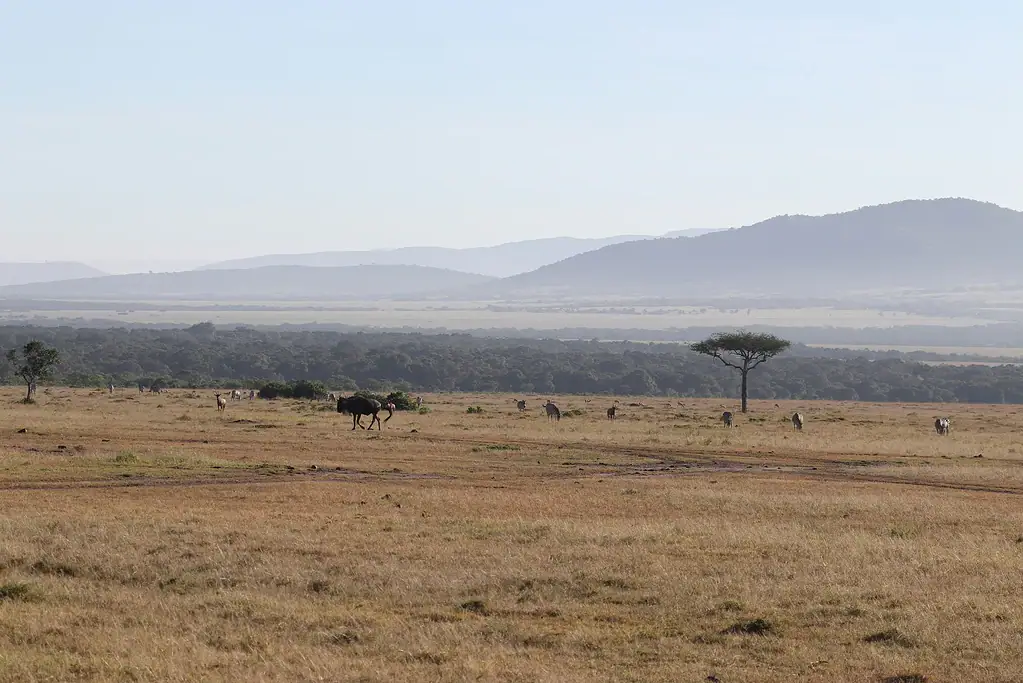
Olare Motorogi’s open habitat and drainage lines provide opportunities to look for predators and the animals they depend on. Lions and cheetahs are prominent interests for many visitors, while leopards require patient observation in suitable cover. None is a scheduled attraction. A guide works with fresh signs, local knowledge and changing conditions, so an outing may involve a long observation, a careful search or a productive encounter with something different from the original target.
The wildlife experience is broader than big cats. Grazing antelope, giraffes, elephants, buffalo and birds help explain how the habitat functions. Watching a herd feed or respond to a predator can be as interesting as a close portrait of the predator itself. A conservancy safari benefits from enough time to revisit places and see those relationships change, rather than require every drive to produce another headline animal before the party returns to camp.
Managed tourism, resident wildlife habitat and the choice of partner camps are practical reasons to consider Olare Motorogi. Broad claims about predator or vehicle density cannot predict what your party will encounter on a particular day. The accommodation, guiding and time spent observing the habitat provide a firmer basis for choosing the stay. Our Big Five guide provides context for the species without turning a safari into a guaranteed checklist.
Partner camps and their different stay styles
The conservancy’s published partner network names Porini Lion Camp, Kicheche Bush Camp, Mara Plains Camp, Olare Mara Kempinski and Mahali Mzuri. These provide different accommodation and hospitality experiences within the wider Olare Motorogi setting. The list establishes the tourism relationship; it does not mean every room, meal plan, activity or vehicle arrangement is identical. Compare the exact property and booked product before treating them as equivalent conservancy stays.
Some travellers prefer a small traditional camp with the safari day at its centre; others place more emphasis on room design, family arrangements or hospitality facilities. Either approach can be compatible with a wildlife-focused trip. The useful comparison is how the stay serves your party: the room configuration, service, accessibility, meals and activities actually included. A famous name or a striking tent photograph is only part of that decision.
Use the accommodation guide to compare comfort and stay styles, then build the conservancy safari around the selected camp’s actual offer. Private transport and guiding should be explicit in a MaasaiMara.ke quotation, particularly where a supplier’s ordinary camp tariff includes scheduled shared activities. Controlled access to Olare Motorogi is not the same as an exclusive vehicle for every guest, and an exclusive vehicle does not remove the sighting rules.
Camp location and useful time on safari
A camp’s immediate setting changes the atmosphere between outings and where drives start. Open plains, riverine vegetation and sheltered drainage lines produce different views and wildlife opportunities. These differences are worth considering, especially when a party enjoys photography from camp or quiet time observing the surroundings. They do not provide a reliable way to promise that a room will overlook a particular predator or that one camp is always nearest the day’s best sighting.
Time matters more than a crowded attraction list. A programme that allows repeated drives within Olare Motorogi can give the guide room to follow what is happening locally. A party may choose to remain with a resting lion, spend time identifying birds or return to habitat where fresh tracks suggest activity. Those choices suit a conservancy safari better than a rigid schedule requiring every outing to reach a named point regardless of conditions.
Balance outings with the accommodation experience and the party’s comfort. A longer drive with an arranged meal and a shorter drive followed by time at camp offer different rhythms. Families, photographers and returning visitors may value different versions. The itinerary should reflect those priorities from the start, so that the selected camp is a suitable safari base rather than simply an overnight stop between journeys to elsewhere in the Mara.
Conservation charges and the published basis
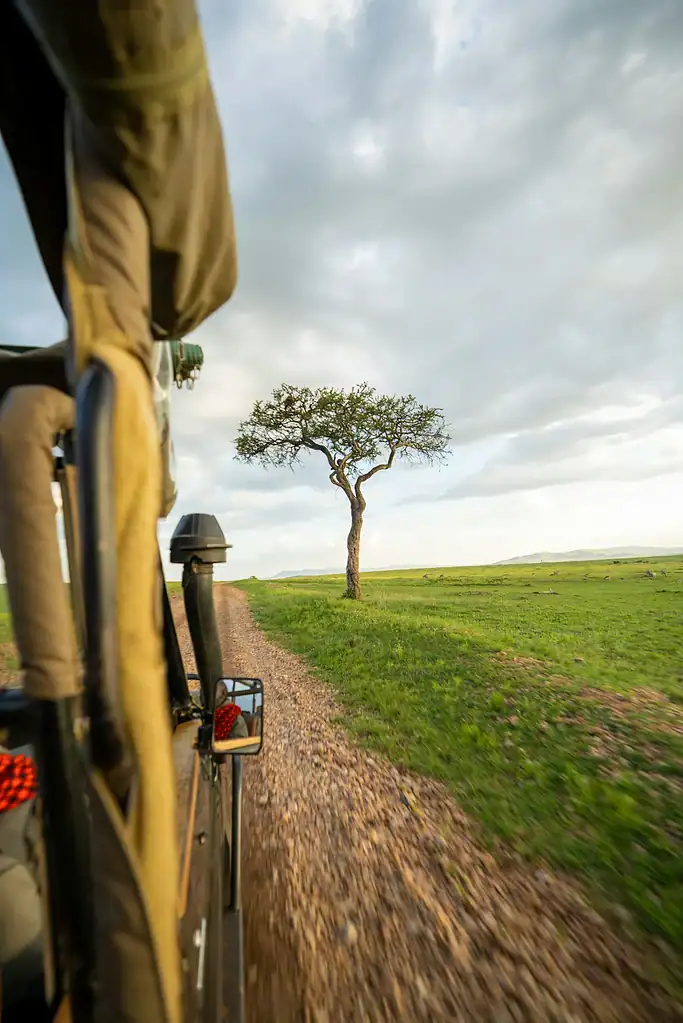
Published 2026 tariffs for Olare Motorogi show a non-resident adult conservation charge of USD 130 per person, with the charging basis described as per day or per night by the relevant camp. Kicheche’s applicable child figure is USD 65 for ages seven to seventeen. Porini’s resident sheet lists KSh 2,500 per person per day. These are source-specific published conditions, not a universal accommodation tariff or proof that every camp bills every category identically.
The selected property’s offer determines whether conservation charges are included or shown separately. Other compulsory contributions may also be listed by a camp. Porini, for example, publishes a separate Wildlife Habitat Trust payment of USD 5 per person per night under its all-camps terms. That is not the Olare Motorogi conservation fee itself. Keep the camp’s full conditions together when comparing a nightly accommodation price with an inclusive safari package.
Your written quote should identify the property, occupancy and board basis, conservation inclusions, private vehicle and guiding, transfers and any Reserve excursions. A Reserve entry ticket remains a separate access item when the itinerary crosses into the National Reserve. The Reserve fee guide explains those charges; the safari cost guide helps compare complete programmes. This is more useful than adding a single fee figure to an otherwise undefined conservancy safari.
Access rights and visiting from elsewhere
Olare Motorogi is a managed tourism area whose access is attached to authorised operations. A visitor staying in the Reserve or outside protected areas should not assume they can buy an ordinary day pass and drive through all the conservancy. The relevant camp and operator arrangement must establish permission. Similarly, travelling along an approved transfer route does not create unrestricted game-viewing rights throughout the surrounding wildlife habitat.
This makes the accommodation location important when reading a safari quotation. A camp marketed as being in the Maasai Mara might stand inside the Reserve, within a conservancy or outside both. Those settings can produce very different access arrangements even when the map distances look small. Establish where you sleep, where the vehicle may drive and which activity permissions are included before comparing the proposal with another Olare Motorogi stay.
If the trip changes camps, plan the transition as part of the safari. The route, meeting point and timing should suit the actual access permissions and conditions. Do not rely on a navigation app to choose an informal shortcut across private land. A conservancy safari becomes easier to assess when the written programme clearly separates accommodation, authorised wildlife viewing and transfers, with no implied rights that the selected property has not provided.
Rules for wildlife viewing and habitat protection
Olare Motorogi’s published approach requires operators and guides to follow a code of conduct and minimise their environmental impact. Guests should give animals space, keep noise low and follow the guide’s instructions. A private conservancy safari does not permit chasing, blocking or disturbing wildlife. It also does not allow a vehicle to enter sensitive vegetation simply because the party would prefer a closer view or a different photographic angle.
Off-road viewing, when authorised, remains controlled by the local rules and conditions. Wet ground, drainage lines, vegetation and animal behaviour can make a particular approach inappropriate. A guide may decide to wait or leave rather than drive to a sighting. Olare Motorogi’s own code determines vehicle conduct and the viewing arrangement; rules from Mara North or the Triangle describe different areas. The camp’s actual briefing explains the code for its outings.
The same care applies around young animals and resting predators. A quiet sighting offers a chance to observe natural behaviour; it is not an invitation to make the animal move. Take litter back, do not feed wildlife and remain within the permitted visitor arrangements. Respecting these limits protects both habitat and the quality of the experience. A thoughtful Olare Motorogi safari treats responsible conduct as part of the trip’s value, rather than an obstacle to enjoying it.
Guided walks and activities outside the vehicle
Permitted guided walking can complement game drives by changing the scale of observation. Tracks, plants, insects and signs of grazing or predation become easier to discuss when the group is moving slowly with a qualified guide. The aim is to understand the landscape, not approach large wildlife as closely as possible. The selected camp determines the actual walking programme and whether it suits the party and conditions.
Walking arrangements can differ in age eligibility, fitness expectations, route and availability. A room suitable for a family does not mean every child can join every outing. Establish the party’s needs early, particularly when walking is a main reason for choosing a conservancy safari. The guide may modify or cancel a route if conditions require it, and guests should accept that judgement rather than request a particular wildlife encounter on foot.
Our walking-safari guide explains the broader experience. In Olare Motorogi, the property’s actual policy is the basis for your booking. Conservancy permission is not permission to leave camp independently, and the camp’s escorted-movement instructions still apply. A varied itinerary can include different ways to appreciate the habitat while preserving enough time for unhurried drives and rest between outings.

Night viewing and optional experiences
Some Olare Motorogi partner programmes include night viewing or other activities under the conservancy’s permissions. These add a different perspective after daylight, but the selected camp’s offer determines what is available and included. Lighting and vehicle conduct should protect animal behaviour. A night drive is a chance to look for nocturnal life, not a promise of rare species, a hunt or unrestricted spotlight use wherever the vehicle can travel.
Other experiences may require advance arrangement, suitable conditions or additional charges. Do not infer every activity from the conservancy name. Decide which experiences matter to the party and include them explicitly in the programme, leaving room for the guide’s judgement. An Olare Motorogi safari can be rewarding with a straightforward set of drives; there is no need to add optional outings merely to make the itinerary appear more luxurious or busy.
Read our night-drive guide for wider context. The relevant return times, routes and safety arrangements come from the local operation, not another conservancy’s website. For a private conservancy safari, make the activity format clear as well: an exclusive travelling party should know when a specialist experience has a different operational arrangement. That clarity is more useful than a long list of experiences that remain only possibilities.
Seasonal conditions and travel timing
Resident wildlife gives Olare Motorogi an appeal beyond a single migration window. Drier periods can ease movement on local tracks and make open-country scanning more straightforward. Greener periods change the scenery, light and birding opportunities, while rain can restrict some routes. Conditions vary, so a camp’s calendar should be read alongside the party’s interests rather than treated as a guarantee that the wildlife will be in a fixed place on a selected date.
The broader Mara migration pattern often draws travellers between July and October. That is a useful starting point for planning the ecosystem portion of the trip, not proof that the main herds will pass every Olare Motorogi camp. If river viewing is central, include the relevant Reserve access and accept that timing is variable. A conservancy safari can complement migration travel through resident wildlife and permitted activities without promising the same event in both settings.
Birders and photographers may value different conditions from a party whose primary interest is a crossing. Camp operating dates and maintenance closures also need to match the stay. Use our best-time guide to understand the wider seasonal pattern. With fixed dates, design the Olare Motorogi safari around what is realistic and appealing then, allowing the guide to adjust the local programme when weather or wildlife movement favours another route.
Road arrival and camp-specific directions
The final road approach needs to follow the camp’s actual directions and authorised access. A vehicle suitable for local tracks and changing weather is essential to practical planning, but no vehicle removes the need for permission. Digital maps can suggest routes across private land, sensitive habitat or unsuitable watercourses. The operator should coordinate the approach with the selected property rather than treat every line shown near Olare Motorogi as a public road.
Keep the arrival programme comfortable. After an overland transfer, the party may prefer settling into camp and a local first drive to another ambitious journey across the Mara. Families and travellers interested in a slower conservancy safari particularly benefit from realistic pacing. The written itinerary should show the actual transfer arrangement and useful time at the base, rather than use broad phrases such as game viewing en route to promise uninterrupted wildlife activity throughout a travel day.
Our road travel guide covers the wider Nairobi connection. The selected camp supplies the local approach and meeting arrangement. Plan the return journey with the same care when it connects to another destination or flight. A coherent Olare Motorogi safari protects the wildlife experience by making transfers predictable enough for the programme, while retaining flexibility for the conditions the guide encounters on the ground.
Air arrival and coordinated local transfers
A fly-in safari can reduce time on the overland journey, but the booked landing strip must suit the camp and service. Ol Kiombo is an arrival option described by some Olare Motorogi properties; it should not be assumed to be the correct point for every booking. The actual flight, meeting arrangement and camp transfer need to be coordinated. A short-looking line between an airstrip and camp on a map is not a verified transfer promise.
Scheduled flights may have intermediate stops, and baggage conditions vary by service. The local transfer is another part of the journey, so keep the first and last safari days consistent with the travel arrangement. When combining camps, determine whether an authorised road movement is the practical connection rather than adding a flight automatically. The party should understand the whole route, including how departure links with the onward journey.
Use the Mara flight guide for the broader considerations. The property and booked service establish the final Olare Motorogi arrival details. A fly-in conservancy safari is best compared as a complete accommodation and guiding experience, not solely on the headline flying time. Smooth coordination allows the party to arrive with clear expectations and spend the stay appreciating the wildlife rather than resolving avoidable meeting-point confusion.
Combining Olare Motorogi with the National Reserve
The adjoining Reserve creates opportunities for a wider trip, but a Reserve excursion still uses its own admission arrangement and safari time. The itinerary should say where the vehicle will go, what entry is included and how the day fits the party’s interests. Staying beside the boundary does not make every river-viewing site equally convenient, and conservation access in Olare Motorogi is not a substitute for the Reserve ticket needed on that excursion.
For a wildlife-focused party, a combined programme can provide different habitat and viewing contexts. For a migration-focused party, the Reserve portion may be the main reason for travelling, with the conservancy safari offering a contrasting stay. Consider whether a split accommodation plan or an excursion from one base serves those priorities better. Either approach needs a practical route and enough time to enjoy each place without turning the trip into constant transfers.
Our Mara Triangle guide, Talek guide and wider areas guide explain Reserve choices. Olare Motorogi should retain a clear purpose within the programme: resident wildlife, an appropriate camp and managed activities. A combination is useful when those experiences complement one another, rather than when the itinerary simply adds more destination names without explaining what the party gains from the move.
Landowners, grazing and community respect
Olare Motorogi’s conservation model rests on relationships with Maasai landowners and tourism partners. Its published management approach includes pasture and grazing decisions as well as tourism standards. Livestock and community activity are part of the wider landscape, so visitors should avoid imagining conservation as land entirely disconnected from its residents. The guide can explain how those arrangements help maintain wildlife habitat while supporting livelihoods.
Community experiences need consent, respectful hosting and accurate information about the programme. Ask before photographing people and follow the host’s guidance. Do not assume a safari stay gives unrestricted access to homes or daily work. Where a camp describes a particular project or contribution, keep its actual terms clear instead of promising that every booking directly funds an invented outcome. A responsible conservancy safari respects people as well as wildlife throughout the stay.
Visitors interested in helping beyond their trip can explore participation with Olare Motorogi Conservancy. The camp and tour operator still arrange the accommodation and activities. Supporting the conservation model through legitimate tourism is valuable, but any separate donation or project participation has its own terms. On the ground, the party’s immediate role is to follow the viewing code, protect habitat and engage respectfully with those managing and living in the landscape.
A well-matched Olare Motorogi safari
Choose Olare Motorogi when its managed wildlife setting and a particular partner camp suit the party. Photographers should specify private vehicle use, equipment needs and the pace of sightings. Families should prioritise room arrangements, children’s activity eligibility and comfortable daily timing. Travellers with mobility needs require specific information about the room, paths and vehicle boarding, rather than assume those features from the accommodation’s luxury description.
Compare Mara North and Naboisho using the same practical criteria. The best conservancy safari for a party is the one whose accommodation, guiding, access and activities fit their interests. Avoid deciding from unsupported wildlife superlatives or a single promotional photograph. A calm explanation of what is actually included provides a firmer basis for choosing between otherwise appealing camps.
The written programme should make the decision concrete: the named camp, accommodation basis, private transport and guiding, transfers, permitted activities, conservation charges and scheduled Reserve visits. Give the Olare Motorogi stay enough time to explore its habitat and observe behaviour without rushing. This produces a clearer and more rewarding safari than expecting the conservancy name alone to guarantee the sighting, activity or level of privacy imagined before travel.
Explore safari packages






From USD 2,000 per person sharing



From USD 2,350 per person sharing

From USD 1,950 per person sharing

From USD 2,350 per person sharing

From USD 1,700 per person sharing

From USD 2,900 per person sharing

From USD 3,800 per person sharing
Plan your Maasai Mara safari
Tell us your travel dates, party and wildlife interests. MaasaiMara.ke quotes and books private safaris through authorised tour operator partners, with dedicated vehicles and guiding. Your written quote names the accommodation and includes the scheduled park fees and compulsory selected-property charges.
