
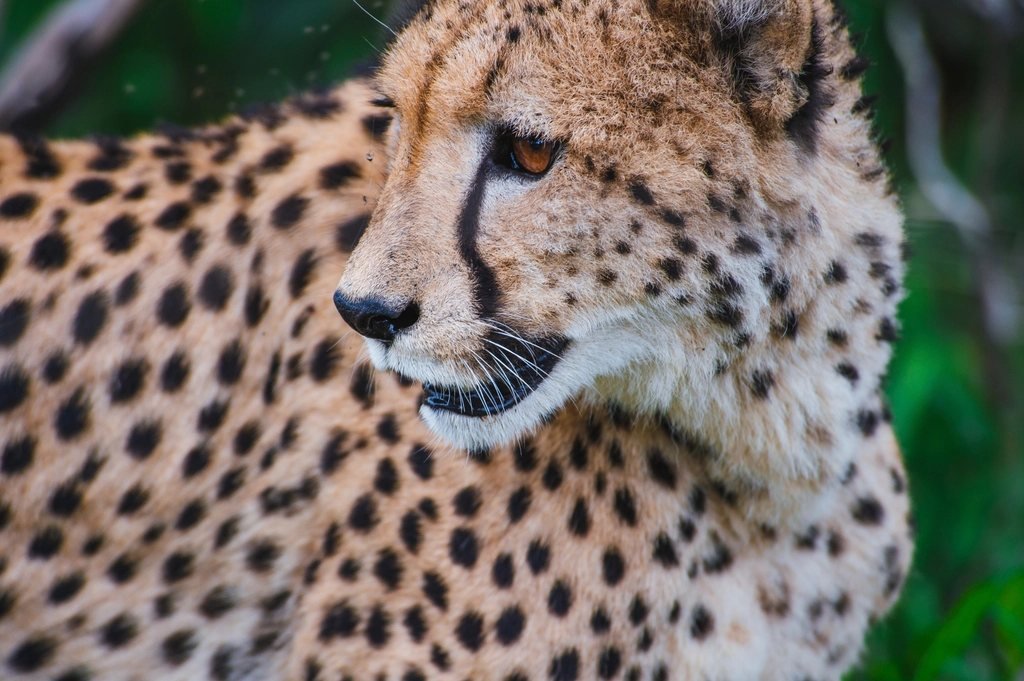
Cheetahs live in the Maasai Mara’s wider grassland landscape. Solid black spots, dark facial tear marks and a slender, long-legged build distinguish them from leopards. Viewing centres on patient observation in suitable habitat, with space for animals to rest, travel and hunt.
Cheetahs of the Maasai Mara at a glance
Identity
Acinonyx jubatus; solid spots and facial tear marks.
Habitat
Open grassland within a connected wider landscape.
Behaviour
Females raise cubs; some males form coalitions.
Identify the cheetah’s lighter build
The small rounded head, long legs, deep chest and long balancing tail give cheetahs a different profile from the more muscular leopard. Look for separate spots and the dark marks running from the eyes towards the mouth. These features are more dependable for identification than assuming every spotted cat on a plain is a cheetah.
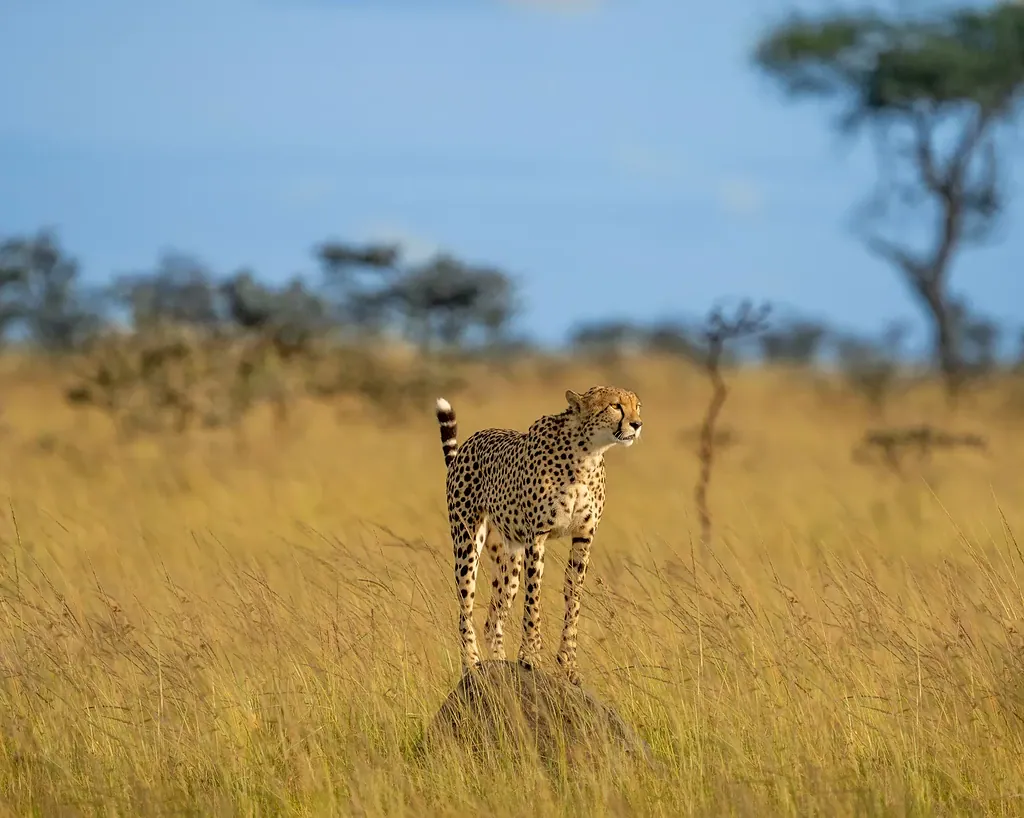
Observe more than the chase
Cheetahs stalk before a short pursuit and take prey including small antelope. Feeding, scanning, resting and a mother’s interaction with cubs are also valuable observations. A hunt is neither inevitable nor an event to stage. Vehicles must leave the animal’s approach and escape routes open, including the space between predator and prey.
Understand coalitions and family groups
Some males live in coalitions, while others travel alone. Females usually raise their cubs without a resident male group. Group size alone does not identify a named family or coalition. Named animals and territories change; an evergreen guide should explain behaviour rather than promise a meeting with a particular individual.
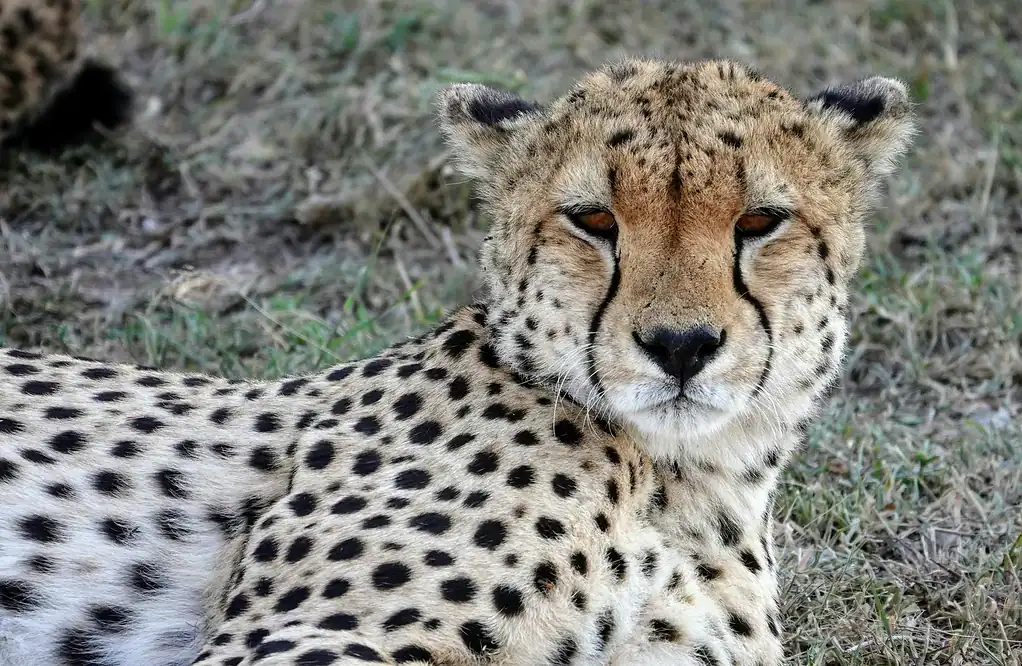
Connected habitat supports cheetahs
Habitat fragmentation and conflict with livestock keepers affect cheetahs across their range. Connected open country supports movements beyond a single protected boundary. On safari, remain in authorised viewing positions, keep noise low and avoid pressure for a close approach. A long lens and patient observation protect a better encounter than surrounding an animal.
Build a wildlife-focused stay
Combine this interest with the wider Maasai Mara wildlife guide and allow time to revisit suitable habitat. The stay-length guide separates nights from full wildlife days. Extra time creates flexibility; it does not establish a numerical probability of a sighting.
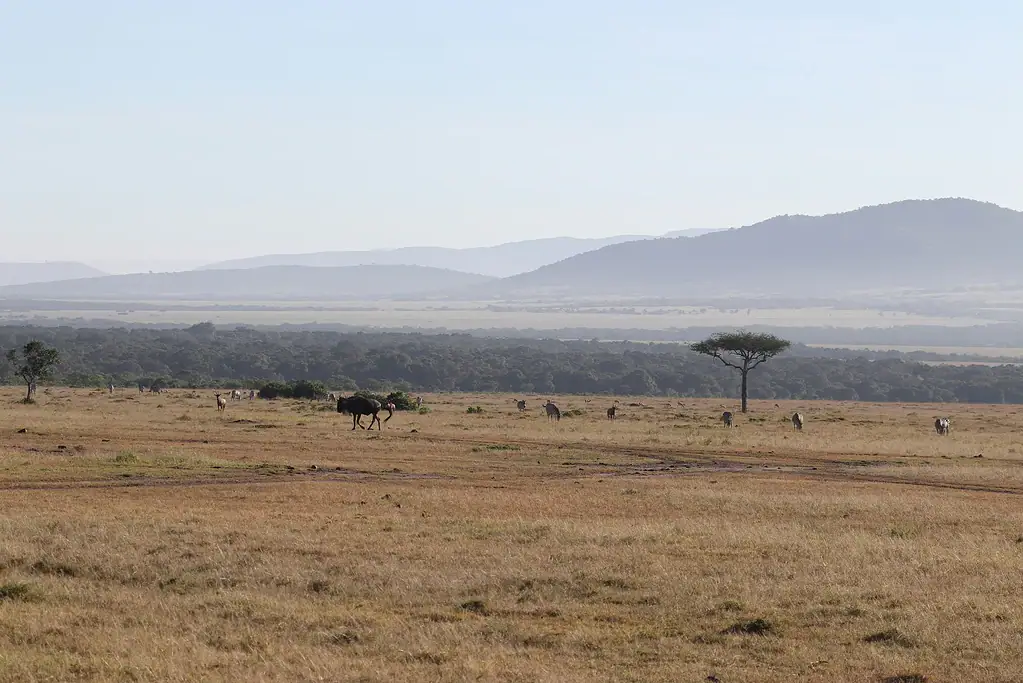
Continue planning your Maasai Mara safari
Book the correct arrival service
For a flight-based stay, use the airline’s airstrip and baggage information for the booked service. The correct strip follows the named camp and collection arrangement.
Explore safari packages






From USD 2,000 per person sharing



From USD 2,350 per person sharing

From USD 1,950 per person sharing

From USD 2,350 per person sharing

From USD 1,700 per person sharing

From USD 2,900 per person sharing

From USD 3,800 per person sharing
From USD 4,550 per person sharing
From USD 3,000 per person sharing
From USD 3,150 per person sharing
Plan your private Maasai Mara safari
Share your dates, party and interests with MaasaiMara.ke. We quote and book private safaris through authorised tour operator partners, with dedicated vehicles and guiding for your travelling party.