
Talek and the Talek River
Talek is a Reserve-access base built around the Talek settlement, gate and river in the Maasai Mara. It offers varied accommodation, including camps beside the river but outside the National Reserve. Choose the exact property and a programme with transport, guiding and Reserve entry clearly included. The Talek River is distinct from the Mara River, so a riverside stay should not be interpreted as a guarantee of a migration crossing beside camp.
Talek and the Talek River at a glance
Wildlife landscape
A Reserve safari with its own local habitat and access context.
Natural observations
Resident wildlife, changing habitat and seasonal possibilities; sightings remain conditional.
Practical access
Use the selected camp’s actual road or air arrival and authorised guiding arrangement.
Seven useful planning decisions
- Choose the exact camp and establish its boundary location.
- Match the wildlife programme to your party’s interests.
- Include the correct entry or conservation charges.
- Specify the private vehicle and guiding arrangement.
- Coordinate the actual road or air arrival and camp transfer.
- Select permitted activities that suit the party and season.
- Allow flexibility for weather, wildlife movement and viewing rules.
Access and fee basis
| Item | Applicable basis |
|---|---|
| Managing arrangement | National Reserve under Narok County arrangements |
| Entry / conservation | National Reserve per-person entry and applicable vehicle charges; use the published visitor-category schedule. No separate universal Talek and the Talek River admission tariff. |
| Accommodation | Selected-property tariff; compare the full occupancy, board and compulsory-charge conditions. |
| Complete private safari | Written quote names the accommodation and includes scheduled entry and compulsory selected-property charges. |
Talek as a safari base
Talek is useful to understand as several connected places rather than a single administrative safari sector. The name can refer to the settlement, the Reserve gate, the river or the surrounding accommodation zone. A quotation that simply says Talek should identify which property and boundary relationship it means. Those details affect daily entry, the start of each outing and the atmosphere of the stay between drives.
Many visitors consider Talek because it combines accommodation choice with access to Reserve wildlife. A camp near the gate can be convenient, but convenience depends on the actual route and programme. A room beside the river is not proof that the property stands inside the Reserve or that its price includes admission. Choose the stay and guiding together, rather than treat a map pin near wildlife habitat as a complete safari arrangement.
The wider Maasai Mara areas guide compares Talek with the Triangle, Musiara and Sand River. Each serves different geographical interests, and none guarantees the best sightings every day. Talek is best selected as a practical safari base for your party’s accommodation and Reserve programme, with enough time to explore suitable habitat and clear expectations about which access is included.
The Talek River and surrounding habitat
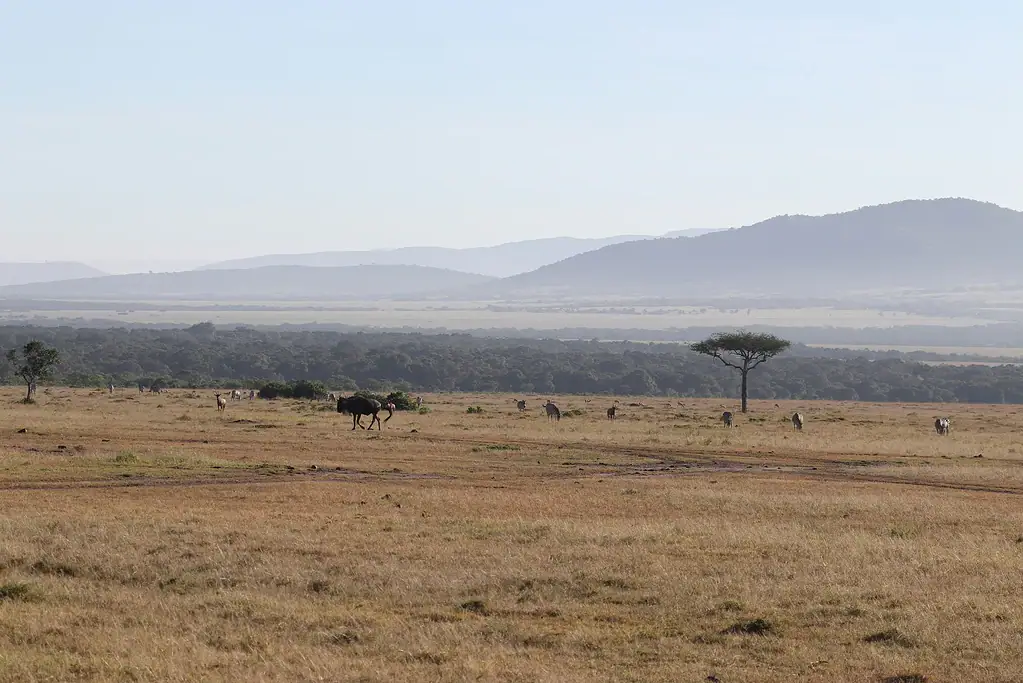
The Talek River gives the area a recognisable setting, with riverine vegetation and nearby open country providing different wildlife interest. A camp beside trees and water can feel different from one facing the plains, even when both serve similar Reserve drives. The immediate view is part of the accommodation experience; it should not be used to promise that a particular predator or herd will appear outside the room.
Water levels and ground conditions change with rain, affecting the river margins and routes around them. A guide chooses suitable approaches and respects the animals using the habitat. Riverbanks are not unrestricted walking areas, and a camp’s riverside location does not make entering the water or crossing informally safe or permitted. Follow the property’s movement and escort instructions as well as the wildlife rules on outings.
The Talek River and Mara River are separate watercourses. This matters particularly for migration expectations: a photograph of animals crossing the Mara River does not describe every riverfront stay in Talek. A wildlife programme can include productive resident observations around the local habitat and a separately planned excursion elsewhere. Keep the geography clear so that the safari base serves the trip you want rather than a crossing image whose location is unrelated to the camp.
Reserve access and the managing body
Talek Gate serves entry to the Maasai Mara National Reserve, which is under Narok County’s management arrangements on this side. Talek itself is not a private conservancy with a universal camp-membership access system. Admission, vehicle arrangements and the applicable visitor category need to fit the actual stay. An accommodation-only booking outside the boundary does not automatically fund the Reserve drives that make the trip a safari.
The public entry-fee system is distinct from charges attached to an individual camp. A property may package admission and activities with accommodation or quote them separately. The relevant fee basis for this area is National Reserve per-person entry, together with applicable vehicle charges; there is no verified standalone Talek-area admission tariff to add simply because the camp uses Talek in its address. Follow the actual Reserve and property conditions rather than invent another layer of entry.
Use our Reserve fee guide for the published categories and conditions. A private safari quotation should identify the scheduled entry, dedicated vehicle and guiding, accommodation and compulsory selected-property charges. The location outside or inside the boundary should be explicit. This provides a clear financial basis for comparing a Talek safari base with a Reserve camp or a conservancy stay whose inclusion structure may be quite different.
Accommodation beside the river and gate
Talek-area accommodation includes varied camp and stay styles. Basecamp Maasai Mara is beside the Talek River and describes a Reserve-border setting; Talek Bush Camp’s current information identifies an outside-Reserve riverside base. Other properties serve nearby Reserve habitat from different positions. These examples help explain the geography, but a broad area label should not replace checking the selected camp’s exact location and access arrangement.
Compare room layout, meals, facilities, privacy and the way wildlife outings operate. A traditional tent, a cabin, a serviced campsite and a lodge-style room are different accommodation products. Each can suit a different party, but the room price does not establish a private vehicle or a particular activity. Our accommodation guide explains comfort and stay styles without assuming every property in Talek offers the same facilities.
For families and travellers with access needs, obtain practical information about room entry, paths, bathroom arrangements and vehicle boarding. A photograph or the word luxury cannot establish those details. Choose a safari base that is comfortable between outings as well as convenient for the wildlife programme. This gives the party a clear reason for selecting the property beyond proximity to a gate or a general claim of being close to the animals.
Wildlife viewing from a Talek base
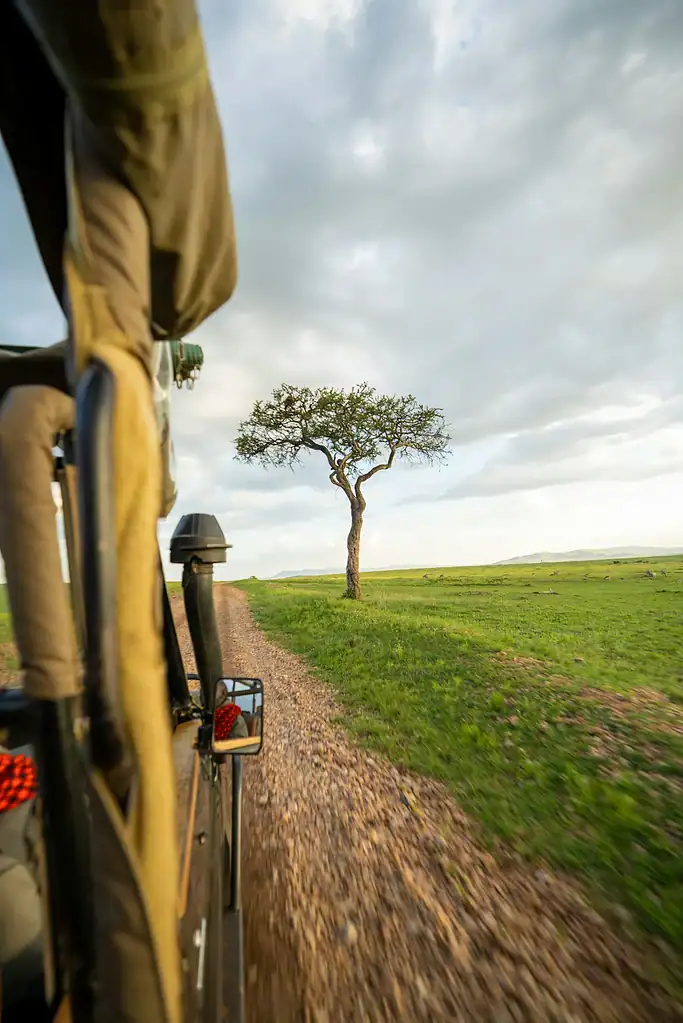
A Talek stay can serve Reserve drives through varied habitat, with routes chosen according to conditions and fresh observations. Predators, grazers, elephants, giraffes, buffalo and birds all contribute to the wider Mara experience. No area name provides a fixed animal location. A good guide works with tracks, behaviour and habitat rather than promise that a famous species will be visible near a particular camp every morning.
Allow time for quieter observations. Grazing animals reacting to a predator, birds using riverine trees or a resting cat becoming active can reveal more than a brief close portrait. Repeated drives from the same safari base can help the party understand those changes. This is useful for first-time visitors as well as photographers and returning travellers, and reduces the pressure to travel far simply to collect another named sighting.
The Big Five guide provides species context, while the guide on the ground determines where to spend the day. Talek should be chosen for the accommodation and access programme that suits the party, not a guarantee that every hoped-for species lives within a short drive. Give the itinerary room for varied habitat and natural behaviour, including the possibility that the most memorable encounter was not on the original list.
Migration expectations and river-viewing plans
Migration travel requires a realistic understanding of where herds may be, not just the broad season. The wider Mara pattern often draws visitors between July and October, but animals follow grazing and water and can change direction. A Talek safari base gives access to a programme; it does not reserve a crossing event for your stay. Riverfront accommodation and migration viewing are related interests that should not be treated as the same promise.
The Talek River has a different geographical role from the Mara River, and recent verified reporting describes changes in herd movement around the Talek watercourse. Avoid assuming that every traditional route remains a dependable annual event. For a crossing-focused itinerary, the relevant Reserve viewing area, transport and useful time there need to be explicit. Even at an appropriate site, herds can gather, turn back or remain near a bank without crossing.
Our Great Migration guide explains the broader pattern and uncertainty. Compare a longer excursion from Talek with another safari base if river viewing is the main reason for travel. Either can work when the route and party’s pace make sense. Talek also remains useful for resident-wildlife travel, so the programme can be rewarding without relying on a single migration event beside the accommodation.
Private vehicles and the daily programme
MaasaiMara.ke plans private safaris for the travelling party, with dedicated vehicles and guiding. The written quotation should make those arrangements clear. A camp’s ordinary accommodation tariff may describe shared or separately purchased activities, so it cannot establish the private programme by itself. This is particularly important when comparing a Talek accommodation-only stay with a complete safari that includes transfers, entry and guiding.
Choose a daily rhythm that fits the party. A longer outing with an arranged meal gives more time away from the base; returning to camp between drives provides another pace. Families, birders and photographers may prefer different versions. The guide can respond to wildlife and conditions within that framework. A good safari base supports those choices rather than force every guest to follow the same ambitious route regardless of their interests or comfort.
Private use also remains subject to Reserve rules. It does not allow the vehicle to crowd animals, ignore zones or enter sensitive habitat for a photograph. Tell the guide what you enjoy observing and allow natural flexibility. Talek can then serve as a practical base for meaningful wildlife time, instead of a starting point for constant movement whose main purpose is to reach as many named areas as possible before returning to camp.
Reserve rules and respectful wildlife viewing
Give wildlife space, keep voices low and follow the guide’s instructions. Do not feed animals, block their movement or try to make a resting predator stand up. Sensitive situations around young animals, dens and hunts require particular restraint. A sighting can be interesting without being close, and patient observation often reveals more natural behaviour than pressing the vehicle forward to fill a photograph with the animal.
Off-road permission depends on the applicable Reserve zones and rules. It is not a blanket ban everywhere, nor permission to drive anywhere a vehicle can reach. High-use and river zones have restrictions, and authorised viewing elsewhere remains controlled. The guide should follow the current management instructions and respect ground conditions. Talek’s convenient location does not remove those requirements or turn river margins into unrestricted access routes.
Walking, night drives and horseback activities described for neighbouring conservancies should not be assumed to operate inside the Reserve. Follow the actual activity permissions and leave the vehicle only where permitted. Our conservancies guide explains the alternative model when those experiences are a priority. A Reserve safari base and a conservancy programme can be combined, but their rules and access need to remain clearly attached to the relevant place.

Road arrival and local conditions
The final road approach should follow the selected camp’s directions and the operator’s knowledge of conditions. Main-route planning and local tracks are different parts of the journey. A navigation app can show a short line without accounting for permission, wet ground or the usable crossing. Plan the Talek arrival around the actual property and meeting point rather than assume every riverside camp is reached in the same way.
The vehicle should suit local conditions, and the itinerary needs flexibility for rain or changing access. Do not turn an unverified transfer time into a promise. After a longer road journey, a comfortable first outing near the base may be more enjoyable than immediately travelling farther across the Reserve. This matters especially for families and parties whose interest is unhurried wildlife observation rather than a full sightseeing circuit on arrival day.
Our Nairobi-to-Mara road guide explains the wider connection. The property supplies the final Talek approach. Include the return journey in the same planning when it connects to a flight or another destination. A well-chosen safari base allows the operator to protect useful wildlife time while keeping transfers practical, rather than rely on a wildlife track or informal river crossing as a guaranteed quick route.
Air arrival and camp pickup
Talek-area camps can describe different air arrival options, including Ol Kiombo or Keekorok according to the property and booked service. The correct landing point must be coordinated with the camp. The nearest-looking strip on a map is not automatically the booked or appropriate arrival point for every Talek stay. The flight and local transfer should identify the actual service, strip and meeting arrangement before travel.
Scheduled flights may make intermediate stops, and baggage conditions depend on the service. The local drive after landing is a separate part of the journey. Keep the first day’s activity expectations consistent with that arrival, and plan departure with the onward connection in mind. Photographers and families should consider equipment and the full transfer rather than only the headline airborne time shown in a general Mara description.
The flight guide provides the broader context. For a Talek safari base, the selected camp’s actual arrival instructions remain decisive. When combining properties, determine whether an authorised road transfer is the practical connection rather than automatically adding another flight. Clear coordination lets the party arrive understanding the stay and begin enjoying the landscape without uncertainty about where the camp meets the aircraft.
Seasons and the changing riverside landscape
Talek can serve resident-wildlife travel across the wider seasonal cycle. Drier periods can ease movement on local tracks and open-country scanning; greener conditions change the light, vegetation and birding interest. Rain can affect river levels, crossings and the routes a guide chooses. A productive safari base allows the programme to adapt rather than commit to the same drive circuit in conditions that make another habitat more suitable.
Migration-focused dates often follow the broader July-to-October pattern, but Talek itself should not be sold as a guaranteed crossing location. Resident viewing, photography and birding can provide reasons to travel at other times. The party’s interests and tolerance for weather-related flexibility help determine the best choice. A camp may also have seasonal operating or maintenance dates, which are separate from the wildlife calendar.
Read our best-time guide with the accommodation’s programme. When dates are fixed, plan what works realistically in that season instead of promising the landscape will behave differently. A wet morning may call for another route or a slower outing. Talek remains a useful safari base when expectations are centred on varied wildlife and practical access, rather than one event that the guide cannot control.
Community setting and respectful visits
Talek is also a community setting, not simply a gate and collection of tourist camps. Everyday life, livelihoods and services form part of the surrounding landscape. Visitors should treat those places with the same care as the wildlife area, avoiding assumptions that a safari booking creates unrestricted access to people’s homes or work. A guide can explain the local context without turning every encounter into an attraction.
Hosted community experiences require agreement and appropriate arrangements. Ask before photographing people and follow the host’s guidance. Some camps describe education, conservation or cultural programmes associated with their operation, but the actual offer should be clear. Do not promise a personal meeting, donation outcome or project contribution that is not part of the real programme. Respectful participation is more useful than an invented claim about how every stay benefits a particular initiative.
The wider cultural-visit guide explains how to approach an arranged experience. A Talek safari base can provide context about the relationship between the Reserve, accommodation and neighbouring communities, while keeping the wildlife programme distinct from daily community life. Visitors contribute most directly through legitimate arrangements, thoughtful behaviour and respect for local choices throughout the trip.
Families, photography and practical comfort
For families, select accommodation and activities together. Room suitability, meal flexibility and rest can matter more than a long list of outings. Daytime drives should fit the children’s attention and the party’s interests. Walking or night activities elsewhere have their own eligibility and permissions; a family room near Talek does not establish that all children can join every advertised experience in the wider Mara.
Photographers should specify private vehicle use, equipment needs and the type of observation they enjoy. A Talek programme can explore varied habitat while retaining time for birds, landscapes and behaviour. The guide still follows the Reserve code, so patience and composition are more useful than a demand for the closest possible angle. A suitable safari base provides comfortable time between outings as well as practical access to the wildlife programme.
Travellers with mobility or other access needs require details about room entry, paths and vehicle boarding. Those features vary by property and cannot be inferred from the area name or accommodation tier. Obtain the actual information while choosing the stay. This makes Talek a practical, comfortable base for the party rather than a location selected first and assessed for suitability only after the itinerary has been filled with activities.
Combining Talek with other areas
Compare Talek with Musiara Marsh, Sand River and the Mara Triangle through habitat and access. Musiara offers a northern wetland and riverine focus; Sand River provides a southern border-landscape setting; the Triangle has its own managed western-sector arrangements. None is a universal upgrade from the others. The useful choice depends on the party’s interests, dates and selected accommodation.
A move can make sense when it provides a meaningful contrast or better access to a priority. Include the transfer, admission and time at both bases, rather than squeeze the change between full activity days. A longer stay in Talek may be preferable for a family or photographer who values repeated drives, while a returning visitor may want another habitat. Each programme should explain what the party gains from changing the safari base.
The written itinerary should show the named camp, boundary location, private vehicle and guiding, transfers, scheduled entry and compulsory charges. Talek can then be assessed clearly as part of the safari. It does not guarantee every wildlife event nearby, but it can provide accommodation flexibility and a practical Reserve programme that lets the guide and party make the most of natural observations without unnecessary rushing.
Planning a clear Talek stay
Keep the accommodation-only and complete-safari options distinct when comparing prices and inclusions. The former may require separately arranged meals, transport, guiding and entry; the latter should identify those components in the programme. Do not infer them from the camp’s address or a general promise of being close to the Reserve. The safari cost guide helps compare the complete trip on a consistent basis.
For visitors arranging Reserve tickets directly, use the KAPS park-booking portal and follow the actual visitor-category and entry conditions. A private safari should coordinate admission within the written quote. Talek is then an understandable base with a defined wildlife programme, rather than a room booking whose essential access arrangements remain to be discovered after arrival.
Choose the property that fits the party between outings and the programme that serves the wildlife interests. Leave room for weather, animal movement and the guide’s judgement. A well-planned Talek stay connects those practical details with enjoyable time in the Reserve, so that the river setting and accommodation choice support the safari rather than create expectations that geography or wildlife cannot fulfil.
Explore safari packages






From USD 2,000 per person sharing



From USD 2,350 per person sharing

From USD 1,950 per person sharing

From USD 2,350 per person sharing

From USD 1,700 per person sharing

From USD 2,900 per person sharing

From USD 3,800 per person sharing
Plan your Maasai Mara safari
Tell us your travel dates, party and wildlife interests. MaasaiMara.ke quotes and books private safaris through authorised tour operator partners, with dedicated vehicles and guiding. Your written quote names the accommodation and includes the scheduled park fees and compulsory selected-property charges.
